Employment of Nepalese in Japan: Recruitment Status of Major Companies and Success Strategies
Employment of Nepalese in Japan: Recruitment Status of Major Companies and Success Strategies
Nepalese
大手
2026.08.03
Employment Opportunities for Nepalese in Japan and Recruitment Status of Major Companies
Employment Opportunities for Nepalese in Japan and Recruitment Status of Major Companies
For Nepalese aiming to find employment in Japan, recruitment by major companies is an important milestone. In this chapter, we will discuss the theme of "Japan Employment Nepalese Major Recruitment" and explain the key points that Nepalese individuals should know to succeed in major companies. We will particularly focus on recruitment trends, the desired profile of candidates, and industry trends as well.
In recent years, major companies in Japan have been actively accepting diverse talent, and there is a growing demand for foreign workers, especially in IT and manufacturing sectors. Therefore, if Nepalese individuals possess specific skills, there are areas with high employment potential. As a first step to entering major companies, it is essential to thoroughly analyze how one's skills and experiences can be beneficial.
Additionally, the desired profile of candidates varies by job type, so it is important not to neglect preparation according to the targeted position. In particular, Japanese language skills and specialized qualifications are crucial factors in hiring, so self-improvement in line with these conditions is required.
⚠️ Note
Since the hiring conditions and selection criteria differ based on job type, residency status, and Japanese language proficiency, special attention is needed.
The next chapter will provide a detailed introduction to the latest hiring trends and specific industry needs, exploring strategies for Nepalese individuals to be hired by major companies. This will help readers clarify their own paths and enable them to conduct effective job searches.
Note
The hiring conditions of major companies vary significantly depending on the job type, residency status, and Japanese language proficiency. In particular, Japanese language skills are directly linked to job success, so it is important to engage in self-improvement and equip yourself with the skills that are optimal for the companies and positions you are applying for. Planned preparation is key.
Industries and Positions Where Hiring is Likely to Occur
In Japan, the hiring of Nepalese people is increasing in specific industries and job types. This is particularly evident in the fields of IT engineers and cooking personnel. For example, Sakai Moving Center is hiring three NepaleseIT engineers in 2024, contributing to system development. (Reference: japal-nankai.com) Additionally, Meikyu Corporation has hired over 30 Nepalesecooking personnel in response to labor shortages in the food service industry. (Reference: jobbiz.connectiu.com) These examples show that the hiring of Nepalese individuals is particularly advanced in the IT and food service industries.
Differences Between New Graduates and Mid-Career Hires
For Nepalesenew graduates and mid-career hires, there are differences in the hiring process and the requirements expected. In the case of new graduate hiring, Japanese language skills and specialization tend to be less emphasized compared to potential and adaptability. On the other hand, for mid-career hiring, specialization, practical experience, and Japanese language skills are prioritized as essential. Thus, since the required elements differ depending on the entry point of hiring, companies considering hiring Nepalese individuals need to set requirements according to their hiring objectives.
Impact of Japanese Language Skills, Specialization, and Residence Status
Japanese language skills are an important factor in the hiring of Nepalese individuals. Many companies require a level of Japanese Language Proficiency Test (JLPT) N3 or higher, and Japanese language skills significantly influence hiring decisions. However, research has revealed that many companies feel a gap in practical capabilities even among those who have intermediate-level Japanese language test scores. (Reference: adv.tokyo-np.co.jp) Additionally, specialization and residence status also affect hiring. Nepalese individuals with residence statuses such as highly skilled professionals or specific skills are being hired in certain industries. (Reference: jetro.go.jp) Considering these factors comprehensively leads to the success of hiring Nepalese individuals.
Preparation Checklist Based on Current Situation (3 Points)
1. Strengthening Japanese Language Skills:Companies aiming to hire Nepalese should provide programs to support the improvement of Japanese language skills and create an environment aimed at achieving a level of Japanese Language Proficiency Test (JLPT) N3 or higher.
2. Clarification of Expertise:It is necessary to clarify the expertise required for the positions being hired and to establish criteria for evaluating whether Nepalese candidates meet those requirements.
3. Confirmation and Support for Residence Status:When hiring Nepalese, it is important to confirm the appropriate residence status and establish a system to support the necessary procedures, contributing to a smooth hiring process.
Note
Information regarding the hiring of Nepalese people in Japan varies by industry and job type, so it cannot be generalized. Additionally, hiring standards and required skills differ by company, making it important to confirm specific information. In particular, careful consideration is needed regarding Japanese language proficiency and residency qualifications.
Characteristics of Nepalese Talent Sought by Major Companies
Characteristics of Nepalese Talent Sought by Major Companies
The evaluation criteria in major companies are diverse. Among these, the most emphasized are language skills, specialized skills, business manners and reporting, cultural adaptability, and prospects for long-term employment. First, regarding language, both Japanese and English are required. For example, in customer interactions and team communication, the ability to converse in Japanese is necessary, and English proficiency is also essential in a global business environment.
Next, regarding specialized skills, knowledge in IT engineering and mechanical/electrical fields is often required. For example, having experience in programming or data analysis techniques can be advantageous in hiring. Furthermore, business etiquette and reporting are particularly important. In this culture, the ability to report, communicate, and consult with superiors smoothly can determine success in large companies.
Additionally, cultural adaptability is also an important factor that large companies seek. There is an expectation for Nepalese individuals to adapt to Japanese business culture and work collaboratively in diverse teams. Moreover, the prospect of long-term employment is a significant criterion for companies when hiring. Large companies that seek a stable workforce require a clear demonstration of the willingness to work long-term.
On the other hand, compared to small and medium-sized enterprises, the hiring process of large companies is characterized by standardization. Large companies conduct hiring based on specific job categories, and compliance and documentation skills are also emphasized. In contrast, small and medium-sized enterprises tend to have more flexible hiring practices, with a wider range of required skills.
Advantages of large companies
They offer stable employment and comprehensive benefits.
Opportunities to build an international career are expanding.
Disadvantages of large companies
The hiring process is strict and time-consuming.
Competition is fierce, and it poses a high barrier for young candidates.
Finally, I will present a template for examples when considering your self-promotion. "My strength is my specialized skills in ○○, and I have experience achieving results in a ×× project. Additionally, I excel in teamwork in multicultural environments by utilizing my Japanese communication skills." It is important to specifically mention your achievements and abilities to convey your value as a Nepalese.
Points
Nepalese talent sought by major companies requires language skills, specialized skills, business etiquette, and cultural adaptability. A willingness to work long-term is also valued.
By emphasizing these elements and utilizing them in your self-promotion, you can demonstrate an advantage in employment in Japan.
Employment strategies for Nepalese to succeed in Japan
Employment Strategies for Nepalese to Succeed in Japan
For Nepalese considering employment in Japan, securing a position at a major company is an important goal. To succeed, it is essential to thoroughly understand the processes from preparation to application, selection, and post-offer. First, narrowing down the job type is very important. Clearly define which field you want to work in based on your skills and experience, and identify your target industry. In particular, IT and manufacturing are promising options for Nepalese.
Next, let’s touch on the Japanese language requirements. Many major companies require a certain level of Japanese proficiency as a condition for hiring, so it is crucial to plan your studies to improve your Japanese skills. This preparation is directly linked to success in interviews. Additionally, it is important to research in advance which employment type suits you, as it needs to align with your residency status.
In the selection process, the evaluation of your portfolio and qualifications will have an impact. In particular, having specific qualifications increases your materials for self-promotion and enhances the quality of your resume and work history. Here, it is important to understand the skill set the employer is looking for and to check if your experiences and selling points align with it. This consistency will be a key factor in securing a job offer.
Support systems after receiving a job offer and cultural adaptation cannot be overlooked. By preparing to smoothly adapt to a new environment, the likelihood of long-term success increases. By implementing these strategies, the chances of Nepalese being hired by major companies in Japan will improve. Please refer to the timeline below to check the flow.
Spring 2022
Major companies have started to strengthen their hiring of foreign workers.
Summer 2023
The number of job types requiring Japanese language proficiency is increasing.
Keeping these steps in mind and developing an efficient job strategy should lead to the success of Nepalese people in Japan.
Attention
When Nepalese people consider employment in Japan, it is important to pay attention to the selection of job types, Japanese language proficiency, and the consistency of residency status. Especially in large companies, the required conditions vary by job type, so it is crucial to conduct thorough research in advance and establish a strategy that suits you.
To target major recruitment in Japan, it is essential to create resumes and work history documents (or ES) effectively. The aspects that recruiters should consider include reproducibility, quantitative achievements, roles, technologies used, and causal relationships of results. First, let's look at the steps to create a resume based on these criteria.
Reproducibility: Clearly describe past experiences and explain the reasons why similar results can be reproduced.
Quantitative Achievements: Clearly state achievements that can be shown in numbers and specify the impact they had.
Roles: Clarify your role and communicate your contributions to the team.
Technologies Used: List your specialized skills and tools used to showcase your abilities.
Cause of Results: Explain how your actions led to results and demonstrate the causal relationship.
I will also touch on points where Nepalese people tend to lose points. For example, the use of keigo, inconsistencies in year notation, photo selection, address notation ambiguity, writing of residency qualifications, academic credential equivalency, and explanations of gaps in employment are particularly important to pay attention to.
Example of OK: "In 2022, I served as the team leader for a marketing project that increased sales by 20%."
Example of NG: "I have experience in increasing sales, and it was a very important job."
Finally, I have prepared a checklist to use before submission. Let's utilize this to complete your resume and work history.
Check if the use of honorifics is appropriate.
Check if the year notation is consistent.
Check if the photo is appropriate.
Check if the address notation is accurate.
Check if the residency status is correctly stated and verify that there are no typographical errors.
Confirm that the conversion of academic history is clear.
Ensure that the explanation for any gaps in employment is satisfactory.
By using this checklist, you can increase your chances of being hired by major companies in Japan.
Here are the key points
To be hired by a major company in Japan, it is important to create a resume and a work history document. Recruiters focus on reproducibility, quantitative achievements, roles, technologies used, and the causality of results. Additionally, attention is needed regarding honorifics, year notation, and address notation, which are areas where Nepalese candidates may struggle. Let's utilize a checklist to create perfect documents.
The main skills and experiences evaluated in interviews include communication, logical thinking, cultural fit, expertise, and the necessity of working in Japan (motivation). From these perspectives, it is important for Nepalese candidates to prepare thoroughly to be hired by major companies in Japan.
Q1: Please tell me specifically about your communication skills.
Main points of the answer: Discuss experiences in teams of varying sizes and provide specific situations.
Deepening measures: Be prepared to explain how to build relationships with others, adding specific episodes.
Expressions that can be easily misunderstood: Avoid vague expressions like "I can do well."
Improvement measures: It is desirable to demonstrate results with specific examples or numbers.
Q2: What is your experience with logical thinking?
Main points of the answer: Explain the problem-solving process and show what approach you took.
Deepening measures: Clarify the materials for judgment and the reasons that led to the conclusion.
Improvement measures: Present data as much as possible in quantifiable terms.
Q3: How do you achieve cultural fit?
Key points of the answer: Understand the company's culture and values, and describe how your experiences align with them.
In-depth strategy: Provide specific values and behaviors, and clearly demonstrate the match with the company.
Commonly misunderstood expressions: Avoid expressions that undervalue yourself as a form of humility.
Improvement measures: Prepare multiple specific examples to showcase your strengths.
Q4: Please tell us about your expertise. How will you utilize that skill?
Main points of the answer: Clearly indicate your area of expertise and convey how it can contribute to the company.
In-depth preparation: Specifically explain the tools and techniques used, linking them to results.
Commonly misunderstood expressions: It is not acceptable to evaluate your expertise abstractly.
Improvement measures: Clarify your skill set and present achievements in quantifiable terms.
Q5: What are your thoughts on the necessity of working in Japan?
Key points of the answer: Show reasons for wanting to work in Japan and demonstrate an understanding of Japanese culture.
In-depth strategy: Explain how you can contribute to the Japanese business environment.
Commonly misunderstood expressions: Avoid silence or vague reasons.
Improvement measures: Present specific goals and career plans to enhance persuasiveness.
By preparing clear answers to these questions, you can increase your chances of being hired by major companies in Japan. It is important for Nepali applicants to be aware of expressions that can be easily misunderstood and to take a firm approach.
Key Points of the Interview
In the interview, it is important to clearly demonstrate communication, logical reasoning, cultural fit, expertise, and the necessity of working in Japan. Avoid vague expressions and understatements, and use specific examples to showcase your skills.
Evaluation Points
Specific Examples
Communication
Discuss specific situations and outcomes
Logicality
Explain the problem-solving process
Culture fit
Demonstrating Understanding of Corporate Values
This increases the likelihood of recruitment in major Japanese companies.
Laws and Regulations Regarding the Employment of Nepalese in Japan
The laws and regulations regarding the employment of Nepalese in Japan are mainly summarized in the provisions concerning residency status and work eligibility. When Nepalese seek employment in Japan, the first thing to confirm is whether the desired job meets the requirements for residency status. For example, those with the Technical, Humanities, and International Servicesresidency status are required to engage in work that requires specialized knowledge or skills. Therefore, it is important to check in advance whether the job being applied for is compatible with this residency status.
Additionally, attention is required regarding activities outside of qualifications. It is generally prohibited for Nepalese individuals to work outside the scope of their residency status according to the Immigration Control Act. However, it may be possible to engage in side jobs under certain conditions by obtaining permission for activities outside of qualifications. To obtain this permission, an application to the Immigration Bureau is necessary, and work must not begin until permission is granted.
As part of the company's procedures, when hiring Nepalese individuals, it is required to confirm their residency status and submit a foreign employment status report. This is to report the name of the hired Nepalese, their residency status, residency period, and other information to the Minister of Health, Labour and Welfare based on Article 28 of the Employment Measures Act. Failure to comply with this procedure may result in penalties, so appropriate measures are necessary.
Furthermore, when hiring Nepalese individuals, it is prohibited to engage in discriminatory treatment based on nationality according to Article 3 of the Labor Standards Act. This regulation prohibits setting wages and working conditions unfairly low solely based on being Nepalese. Therefore, when hiring Nepalese, it is required to provide treatment equivalent to that of Japanese workers.
By complying with these laws and regulations, the risks associated with hiring Nepalese individuals can be minimized. However, in individual cases, the application and interpretation of the laws may become complex. Therefore, it is recommended to consider consulting with experts based on the specific circumstances.
Here are the key points
When hiring Nepalese people in Japan, understanding residency status, work eligibility, and activities outside of qualifications is important. Companies are required to report their foreign employment status and must comply with laws prohibiting discrimination based on nationality. It is recommended to consult with experts for individual cases.
Work-related residence status (Technology, Humanities, International Services, etc.)
It is possible to get a full-time job at a major Japanese company.
Technical Intern Training / Employment for Development
Getting a full-time job is difficult, and the main purpose is training and skill acquisition.
Specified Skilled Worker
Employment as a full-time employee is possible, but the job duties are limited to specific fields.
Part-time work for international students (activities outside of visa status)
Employment as a full-time employee is not permitted, and activities are limited to part-time work.
The system for foreign workers in Japan plays an important role when Nepalese people seek to become full-time employees at major companies in Japan. Below, I have organized the characteristics of each system and the possibility of employment as a full-time employee.
Work-related residency status (such as Technical, Humanities, and International Services) is a residency status that allows employment as a full-time employee at major companies in Japan. By obtaining this status, Nepalese people can engage in specialized work and work as full-time employees at major companies in Japan.
Technical Intern Training / Employment for Development is a system primarily aimed at training and skill acquisition, and it is considered difficult to find employment as a regular employee. When Nepalese utilize this system, it is difficult to find employment as a regular employee in major Japanese companies, and the main purpose is training and skill acquisition.
Specified Skilled Worker is a system for accepting foreign workers with specialized skills in specific fields, and employment as a regular employee is possible, but the job duties are limited to specific fields. By obtaining this qualification, Nepalese can work as regular employees in specific fields.
Student Part-time Work (Activities Outside of Status of Residence) is a system that allows international students to work part-time while studying, and employment as a regular employee is not permitted, and activities are limited to part-time work. When Nepalese international students utilize this system, employment as a regular employee in major Japanese companies is not permitted, and activities are limited to part-time work.
To understand these systems, it is necessary to obtain the appropriate residency status and ensure consistency with job duties to find employment as a regular employee in major Japanese companies. It is important for Nepalese to meet the requirements of each system when seeking employment as a regular employee in major Japanese companies.
Summary of Key Points
Japan's foreign worker system is mainly classified into work-related residency statuses, technical internships, specified skills, and part-time jobs for international students. For Nepalese individuals to secure full-time employment at major companies in Japan, it is essential to have the appropriate residency status, and understanding the characteristics of each system is important.
About visas and work permits for Nepalese individuals
About visas and work permits for Nepalese individuals
Requirements for residency status in Japan and the process from job offer to residency status change for Nepalese individuals
Nepalese people need to obtain and change the appropriate residency status when employed as a full-time employee at a major Japanese company. First, after receiving a job offer, they will apply for residency status change permission. This application requires documents such as a employment contract, details of job responsibilities, and pay slips. During the review, it will be confirmed whether the job responsibilities match the educational background and work history, whether the proposed salary meets the standards of a major Japanese company, and whether the employment contract is appropriate. By meeting these requirements, the residency status change will be approved, allowing for employment as a full-time employee at a major Japanese company.
Documents required for residency status change and key points emphasized in the review
Nepalese people need the following documents for the residency status change permission application when employed as a full-time employee at a major Japanese company:
- Application for residency status change permission
- Photograph
- Copy of passport
- Copy of employment contract
- Document explaining job duties
- Pay slip
- Company registration certificate
In the review, it will be confirmed whether the job description matches the educational background and work history, whether the proposed salary meets the standards of major Japanese companies, and whether the employment contract is appropriate. By meeting these requirements, the change of residency status will be approved, allowing for employment as a full-time employee at a major Japanese company.
Job support for Nepalese provided by major companies
Major companies in Japan offer various support at each stage before and after joining to assist Nepalese with their employment.
Pre-employment Support
Japanese Language Support is one of the most important factors for Nepalese people in finding employment in Japan. Many companies offer training and educational programs to enhance Japanese language skills. For example, Big Valley International provides a program where you can learn Japanese while working as a programmer, and covers part of the commuting costs to Japanese language schools. (Reference: bvi.jp)
Furthermore, there are companies that have introduced a mentorship system. SUSHILA Co., Ltd. provides support for foreign talent in terms of daily life and settlement follow-up, creating an environment where Nepalese can work safely in Japan. (Reference: sushila.jp)
In addition, more companies are implementing cross-cultural training. Sherpa Human Resources Co., Ltd. offers business training, Japanese language training, and cross-cultural understanding training aimed at developing foreign talent, supporting Nepalese individuals in adapting to the employment environment in Japan. (Reference: sherpa-hr.co.jp)
Additionally, there are companies that provide housing allowances and benefits. Yudetaro System offers a company dormitory system and meal assistance, supporting Nepalese individuals in comfortably living their employment life in Japan. (Reference: recruit.yudetaro.jp)
Support after joining the company
Career interviews are regularly conducted by some companies. Sherpa Human Resources Co., Ltd. conducts regular interviews and reports to government agencies to promote the settlement of foreign talent, supporting Nepalese individuals to continue their employment life in Japan over the long term. (Reference: sherpa-hr.co.jp)
The initiatives of these major companies provide crucial support for Nepalese individuals to successfully find employment in Japan. By utilizing the support offered by each company, Nepalese individuals can enhance their employment life in Japan.
Checkpoint
Major Japanese companies are enhancing employment support for Nepalese individuals. Before joining, they provide Japanese language support, mentoring systems, and cross-cultural training, along with housing allowances. After joining, they conduct career interviews to support long-term retention. This allows Nepalese individuals to smoothly advance their employment life in Japan.
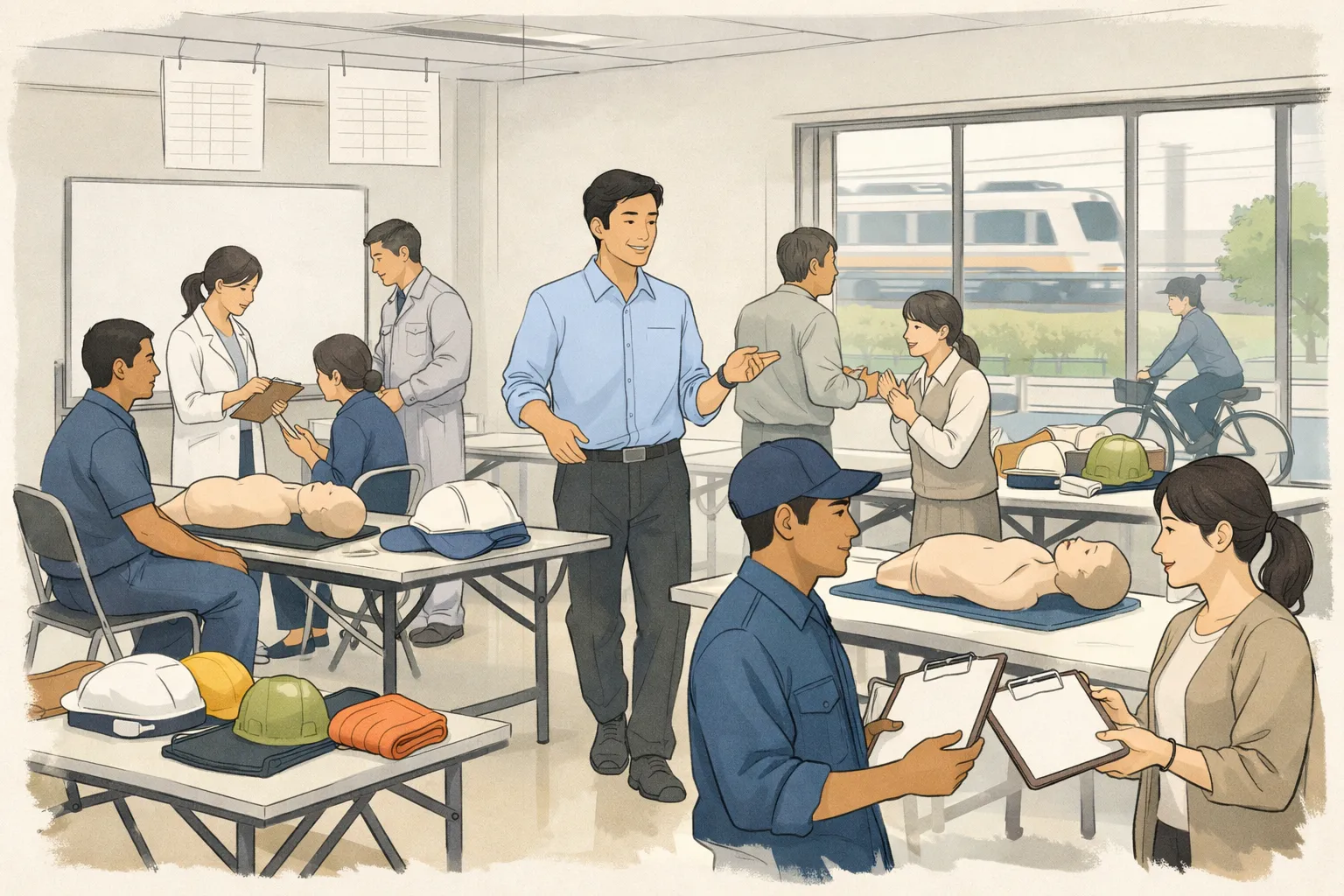
New Graduate Group Training: Understanding company culture and philosophy, acquiring basic business manners.
Job-Specific Training (IT): Learning programming languages and system development techniques.
Job-Specific Training (Sales): Improving customer interaction and proposal skills.
Job-specific Training (Manufacturing):Thorough understanding of manufacturing processes and safety management.
Japanese / Business Documents:Smooth communication skills and document creation abilities.
Compliance:Understanding and practice of legal compliance.
OJT / Mentorship System:Skill enhancement and feedback through practical experience.
When participating in these training sessions, it is good to keep the following tips in mind.
Have specific questions when asking.
Take thorough minutes and organize the important points.
Accept feedback openly and clarify areas for improvement.
After receiving training on such content, you can deepen your understanding by asking the following questions during a meeting.
- "What points from the training left a particularly strong impression on you?"
- "How do you think you can apply this in your actual work?"
- "What steps are you considering for future progress?"
For Nepalese working in major Japanese companies, these training programs are essential elements for job hunting and adapting to the workplace environment. Comprehensive training will be a great help for Nepalese talent to build their careers in Japan.
Comment from the author
For Nepalese talent to succeed in major Japanese companies, utilizing training programs is key. It is important to acquire the necessary skills and knowledge through diverse training content. I hope you actively participate and deepen your understanding through questions. This is a step towards career growth.
When Nepalese people get employed at major companies in Japan, there are many benefits in terms of welfare and career support. First, in terms of welfare, they can receive housing allowances, company housing, commuting allowances, various insurances, leave systems, and even support related to childcare. These systems are designed to ensure that Nepalese people can live comfortably in Japan, providing a solid foundation for their lives. Additionally, there is learning support provided to alleviate the burden of educational expenses, creating an environment that promotes personal growth.
On the other hand, in terms of career support, there are programs such as job rotation, internal recruitment, a transparent evaluation system, and qualification assistance. This allows Nepalese individuals to actively shape their careers and enhance their skills. Furthermore, in globally expanding companies, there are opportunities for global transfers, which is a significant attraction as it allows them to gain international experience.
However, there are several points that Nepalese individuals may overlook when utilizing these systems. In particular, it is important to confirm in advance the availability of family accompaniment, residency renewal support, and information regarding guarantors. Additionally, the extent of language support available is also a crucial factor when choosing a place of employment. By firmly grasping these confirmation points, Nepalese individuals can start their lives in Japan with peace of mind.
Finally, during the offer interview, it is recommended to use the following items as a checklist for reference.
- "Could you please tell me the specific details of the benefits?"
- "What kind of career support programs are available?"
- "Is there support for bringing family to Japan?"
- "How can I proceed with the renewal of my residency status?"
- "I have limited Japanese, but is there language support available?"
Through these questions, Nepalese individuals will be able to have a concrete image of employment in major Japanese companies.
Points
When Nepalese individuals seek employment in major Japanese companies, it is essential to pay attention to the adequacy of benefits and career support. Let's ensure a smooth start by confirming often-overlooked points such as family accompaniment and residency renewal support.
Remarks: It is important to prepare specific questions for the interview.
Cultural Aspects and Workplace Differences for Nepalese Working in Japan
When working in Japan, it is important for Nepalese to understand the cultural aspects they face as "differences in expectations." In particular, in the workplace environment of large companies, there are implicit rules and cultures. By understanding and accepting these, Nepalese can smoothly adapt to the Japaneseemployment environment.
First, regarding the importance of consensus building and groundwork, it is essential for Nepalese to actively express their opinions. In large companies in Japan, it is common to organize opinions before meetings and to do groundwork with influential people. During this process, it is advisable to take notes and organize one's opinions concretely.
Next, these implicit rules are also reflected in the reporting, communication, and consultation (Hōren-sō). Nepalese are expected to have a proactive attitude in resolving issues early through frequent communication. By reporting the situation to supervisors and colleagues and receiving appropriate advice, trust in the workplace can also be built. In particular, understanding deadlines and delivery schedules is essential for working in large companies in Japan.
Regarding meeting management, Nepalese are required to check the agenda in advance and prepare necessary materials. In meetings, it is important not to impose opinions but to seek agreement. By keeping this point in mind, the cooperation in Japanese workplaces can be further enhanced, and the performance as a Nepalese can also improve.
In this way, for Nepalese people to succeed in employment in Japan, it is important to understand the cultural aspects and translate them into specific actions. By acquiring these skills at large companies, it is expected that they will grow as valuable human resources required in an international workplace environment.
Comment from the author
Understanding culture is essential for employment in Japan. In particular, when Nepalese people work at large companies, grasping the unspoken rules and expectations is the key to success. By acquiring these skills, communication in the workplace will become smoother, and a better career can be built. Keep putting in the effort and challenge yourself with confidence.
Differences between Japanese workplace culture and Nepal
Item
Description
Sense of Time
In Japanese workplaces, strict adherence to schedules is emphasized. In contrast, Nepal tends to be somewhat flexible with time.
Hierarchy / Honorifics
In Japanese corporate culture, honorifics towards superiors are important. While respect is also shown in Nepal, friendly communication is common.
Consensus Building
In Japan, consensus is emphasized, and it is important to listen to everyone's opinions. In Nepal, while opinions are also valued, decisions are often left to a few leaders.
Clarity of Instructions
Japanese companies tend to seek detailed and clear instructions. In Nepal, instructions may be relatively vague, and asking questions is encouraged.
Quality Standards
In Japan, high-quality management is required, while in Nepal, quality is important, but the balance with cost is also considered.
How to Assert Yourself
In Japan, there is a tendency to refrain from asserting oneself, while in Nepal, it is more common to express one's opinions.
Teamwork
In Japan, teamwork is emphasized. In Nepal, team cohesion is also important, but individual roles may stand out.
There are clear differences between Japanese workplace culture and Nepali culture, each reflecting its own unique values. As a result, misunderstandings and confusion can arise when Nepalis seek employment in large Japanese companies. For example, due to differences in the perception of time, actions that are not punctual can lead to misunderstandings in Japan, where tardiness is viewed as a problem. In such cases, it is effective to understand the Japanese sense of time in advance and consciously manage time.
In terms of hierarchical relationships and the use of honorifics, Japan has a clear hierarchy, and mishandling this can create an unnatural impression. In Japanese workplaces, it is crucial to pay close attention to the use of honorifics and to acquire appropriate expressions for addressing superiors. Care is also needed regarding the consensus-building process. In Japanese workplace culture, the process leading up to specific opinions is emphasized, and it is necessary to leverage experiences from Nepal to seek a balance when expressing opinions.
Here are three behaviors to be conscious of in the first month. First, be aware of your sense of time and arrive at the workplace early. Next, learn the use of honorifics and maintain an attitude of accepting appropriate feedback in business settings. Finally, actively ask questions to facilitate communication with team members. By practicing these, your chances of succeeding in a large Japanese company will significantly increase.
Key Points
There are clear differences in workplace culture between Japan and Nepal, such as in the sense of time, hierarchical relationships, and consensus-building. When Nepalis seek employment in large Japanese companies, it is important to be aware of the use of honorifics and teamwork. By focusing on time management, learning honorifics, and engaging in proactive communication in the first month, you can achieve a smoother adaptation.
Challenges Faced by Nepalese in the Workplace
The challenges faced by Nepalese in the workplace have various aspects. When working in large Japanese companies, particularly prominent challenges include "language," "evaluation and expectations," "isolation," "religion/food," "overtime and leave," and "harassment/support channels." Each challenge has its own specific signs and countermeasures.
The challenge related to language (keigo and documentation) is that the proper use of keigo is essential in Japan. For example, if a Nepalese person converses without using keigo, they may be considered rude by their colleagues. If such signs are observed, self-study or language training as a self-help measure, as well as consulting with supervisors or the HR department, is recommended.
Next, regarding evaluation and expectations, the clear expectations for results and work processes in Japanese workplaces can sometimes lead to high expectations being a problem. There are differences in evaluation methods, and signs may be seen where Nepalese feel anxious about their own results. It is important to clarify the evaluation criteria and confirm any questions with the responsible supervisor.
The issue of isolation cannot be ignored either. Due to language barriers and cultural differences, Nepalese may feel lonely in the workplace. If such signs are present, actively participating in company events or making efforts to communicate with team members can be effective. Additionally, talking to a trusted colleague can also be beneficial.
Religious / Dietary issues can arise, particularly when there are religious customs, due to a lack of understanding in the workplace. Consideration may be required for the meal times and prayer times of Muslims and Hindus. In such cases, it is important to communicate openly and gain support from leadership.
Overtime / Leave in Japanese corporate culture often involves long working hours. There may be signs that Nepalese workers are surprised by the differences in work styles. Even if overtime is unavoidable, it is necessary to communicate in advance and make an effort to help others understand your limits.
Finally, regarding the issue of Harassment / Consultation, ignoring inappropriate behavior in the workplace can be dangerous. If there are signs of uncomfortable communication, it is effective to consult a trusted mentor or the HR department. In emergencies, it is also recommended to use public consultation services.
Nepalese facing these challenges can create a better work environment through self-help efforts and consultations within the workplace. Particularly, to succeed in major Japanese companies, appropriate information gathering and prompt responses are key.
Workplace Challenges for Nepalese
Nepalese people working in major Japanese companies,
Language, evaluation, isolation, religion, overtime, harassmentWe face various challenges such as these.
Through self-help efforts and consultations, it is possible to build a better workplace environment.
Key Points
Measures for Challenges
Language
Learning Honorifics
Isolation
Strengthening Communication
Advice for Successfully Finding Employment for Nepalese People in Japan
To achieve successful employment for Nepalese individuals in Japan, specific actions are essential. Nepalese individuals aiming for recruitment in large companies should start with improving their documents. It is important to format resumes and work history documents to align with Japanese culture and to present specific achievements and skills in numerical terms. In particular, highlighting unique strengths as a Nepalese individual and showcasing an international perspective can serve as points of differentiation from other candidates.
Next is job selection. In Japan, large companies have specific demands for certain industries and job types, so it is necessary to clarify the industry you want to target and find appropriate job listings. Analyzing your skill set, identifying suitable job openings, and thinking concretely about how you can contribute when applying is effective.
After that, interview practice is important. Interviews at major companies in Japan not only assess skills but also evaluate communication abilities and adaptability. By going through mock interviews, you can organize your thoughts on commonly asked questions and practice your responses, allowing you to approach the real interview with confidence. Nepalese individuals can make a good impression on interviewers by leveraging their cultural background and sharing rich perspectives.
Lastly, one must not forget about residency status verification. Having the appropriate residency status is essential for employment in Japan, so be sure to obtain the necessary qualifications according to your industry and not neglect the renewal procedures. By following these steps, a realistic path to being hired by major companies will open up.
```html
Success in Employment for Nepalese
Starting with document improvement, job selection, interview practice, and residency status verification are important.
These steps will lead to employment at major companies in Japan.
Step
Content
Document Improvement
Organize Resume
Job Selection
Find Suitable Job
Interview Practice
Conducting Mock Interviews
Residence Status Verification
Obtaining the Appropriate Qualifications
```
How to Utilize Your Network
How to Utilize Networks
University / Japanese Language School
Japanese universities and Japanese language schools are important bases for Nepalese aiming for employment in Japan. At these educational institutions, you can deepen your Japanese language skills and specialized knowledge, as well as understand Japanese corporate culture. If you aim for employment at major companies, learning at these institutions will be a significant advantage.
Hometown Community
Hometown Nepalese communities serve as valuable sources of information for job hunting in Japan. In these communities, you can gain insights from the experiences of Nepalese working at Japanese companies and obtain recruitment information from major companies. By actively participating and exchanging information, you can advance your job search in Japan favorably.
Alumni
Graduates of Japanese universities and Japanese language schools who are Nepalesealumni can be valuable advisors regarding employment in Japan. By leveraging their experiences and knowledge, you can smoothly navigate the recruitment process for major companies. It is effective to reach out and seek their advice.
LinkedIn, etc.
LinkedIn and other business social networks are effective tools for job hunting in Japan. You can connect directly with recruiters from Japanese companies and Nepaleseemployees. By enhancing your profile and actively networking, you can expand your opportunities for recruitment at major companies.
Recruitment agents
Recruitment agents are a valuable service for Nepalese individuals hoping to find employment in Japan. They have information on Japanese companies and support hiring at major companies. It is important to choose a reliable agent and clearly communicate your hopes and conditions.
Corporate Events
Company information sessions and seminars are corporate events that are beneficial for job hunting in Japan. At these events, you can interact directly with recruiters from Japanese companies. Actively participating and asking questions or promoting yourself is effective for obtaining hiring information from major companies.
Positioning of Referrals
Referrals are a very effective method in job hunting in Japan. Many major companies have employee referral systems, and referrals from trusted Nepalese individuals can work in your favor during the hiring process. It is important to build trust and actively ask for referrals.
Summary of Key Points
Nepalese aiming to find employment in Japan should utilize universities/japanese language schools, local communities, alumni, LinkedIn, recruitment agencies, and corporate events. In particular, it is important to increase hiring opportunities at major companies through referrals. Building trust and actively sharing information is essential.
Tips for Adjusting to Life in Japan
Housing and Procedures
When starting to live in Japan, securing housing is the first priority. Use Japan's major real estate companies and rental information sites to find properties that match your desired area and conditions. When signing a contract, you may need a certificate of employment from your Japanese employer and documents showing your residency status as a Nepalese. Additionally, it is recommended to promptly complete resident registration and obtain your My Number, as well as other administrative procedures in Japan.
Medical
In Japan, enrollment in the National Health Insurance is mandatory. When you secure a job in a major company, they usually provide enrollment in health insurance, but depending on your residency status as a Nepalese, you may also need to enroll in National Health Insurance. Medical institutions in Japan are of high standard, and more hospitals are providing interpretation services for Nepalese. It is advisable to research nearby medical institutions in advance and gather necessary information for peace of mind.
Financial Management
In Japan, with employment, it becomes necessary to manage salary payments from major companies and living expenses. When opening a bank account in Japan, you may need your residency status as a Nepalese and your My Number. Additionally, when your employer in Japan transfers your salary, it is also important to consider the remittance fees and exchange rates for sending money to Nepal. Some banks in Japan may offer services for Nepalese, so it is convenient to check in advance.
Japanese Language Learning
Learning Japanese is essential for smoothly conducting job hunting activities and daily life in Japan. In Japan, many large companies often require Japanese language skills. Let's improve our Japanese skills by utilizing Japanese language schools and online courses for Nepalese. It is also important to prepare for the use of Japanese in job interviews and daily tasks at Japanese workplaces.
Mental Care
Living in a foreign country can cause stress and anxiety during job hunting activities and daily life in Japan. There are counseling services and support groups for Nepalese people in Japan. Additionally, some large companies in Japan may have systems in place to support employees' mental health. Actively utilize resources to maintain your mental health during job hunting activities and life in Japan.
Disaster and Disaster Prevention
Japan is a country prone to natural disasters such as earthquakes and typhoons. When conducting job hunting activities and daily life in Japan, it is essential to confirm actions and evacuation locations during disasters. Some large companies in Japan may provide disaster training and information for employees. Additionally, local governments and community organizations in Japan offer information and support activities during disasters. To ensure safety during job hunting activities and life in Japan, it is important to gather and prepare this information in advance.
Relationships outside of work
In Japan, it is also important to build relationships outside of work to enrich your job search activities and daily life. In Japan, major companies may encourage employee interaction events and club activities. Additionally, by participating in local communities in Japan or gatherings of Nepalese people, you can enhance your life in Japan. To make your job search activities and life in Japan better, let’s actively build relationships.
Points
To get accustomed to life in Japan, it is necessary to prepare in various areas such as housing, healthcare, and financial management.
Important: As a Nepalese person, you can build better relationships by utilizing Japanese and participating in local communities.

 03-6222-9855
 Guide to Working in Japan
 History
 About this site
 Login


 About this site
 Contact





































 COLUMN CATEGORY
 2026.08.03
Comment from the author
For Nepalese talent to succeed in major Japanese companies, utilizing training programs is key. It is important to acquire the necessary skills and knowledge through diverse training content. I hope you actively participate and deepen your understanding through questions. This is a step towards career growth.