A Must-See for Mongolians Aiming to Work in Japan! Dormitory and Housing Support Information
A Must-See for Mongolians Aiming to Work in Japan! Dormitory and Housing Support Information
Mongolians
寮・住居サポート付
2026.08.03
Information on Dormitory and Housing Support Necessary for Mongolians Aiming to Work in Japan
For Mongolians aiming to work in Japan, housing anxiety is a significant issue. Especially when the options for dormitory and housing support and the dormitory fees are unclear, job hunting can feel even more challenging. Japan is a foreign land with different culture and living environments, making the selection of a place to live one of the important factors. Mongolian international students and job seekers need to find reliable housing while conducting their job search. Here, we will introduce ways to alleviate these anxieties through information on types of dormitories, the average dormitory fees, methods for searching for housing, points to note, and personal experiences.
When Mongolians seek employment in Japan, commonly used services with dormitory and housing support include company-provided employee dormitories and student dormitories. These dormitories are equipped with necessary facilities for daily life, providing a safe living environment even for those living in Japan for the first time. Regarding dormitory fees, they vary depending on the region and type of facility, but the average is generally around 50,000 to 80,000 yen per month. Additionally, when searching for a dormitory, it is advisable to utilize job search websites and information sites for international students.
To succeed in finding employment in Japan, it is important to choose a dormitory with housing support. Especially for Mongolians coming to Japan for the first time, the language barrier and cultural differences can often lead to stress. Living in a dormitory increases opportunities to interact with other Mongolians and receive support in daily life, offering many advantages. Additionally, by listening to the experiences of those who have gone through it, you can obtain more specific information and approach your job search with confidence.
In the following chapters, we will delve into the current state of the job market in Japan and the specific benefits of dormitory and housing support. Based on this knowledge, we hope to help Mongolian individuals overcome their anxieties and enrich their lives in Japan. By finding reliable housing and establishing a stable living foundation, job hunting can proceed more smoothly.
Notice
Since information may vary depending on the region and type of dormitory, please refer to reliable sites when confirming specific details. Additionally, dormitory fees and housing contract conditions may change, so it is important to always check for the latest information.
Current State of the Job Market for Mongolians in Japan
The Mongolian job market in Japan has shown diversification and expansion in recent years. In particular, we will organize the industries and occupations that are attracting attention as employment destinations for Mongolians, the required Japanese language level, and the requirements for residency status.
Industries such as manufacturing, construction, agriculture, nursing care, and the food service industry are cited as employment destinations for Mongolians. In these industries, there is a growing trend of Mongolian job seekers.
When Mongolians seek employment in Japan, Japanese language proficiency is an important factor. In particular, a level of N4 or higher on the Japanese Language Proficiency Test (JLPT) is often required. This level of Japanese proficiency demonstrates basic understanding and expressiveness necessary for business communication.
To work in Japan, Mongolians need the appropriate residency status. The main residency statuses include Technical, Humanities, and International Services and Specified Skilled Worker. Technical, Humanities, and International Services requires a university degree or more than 10 years of practical experience. On the other hand, Specified Skilled Worker requires passing a skills test in a specific industry and a Japanese language test (N4 or higher).
By meeting the requirements for these residency statuses, Mongolians can secure employment in Japan. However, obtaining residency status has certain conditions, and it is important to clear these.
Furthermore, when Mongolians seek employment in Japan, there is a tendency to prefer job listings that offer dormitory and housing support. This is to reduce the burden of initial costs, secure a guarantor, and clear rental screening, thereby lowering the hurdles related to housing. Job listings with dormitory and housing support have become an important factor in supporting Mongolians in their job search activities.
Summary of Key Points
The job market for Mongolians in Japan is expanding, with manufacturing and nursing being popular industries. Japanese language proficiency of N4 or higher is required, and the requirements for residency status also vary. Additionally, job listings with dormitory and housing support are particularly favored due to their advantages in initial costs and rental screening.
The Importance and Benefits of Dormitory and Housing Support
Benefits
Significant reduction in initial costs is possible. It is often the case that the required security deposit, key money, and guarantee fees are waived or reduced.
In many cases, a guarantor is not required, providing great peace of mind, especially for Mongolians coming to Japan for the first time.
Since housing is secured immediately upon entry, it helps avoid unstable situations.
Commute to work is convenient, making it easy to establish a stable living foundation.
Support is available for starting your life, and you can receive necessary procedures and information.
Disadvantages
When moving into a dormitory, it is necessary to strictly adhere to the rules set by each facility.
There may be restrictions on the freedom to change residences, making it difficult to leave a familiar environment.
Under certain conditions, dormitory fees may increase, so it is necessary to check in advance.
With dormitory and housing support, employment for Mongolians in Japan offers many advantages in terms of overall living, finances, procedures, and even mental well-being. First, in terms of living conditions, having a place secured immediately after entering the country is a significant source of reassurance for Mongolians. It also makes commuting to work easier, allowing them to focus more on their jobs.
From a financial perspective, it is important to consider the initial costs that are usually incurred. Particularly, the exemption or reduction of key money, deposit, and the fees for guarantor companies that are often required for many rentals lightens the financial burden. This allows Mongolians who have just entered the country to allocate their living funds to other necessary expenses.
In terms of procedures, many cases do not require securing a guarantor when signing a rental contract, allowing for a smooth contract conclusion. This facilitates the job search process for Mongolians efficiently. Especially for those coming to Japan for the first time, support in these procedural aspects is a great help.
On the mental side, having support for housing reduces stress and allows for a secure start to a new life. This makes it easier for Mongolians to concentrate on their work and improves their adaptability.
However, with dormitory and housing support, there are also disadvantages. For example, when moving into a dormitory, one must adhere to established rules, which may limit the freedom of living. The freedom to change residences is also restricted, and stress may arise until one becomes accustomed to the environment. Additionally, there is a risk of dormitory fees increasing, so it is important to check the support details and costs in advance. By understanding these advantages and disadvantages, Mongolians can choose employment in Japan that better suits them, especially in terms of job opportunities.
Points
Support for dormitories and housing for Mongolian people seeking employment in Japan has the advantage of reducing initial costs and easing the burden, allowing for a secure start to a new life. However, it is important to consider the disadvantages as there are restrictions on rules and moving.
What dormitory and housing support is available for Mongolians in Japan
Mongolian individuals can receive dormitory and housing support in Japan, but it is important to note that this varies by company. The methods of providing dormitories and housing can differ significantly based on company policies and regions, so it is crucial to identify a support system that matches your desired conditions. For example, terms like company housing, leased company housing, housing allowance, and moving assistance can be easily confused without proper knowledge, but each of these offers different types of support, and it is necessary to check the details to find the best option for yourself.
Additionally, it is important to understand what determines the specific menu and the market price of dormitory fees. This is essential for Mongolians to conduct their job search smoothly in Japan. By confirming in advance what conditions are provided for living and what the dormitory fees will be, it becomes easier to plan a budget and start a new life with peace of mind.
Moreover, when advancing your job search, having a solid understanding of the dormitory conditions allows you to live in an environment that suits your lifestyle. When moving from Mongolia to Japan, especially during the initial choice of residence and job selection, there are many anxieties involved. Among these, whether there is reliable dormitory and housing support is a very valuable point in building a foundation for your future life. First, carefully compare the conditions and find a residence that meets your needs, as this is the first step towards a secure life.
Comment from the author
For Mongolians aiming for employment in Japan, dormitory and housing support is extremely important. By understanding the support provided by each company and making the best choice for yourself, you can start your new life with peace of mind. Gather information thoroughly, find a residence that suits you, and enjoy a fulfilling life in Japan.
A Thorough Explanation of Dormitory and Housing Support
In job listings with dormitory and housing support, we will explain the specific assistance provided to ensure that Mongolian individuals can live in a safe environment. The following items can be considered.
Property Arrangement: While the company often arranges housing properties, the options may be limited based on preferences and conditions. It is important to check properties that meet the needs of Mongolian individuals.
Contract Name: Typically, the company will sign the contract in its name, but it is necessary to confirm this as it may directly involve the individual in case of emergencies.
Guarantor / Guarantee Company:Many companies use guarantee companies. However, for Mongolian individuals, there are language barriers, so it is recommended to gather information in advance.
Initial Cost Assistance:The company may assist with part of the initial costs, but there are cases where they cover the full amount, so it is essential to confirm the details.
Furniture and Appliances:There may be cases where they are provided and cases where they are not. It is important to check the contents of the items provided by the company.
Wi-Fi and Utility Costs:Generally, these are self-funded, but some companies may cover them as part of their benefits.
Transportation:Some companies provide transportation between the workplace and residence, so if you have concerns about commuting, it is advisable to check.
Living Orientation: It is important to receive orientation from the company, especially if you have concerns about Japanese culture and lifestyle habits.
Multilingual Support: This is also a very important point, so please check whether there is support to eliminate language barriers.
Emergency Contact: Check whether a contact system is in place in case something happens, and create a situation where you can feel secure.
Move-Out Settlement: By confirming the settlement conditions and necessary procedures for moving out in advance, you can avoid troubles.
These points are important for Mongolians to secure a comfortable environment with dormitory and housing support when working in Japan. Don't forget to check the following items during job postings and interviews.
Specifics of Dormitory and Housing Support
About Initial Cost Assistance
Availability of Furniture and Appliances
Rules for Utility Cost Burden
Language Support System
For Mongolians to smoothly start their life in Japan, it is important to have sufficient information when choosing job offers that include dormitory and housing support.
Summary of Key Points
This article explains the specific details of dormitory and housing support for Mongolians aiming to find employment in Japan. Be sure to confirm the details during the interview, including property arrangements, initial costs, and support for furniture and appliances. It is essential to obtain accurate information to ensure a comfortable start to your life.
Average Dormitory Costs and Their Cost-Effectiveness
When Mongolians seek employment in Japan, job listings with dormitory and housing support provide a sense of security in daily life. However, understanding the market rate for dormitory fees, initial costs, and the actual burden is important for long-term life planning.
The dormitory fees vary significantly depending on the region and type. For example, in the Tokyo metropolitan area, monthly fees typically range from 50,000 yen to around 100,000 yen, while in Kansai and regional cities, it is common to see fees from 30,000 yen to 70,000 yen. Additionally, in the case of employee dormitories or company-leased housing, companies may cover part or all of the costs. On the other hand, for general rentals, some companies provide 30% to 50% of the rent as housing allowance.
Initial costs typically include security deposit, key money, brokerage fees, and guarantee fees. The total of these costs is generally considered to be around 150,000 yen to 300,000 yen. Companies may cover all or part of these initial costs, but it is important to confirm the details in the job information or during the interview.
Deductions from salary for housing costs and the duration of assistance also affect the actual burden. For example, if rent or utilities are deducted from the salary, the take-home amount decreases. Additionally, housing allowances and rent subsidies often have payment periods and maximum amounts set, making it important to check these conditions in advance.
However, it is not a simple equation that lower dormitory fees = better deal. It is important to consider the overall cost-effectiveness, including commuting time, the quality of facilities, renewal costs, exit fees, and the duration of assistance. For instance, a longer commuting time may decrease the quality of life. Additionally, if the facilities are old, it may become difficult to live comfortably. Furthermore, if the renewal costs or exit fees are high, they may become a long-term burden.
By comprehensively evaluating these elements and choosing job listings with dormitory and housing support that match your lifestyle and values, you will make a choice that offers cost-effectiveness. Be sure to thoroughly check these details in job information and during interviews to make a satisfactory choice.
Summary of Points
When Mongolians seek employment in Japan, it is important to understand dormitory fees, initial costs, and actual burdens. Since these vary by region and type, it is necessary to consider the cost-effectiveness in relation to your own needs when making a selection.
Information on Job Seminars for Mongolian International Students in Japan
Mongolian international students often face various challenges when advancing their job search activities in Japan. In particular, many international students struggle with creating self-PR. Understanding cultural and language differences is crucial for effectively showcasing one's strengths and experiences. Additionally, knowledge about the necessary residency status is also essential. Without obtaining the appropriate visa based on Japanese laws and regulations, the job search process may not proceed smoothly, making prior information gathering necessary.
Furthermore, company research is indispensable for job hunting in Japan. By understanding which companies are looking for what kind of talent, it helps in finding a workplace that suits you. Additionally, preparing for Japanese interviews is important. To overcome the language barrier and approach interviews with confidence, it is necessary to improve Japanese language skills. Therefore, efforts to enhance each skill in advance are required.
To solve these issues, a job seminar for Mongolian international students is very beneficial. This seminar provides the latest information and plays a role in bridging the "information gap." Additionally, by participating in the seminar, you will also have the opportunity to access job listings with housing support. This allows you to secure a living environment where you can feel safe once you get a job.
Ultimately, for Mongolians to smoothly advance their employment in Japan, it is essential to gather solid information and receive appropriate support. By utilizing such seminars, you can expand your chances of finding a suitable job with housing support and also understand the necessary housing costs and living environment in advance, which will lead to a successful job search.
Notice
Mongolian international students need to pay attention to many points in their job search in Japan, such as self-promotion, visa status, company research, interviews, and housing conditions. By diligently gathering information and utilizing reliable seminars and support, you can get closer to success. Additionally, understanding the housing support and costs provided by each company is also essential. It is important to grasp these aspects thoroughly.
A job seminar for Mongolian international students will be held, where participants will learn the basics of self-analysis and industry research.
2023年11月
The writing of entry sheets (ES) and interview preparation are discussed, with points introduced that take cultural differences into account.
December 2023
Details regarding post-offer procedures are explained, and the method for obtaining residency status is clarified.
To succeed in job hunting, prior preparation is essential. In particular, the job seminar aimed at Mongolian international students is structured to systematize the specific processes and progress step by step. The first step is self-analysis. It is necessary to understand your strengths and interests and consider what industries you can thrive in. A clear self-understanding at this stage greatly influences later industry research, so it is important to engage in it thoroughly.
Next, we will move on to creating the entry sheet (ES), which is particularly important for Mongolian students. Here, you will consider the culture of the companies you are applying to and the type of personnel they seek, shaping your own experiences to match. The key point is to adhere to expressions and styles unique to Japan. Additionally, during interviews, it is important to focus on the aspects seen in Japanese interviews, paying attention to the correct use of honorifics, expressions, and attitudes.
Understanding cultural differences is also necessary. In particular, the differences in reporting, communication, and consultation (Hōren-sō) and the sense of time can have an impact, so prior confirmation is essential. Whether you can act with awareness of these points in the interview situation can significantly change the impression you make. Furthermore, preparation is needed for the procedures after receiving a job offer. By receiving specific explanations about how to obtain residency status and the necessary documents, you can proceed with the procedures smoothly.
Finally, before participating, let's prepare the necessary items and examples of questions. It is advisable to have the original copies of your resume and ES, records of your company research, and materials that can specifically explain your strengths ready. By not neglecting such prior preparations and engaging thoroughly, you will be able to approach the interview without nervousness. Preparing to take the first step towards employment in Japan will be a shortcut to success.
Comment from the author
Job hunting is an important process that involves many steps. For Mongolian international students in particular, understanding cultural and language differences is key to success. Please prepare thoroughly and approach it with confidence. I sincerely support your endeavors.
Convenient seminar participation methods with dormitory and housing support
Job offers with dormitory and housing support
Job information that offers support for dormitories and housing is particularly attracting attention from Mongolian international students.
To succeed in job hunting, it is important to catch information about jobs with dormitory and housing support. First, there are options for participating in seminars, either online or in person, each with its own advantages. Online seminars allow participation without geographical constraints, while in-person seminars provide more opportunities to build direct human relationships. Mongolian international students aiming for employment in Japan should choose based on their own lifestyle.
Next, the characteristics of the seminars also vary depending on the organizing body. University-hosted seminars often have abundant job information utilizing the campus network, while seminars hosted by local governments, recruitment agencies, or companies provide opportunities to directly encounter job information and company culture. In particular, choosing seminars hosted by organizers who have a deep understanding of Mongolians can lead to more specific support.
When participating in seminars, the timing to ask questions about dormitory fees and housing support is important. Generally, there is often a Q&A session set from the middle to the end of the seminar, so be sure to clearly ask any points of concern at that time. Additionally, if individual consultations are possible, actively utilize them to obtain information that suits you. However, be cautious about recruitment and fees when participating. To avoid unnecessary contracts, make sure to thoroughly confirm the details.
Finally, confirming contracts after participation is crucial. Especially for Mongolians aiming for employment in Japan, understanding the contract details is essential. Be sure to check important contract items, understand the extent of dormitory and housing support provided, the amount of dormitory fees, and the contract conditions to prevent future troubles. By being aware of these points and taking proactive action, it will lead to the success of Mongolian international students' employment in Japan.
Point
Mongolian international students should utilize job listings with dormitory and housing support when aiming for employment in Japan. Gathering information at seminars and confirming contract details are the keys to success.
Helpful for Living in Japan! Dormitory Cost-Saving Tips for Mongolians
ℹ️ Additional Information
Many Mongolian international students are likely to live in Japan at a particularly low cost with dormitory and housing support. However, it is necessary to consider many expenses in addition to dormitory fees.
To stabilize life in Japan, optimizing dormitory fees is very important. However, dormitory fees should be considered not only on a monthly basis but also in terms of initial costs, living expenses, and commuting costs. After Mongolians achieve employment in Japan, it is desirable to have the ability to save money and send remittances to family by receiving public assistance. To achieve this, it is essential to have a perspective that reviews the overall economic situation. In particular, by choosing job offers with dormitory and housing support, it is possible to secure a stable living environment and reduce living expenses.
Furthermore, mastering saving techniques in daily life forms the foundation for acquiring skills and qualifications that are in demand in the market, as well as for saving money. For example, by choosing a dormitory that can be contracted at a low price, monthly burdens can be significantly reduced. By estimating initial costs in detail and understanding how much funding is needed, it is also possible to avoid situations where one is confused by sudden expenses.
Additionally, reviewing commuting costs is important. For Mongolians to lead a stable life after employment, it is necessary to choose housing that emphasizes the distance from the workplace and transportation methods. As an option, properties with dormitory and housing support near the company are the most rational. Such choices can reduce unnecessary transportation costs and increase leisure time. This allows for self-investment to enhance one's expertise and the ability to send funds to family.
By avoiding impulsive choices and making calm judgments, Mongolian international students can enrich their lives in Japan and connect to successful job hunting activities. It can be said that conducting an overall cost evaluation and planning for life from a long-term perspective is a wise choice.
Checkpoint
To stabilize life in Japan, optimizing dormitory costs is essential. By considering not only the monthly fees but also initial costs and commuting expenses, you can reduce living expenses by choosing job offers that include dormitory and housing support. This enables savings, obtaining qualifications, and remitting money to family, leading to a stable life.
In choosing a property, it is important to prioritize the location of the dormitory. Being close to your workplace can save you costs and time on commuting. This point is particularly important for Mongolian individuals.
Next, when selecting a dormitory type, it is advisable to consider shared living arrangements such as share houses or room shares. This may help reduce dormitory expenses.
Before signing a contract, it is also important to thoroughly check the subsidy conditions. Be sure to understand the duration of rent subsidies, renewal fees, move-out costs, and the availability of furniture and appliances.
Furthermore, after moving in, it is essential to check the utility and communication costs. By fully understanding the rules for using shared facilities and avoiding unnecessary expenses, you can lead a more stable life.
Reviewing the contract details: Check for any discrepancies between the actual living conditions and the contract terms.
Researching the Surrounding Environment: Check the proximity of essential facilities for daily life.
Considering the Distance to Work: Understand the congestion during commuting hours and make choices that fit your lifestyle.
Ways to Reduce Utility Costs: Aim for an eco-friendly lifestyle and prevent unnecessary expenses.
The risk of choosing solely based on low cost is that if a good living environment is not secured, it can affect the quality of life in the long term. This is especially important for Mongolians aiming to find employment in Japan; remember that a stable living environment can lead to better outcomes.
Key Points
To keep dormitory costs down, it is important to choose the right property, confirm details before signing a contract, and manage your living situation after moving in. Choosing properties close to work or shared living arrangements and understanding the conditions for rent assistance are essential. Additionally, by eliminating waste in utility and communication costs, you can achieve a stable living situation. Instead of solely pursuing low costs, consider the quality of your living environment as well.
How to utilize the provided services and points to note
By fully utilizing the support provided by the company, Mongolians can enjoy a more comfortable working life in Japan. Services such as moving assistance, equipment loans, interpretation, lifestyle consultations, and welfare benefits can provide economic advantages when used appropriately. However, misusing these services can lead to unnecessary expenses and troubles. It is particularly important to check the details in advance regarding salary deductions, penalties, and conditions for moving out. Neglecting this can result in unexpected costs, ultimately increasing dormitory expenses.
The rules regarding the name on the leased company housing and the prohibition of double contracts should not be overlooked. Improper procedures can pose risks of contract termination or loss of residency rights, so it is important to act cautiously. To effectively utilize support, it is essential for Mongolians to have a solid understanding of their rights and obligations. Let’s make good use of housing support and lead a comfortable life.
As important matters to confirm before joining the company, it is essential to thoroughly understand the contract details, the distance to the workplace, and the utility costs after moving in.
Finally, for Mongolians to succeed in finding employment in Japan, it is important to carefully check these points and make the most of the services available. Proper use of dormitory and housing support will be the first step towards achieving a comfortable life.
Important Point!
For Mongolians seeking employment in Japan, effectively utilizing the provided dormitory and housing support is key.
By effectively utilizing moving assistance and interpretation services, you can achieve a comfortable life, but it is also essential to confirm the contract details and conditions for moving out in advance.
Confirmation Items
Importance
Contract Details
High
Distance from Workplace
Middle
Experiences! The Dormitory Life of Mongolian Workers in Japan
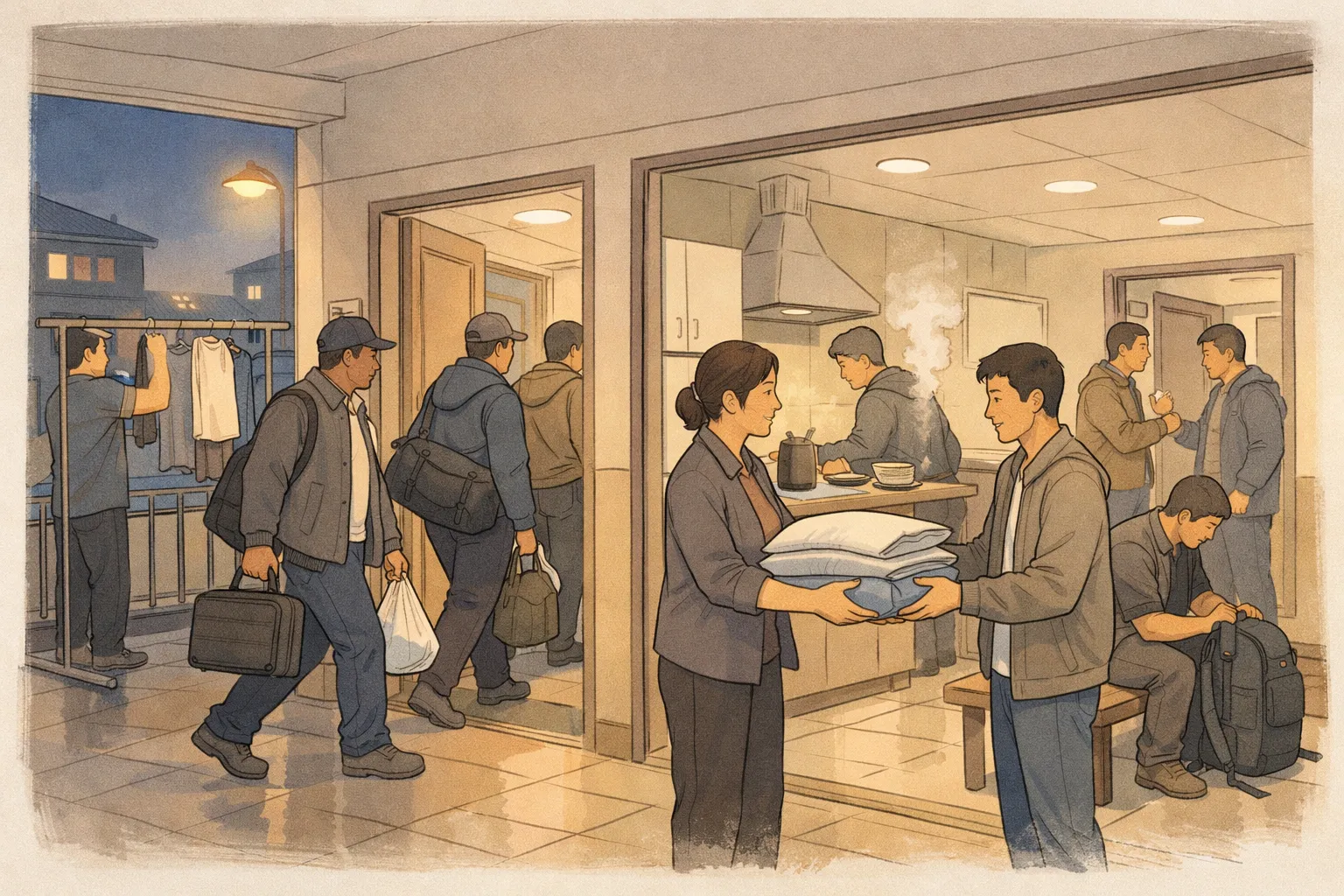
In this chapter, we will explore the importance and impact of communal living through the experiences of Mongolian workers living in dormitories in Japan. We will vividly convey how effective the system of dormitory and housing support is for Mongolians to find employment and build a stable life in Japan. However, it is important to understand that each experience varies, and the situation can differ depending on the region and company where one works, as well as the type of dormitory.
The advantages of dormitory and housing support are numerous. For example, when Mongolians start their new life in Japan, it is crucial to have an environment where they can spend time with peers who share the same background to overcome language and cultural barriers. This enhances communication skills and adaptability, increasing motivation towards employment. Additionally, communal living offers significant economic benefits. By keeping rent low, it greatly reduces the monthly dormitory fees. Such affordable housing brings stability to overall living conditions, allowing for savings and remittances to family.
Next, the selection of the dormitory environment becomes a key factor for success. For instance, choosing a dormitory and housing support property close to the workplace shortens commuting time and reduces unnecessary transportation costs. This choice can make daily life more comfortable and increase free time. Securing study time for self-investment and obtaining qualifications is also a significant advantage. Additionally, it deepens interactions with new friends from Mongolia, providing unique cultural experiences.
Overall, the choice of environment plays a very important role in enabling Mongolians to enrich their lives and work diligently in Japan. The system with dormitory and housing support helps reduce financial burdens, fosters community formation, and promotes individual growth. These elements together lead to successful employment activities. For Mongolians, keeping these points in mind while searching for a suitable living environment will be the key to a successful new life in Japan.
Comment from the author
The dormitory life of Mongolians in Japan is a valuable opportunity to deepen interactions with peers while receiving financial support. A stable living environment enhances focus on work and improves quality of life. Everyone should choose a dormitory that suits them and enrich their new life.
About the actual dormitory environment and living conditions
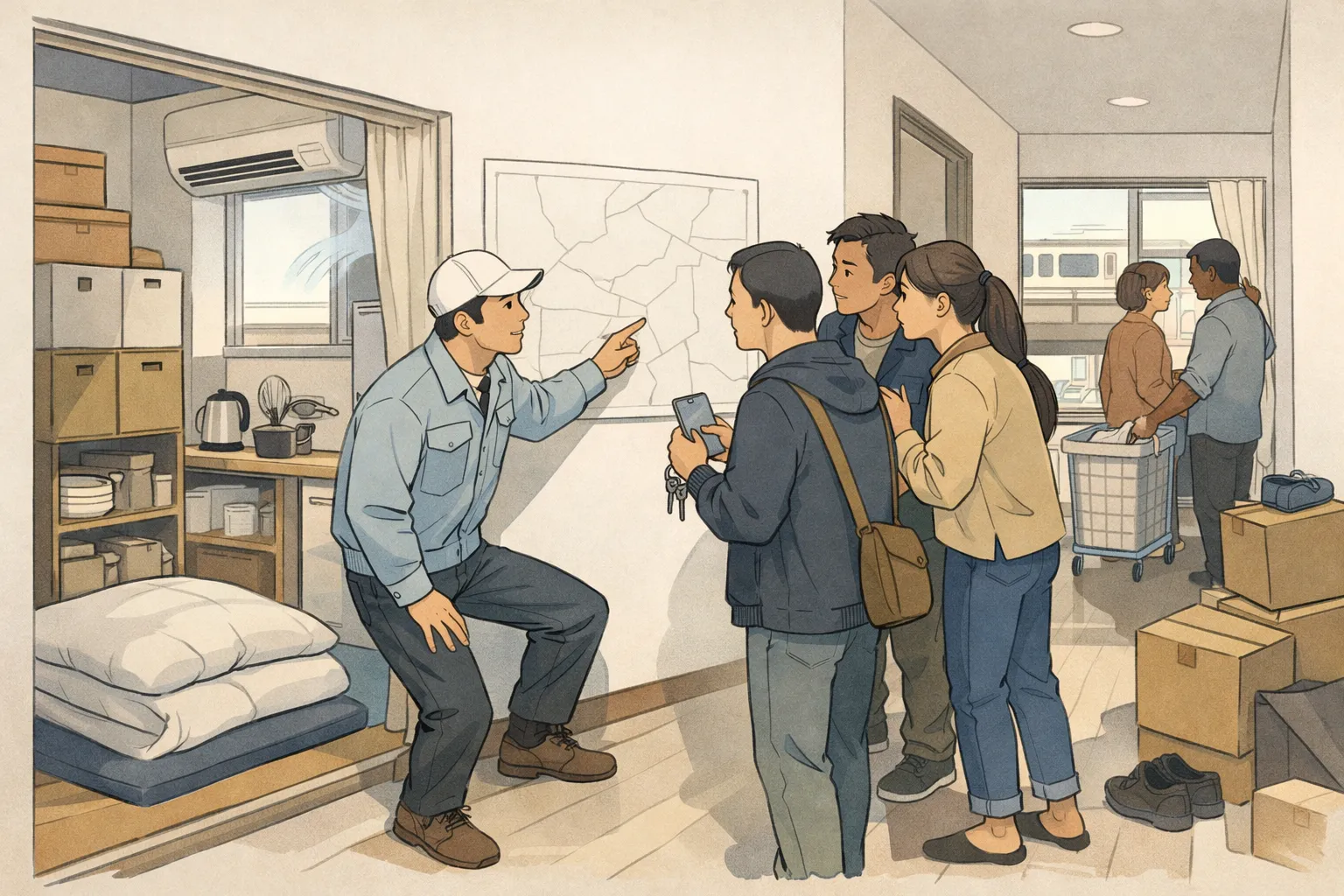
Through a fictional case study of a Mongolian finding employment in Japan and experiencing an environment with dormitory and housing support, we will provide detailed information about the dormitory environment and living conditions.
Room Size
Positive Aspects:The dormitory rooms have a size of 7.5㎡ or more per person, ensuring privacy. This size complies with Japanesehousing standards, allowing for a comfortable stay.
Issues:In some rooms, storage space was limited, requiring creativity in organizing belongings. Particularly, in Mongolian culture, there are many seasonal clothes and decorations, which sometimes led to storage shortages.
Points to Check in Advance:It is advisable to check the details of the room's storage space before moving in and prepare additional storage furniture if necessary. Additionally, in Japanesehousing, the methods of using storage and organizing differ, so gathering information in advance will make the process smoother.
Facilities
Positive Aspects: The dormitory is equipped with basic appliances such as air conditioning, heating, refrigerator, and microwave, allowing for a comfortable living experience. In particular, in Japan, these amenities are often standard in housing, which was convenient.
Negative Aspects: In some dormitories, the kitchen facilities were basic, making cooking inconvenient at times. Particularly, in Mongolian food culture, there is a variety of cooking utensils and seasonings, and I sometimes felt that these were not sufficiently provided.
Points to Check in Advance: It is advisable to check the kitchen facilities and the availability of cooking utensils before moving in, and prepare your own if necessary. Additionally, in Japan, the rules and manners for cooking may differ, so it is good to research this in advance.
Common Areas
Positive Aspects: The common areas of the dormitory were kept clean, and there were washing machines and dryers available. These facilities are common in Japanesehousing, making them convenient to use.
Issues Faced:The usage hours of the common areas were restricted, particularly the time slots for using the washing machine, which required coordination with other residents.
Points to Confirm in Advance:It is advisable to check the usage hours and rules of the common areas before moving in, so that adjustments can be made with other residents. Additionally, in Japan, there can be strict manners regarding the use of common areas in residences, so gathering information in advance can make things smoother.
Curfew
Positive Aspects:There were no particularly strict curfews in the dormitory, allowing for freedom to go out. This is a common rule in Japan, and I was able to live comfortably.
Issues Faced:In some dormitories, it was necessary to contact the manager regarding entry and exit at night, which sometimes felt cumbersome.
Points to confirm in advance:It is advisable to check the curfew and rules for going out before moving in, and to understand how to contact the manager if necessary. Additionally, in Japan, the rules for entering and exiting residences may be strict for security reasons, so it is a good idea to research this in advance.
Visitors
Positive aspects:In the dormitory, if permission is obtained in advance, friends and family can be invited to the room, providing an opportunity for social interaction. This is a common rule in Japan and was convenient.
Issues encountered:In some dormitories, prior application is required for visitors, and the process can feel cumbersome.
Points to confirm in advance:It is advisable to check the rules and procedures for visitors before moving in and to prepare as necessary. Additionally, Japan's **residences
Comment from the author
Information for Mongolians seeking employment in Japan, with dormitory and housing support, is extremely important. By understanding the actual dormitory environment and housing conditions, one can prepare for a comfortable life. By keeping these points in mind, you can start your new life with peace of mind.
Success stories of Mongolians in finding employment in Japan
How to find job listings with dormitory and housing support
For Mongolians aiming to find employment in Japan, it is important to find job listings with dormitory and housing support. First, utilize Japanese job sites and recruitment agencies to search for job listings with dormitory and housing support. Additionally, consulting with Japanese language schools and employment support organizations in Mongolia to obtain job information from reliable sources is also effective. Furthermore, it is recommended to regularly check the official websites and social media of Japanese companies to obtain the latest job information.
Questions about dormitory fees and deductions confirmed during the interview
During the interview, when choosing job listings with dormitory and housing support, it is important to ask specific questions about dormitory fees and deductions from your salary. For example, asking "How much is the monthly dormitory fee?" or "Please tell me the items and amounts of deductions from my salary" can help you understand your actual living expenses. This will make it easier to plan your life in Japan.
Japanese Language Learning After Joining
After starting your job in Japan, improving your Japanese skills is essential. Many companies offer support programs for Japanese language learning. For example, there are Japanese classes once a week and training to learn Japanese expressions necessary for work. By actively utilizing these programs and enhancing your Japanese abilities, communication in the workplace will become smoother.
Reporting and Communication in the Workplace
In Japan, workplace culture emphasizes reporting, communication, and consultation (Horen-so). When issues or questions arise in the course of work, it is essential to appropriately report, communicate, and consult with supervisors and colleagues. This helps build trust within the team and improves work efficiency.
Adaptation to Daily Rhythm
Adapting to the daily rhythm in Japan is also important. In particular, by getting used to the working hours, break times, and meal times in Japan, you can maintain a healthy lifestyle. Additionally, understanding and actively participating in Japanese culture and customs deepens relationships with the workplace and the local community.
Advice for Mongolians Seeking Employment
- Actively search for job listings that offer dormitory and housing support, and ask specific questions about dormitory fees and deductions during the interview.
- Utilize opportunities for Japanese language learning and do not spare efforts to improve your ability.
- Make an effort to practice reporting, communication, and consultation in the workplace to ensure smooth communication.
- Adapt to the Japanese lifestyle and culture, and lead a healthy and fulfilling life.
Key Points for Employment Success for Mongolians
The secrets for Mongolians to succeed in **Japan** include searching for job information, confirming **dormitory fees** during interviews, learning **Japanese**, practicing **reporting, communication, and consultation** in the workplace, and adapting to the lifestyle rhythm.
Key Points:
Thoroughly search for job information.
Confirm details during the interview.
Utilize learning programs.
Be mindful of communication in the workplace.
Get accustomed to your daily rhythm.
Future Prospects: Expanding Opportunities for Mongolians through Employment in Japan
As a future prospect, employment in Japan offers many possibilities for Mongolians. To understand how this experience contributes to personal growth, it is necessary to consider the important role of systems with dormitory and housing support. The stability of housing brings mental peace and economic benefits, leading to the construction of a long-term career.
Living with dormitory and housing support provides an environment where one can first focus on acquiring Japanese language skills and improving technical abilities. Through communal living, interaction with peers who share the same cultural background enhances language skills and deepens cross-cultural understanding. Additionally, when Mongolians work in Japan, skill enhancement and qualification acquisition are required, but having a stable living foundation allows for the flexibility to concentrate on these aspects.
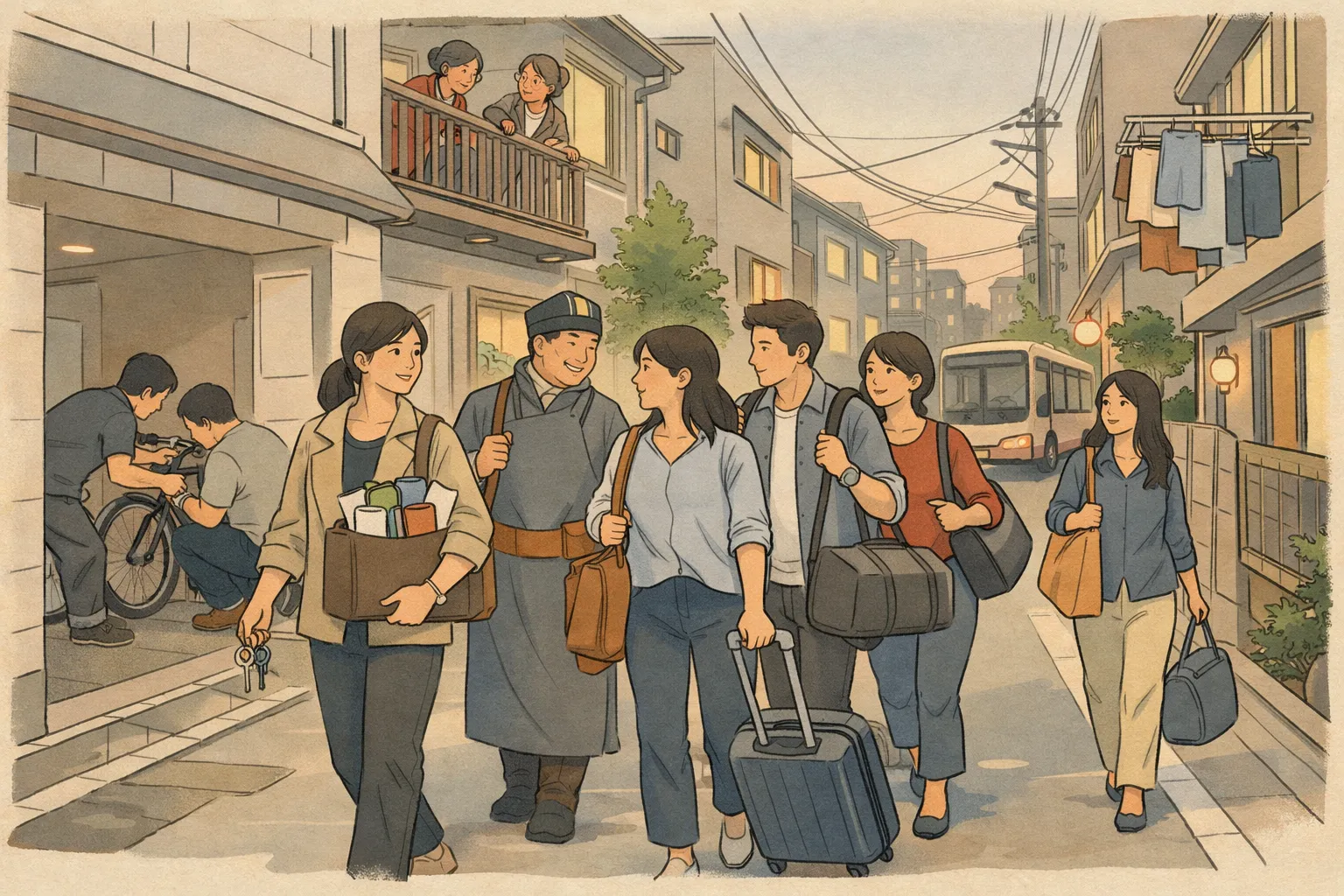
Touching on the social significance, the concept of multicultural coexistence is important. The system with dormitory and housing support provides a space for people from diverse cultures to live together, promoting mutual understanding. As Mongolians become rooted in Japanese society, connections with the local community strengthen, contributing to the realization of multicultural coexistence in both name and reality. This allows Mongolians working in Japan to act not just as workers, but as members of the community.
These factors promote the success of Mongolians in their employment activities in Japan. In the next chapter, we will explore specific cases to detail how the dormitory and housing support system impacts the careers of Mongolians. This practical information will serve as a reference for considering future careers.
Point
For Mongolians seeking employment in Japan, establishing a stable living foundation with dormitory and housing support enhances skill development, Japanese language acquisition, and social significance. It promotes multicultural coexistence and contributes to long-term career building.
I hope this information will be helpful for your future career development.
Career Paths in Multicultural Coexistence
Initial Stage
Mongolians who start their life in Japan and find employment are required to adapt in the early stages.AdaptationDuring this period, it is common to take jobs in fields with relatively high demand, such as manufacturing and nursing care.By choosing workplaces with dormitory and housing support, it becomes easier to establish a living foundation early on and to adapt to the work environment while receiving necessary support.の職場を選ぶことで、生活基盤を早期に整えやすく、必要な支援を受けながら職場環境に馴染むことが可能となります。
Mid-term stage
Once a certain level of adaptation is complete, it is important for Mongolians to enhance theirexpertise. Choosing a career in the IT industry or as an interpreter is a consideration, and the preparation period to acquire the necessary skills for the job is crucial. At this stage, thedormitory feesThe advantage of having a low burden creates financial flexibility and promotes further investment in education.
Later stage
Ultimately, it will be a time for Mongolians to build careers in management positions and as multicultural bridge builders. During this period, they are also expected to thrive as professionals involved in the trade industry.With dormitory and housing supportEmployment provides a sense of security even if the workplace changes, and is very helpful during promotions and job changes.
In Japan, where multicultural coexistence is advancing, a step-by-step approach is essential for Mongolians to steadily develop their careers. It is necessary to understand that appropriate support at each stage, from the initial to the later stages, leads to successful career formation.
Key Points
The career development of Mongolians in Japan is crucially marked by the initial adaptation, the mid-stage improvement of expertise, and the transition to management in the later stage. A working environment with dormitory and housing support greatly helps stabilize the living foundation at each stage, expanding opportunities for promotion and job change.
The Impact of Experience in Japan on Mongolia and Japan
Impact After Returning to Mongolia
People who return to Mongolia after gaining experience in Japan typically explore new career options andentrepreneurship. In particular, by bringing back skills and business know-how from Japan, they contribute to the development of businesses in Mongolia. This leads totechnology transferAs progress is made and local employment opportunities increase, it has a positive impact on the regional economy.
Remittances and Regional Revitalization
Mongolians tend to consciously send the income they earn in Japan back to Mongolia, which contributes to improving the local standard of living.Remittancesstrengthen the economic foundation of households and promote consumption in the local community. Therefore, the impact of remittances is directly linked to the revitalization of the regional economy.
Efforts to Alleviate Labor Shortages
Mongolians in JapanEmploymentThe skills acquired through employment in Japan will play a role in alleviating local labor shortages upon their return. In particular, securing labor in fields such as nursing care and manufacturing is expected, which may lead to improvements in the workplace environment.Support for Dormitory and HousingEmployment experience will also be a factor that creates valuable skills.
Promotion of multicultural coexistence
Life in Japan andEmploymentMongolians who have experienced life and employment in Japan can become a model for multicultural coexistence. By advancing intercultural understanding and exchange, they contribute to the revitalization of local communities and promote cooperation with people from other countries. This trend may lead to the creation of new industries and the development of international business.
The impact of experience in Japan on Mongolia and Japan is diverse. Broadening perspectives on one's future career and gathering necessary information through consultation sources and confirming useful conditions for job hunting will be the next step.
Summary of Key Points
Mongolians who have worked in Japan promote technology transfer and regional contributions after returning to their home country, and also contribute to multicultural coexistence. This may alleviate labor shortages and revitalize the local economy.
Next Step:
It is important to find sources of information and consultation.

 03-6222-9855
 Guide to Working in Japan
 History
 About this site
 Login


 About this site
 Contact































 COLUMN CATEGORY
 2026.08.03
Comment from the author
For Mongolians aiming for employment in Japan, dormitory and housing support is extremely important. By understanding the support provided by each company and making the best choice for yourself, you can start your new life with peace of mind. Gather information thoroughly, find a residence that suits you, and enjoy a fulfilling life in Japan.