
 03-6222-9855
 Guide to Working in Japan
 History
 About this site
 Login


 About this site
 Contact
-

- Mongolians
- Employment Support in Japan! A Guide to Immediate Housing Support for Mongolians
Employment Support in Japan! A Guide to Immediate Housing Support for Mongolians
- 寮・住居サポート付
The Current Situation and Support Systems for Mongolian Employment in Japan

The employment of Mongolians in Japan is on the rise in recent years, but securing immediate housing with housing support poses a significant challenge for Mongolians in their job search activities. In particular, for Mongolians wishing to find employment in Japan, housing issues directly impact the success rate of their job search. This article will provide a detailed explanation of the current situation regarding Mongolian employment in Japan and the impact of housing support on the success rate of job searches.
Prerequisites for Residence Status
To work in Japan, Mongolians need the appropriate residence status. The main residence statuses include Technical, Humanistic Knowledge, and International Services, Specified Skills, and Technical Intern Training. These residence statuses are crucial elements for job search activities in Japan. However, caution is required when changing jobs from Technical Intern Training, as the new employer must hold a residence status such as Specified Skills.
Trends in Occupations and Industries with Many Mongolians
Mongolians are often found in industries such as manufacturing, construction, and agriculture as potential employment destinations. In these industries, there are many Mongolian job seekers. In particular, to compensate for the labor shortage in Japan, the employment of Mongolians is being actively promoted.
The Impact of Housing Support on Employment Success Rates
In the employment activities of Mongolians, securing housing is a significant challenge. In Japan, issues such as initial costs and guarantors make it difficult for Mongolians to engage in employment activities. However, the number of companies and organizations providing immediate occupancy housing with dormitory and housing support is increasing, and this support is enhancing the employment success rate of Mongolians.
What This Article Can Solve
This article will provide a detailed explanation of the following points:
- Necessary residency qualifications and how to obtain them for Mongolians seeking employment in Japan
- Trends in industries and job types where Mongolians are frequently employed
- Issues related to housing in the employment activities of Mongolians, and the availability of immediate occupancy housing with dormitory and housing support
Through this information, we aim to support the employment activities of Mongolians and provide specific advice for successful employment in Japan.

Checkpoint
For Mongolians seeking employment in Japan, residence status and industry selection are crucial. In particular, many Mongolians are employed in the manufacturing and construction industries. Additionally, housing that is available for immediate occupancy with dormitory and housing support alleviates initial costs and guarantor issues, thereby improving the success rate of employment.
Challenges for Mongolians Seeking Employment in Japan
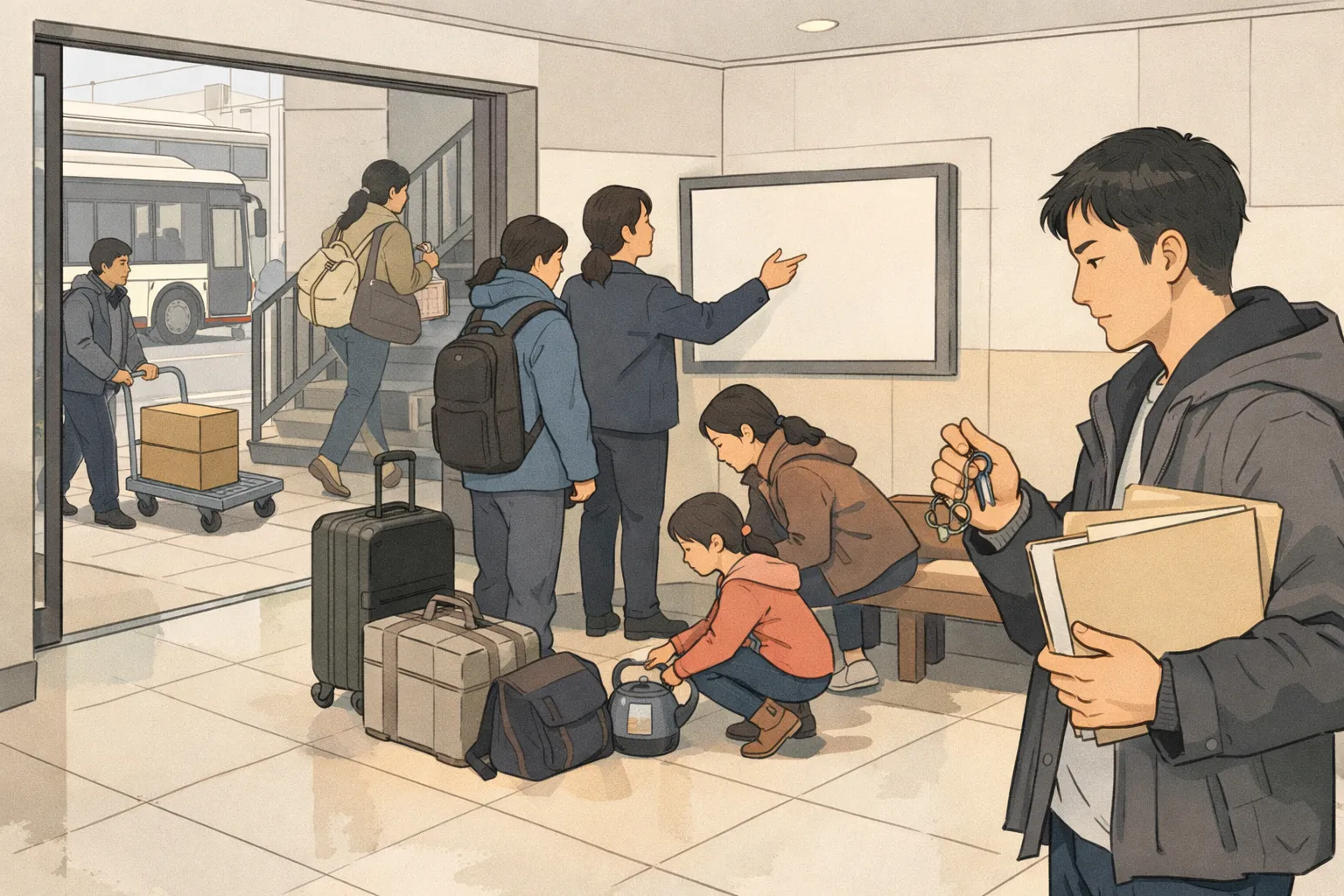
When Mongolians seek employment in Japan, the first challenge they face is employment-related issues. Many job listings are written in Japanese, which presents the first barrier. If Japanese language skills are insufficient, it becomes difficult to understand the necessary information when applying for jobs. To avoid this problem, it is important to strengthen Japanese language learning and to take the Japanese Language Proficiency Test (JLPT) to prove one's skills. Furthermore, utilizing companies or agents that provide job information in English or Mongolian makes it easier to find suitable job listings. In particular, job listings with dormitory and housing support are a significant help in starting life in Japan smoothly, so it is important to broaden one's options.
Next, the challenges related to residency status are also important. If the required skills do not match the job description, obtaining residency status can become difficult. Additionally, when considering a job change, there may be constraints due to dependence on the previous job. To resolve this issue, it is essential to carefully think about your career plan in advance and understand the required skills and job roles. Specifically, it is effective to check the conditions for residency status in job changes and to acquire necessary qualifications and skills beforehand. When you find job listings that have this information, you can confirm whether they offer housing and dormitory support, which increases convenience even further.
Finally, in terms of living conditions, housing and dormitory support is a significant challenge. Particularly, when immediate occupancy is required or when you need to find a guarantor, the initial costs can be a source of concern. To avoid this, it is important to research housing options in advance and choose properties that minimize initial costs. By selecting job listings that offer serviced housing or furnished dormitory and housing support, you can start your new life with peace of mind. Additionally, it is effective to check the following points and conduct a self-assessment.
- Conduct a self-assessment of your Japanese language skills and clarify your weaknesses.
- Create a plan to acquire the necessary qualifications and skills.
- Research job listings that offer dormitory and housing support.
- Have knowledge about residency status during job change.
- Develop a financial plan to secure the necessary initial costs.
Reference: International Academy IAY Japanese Language Department
Information on Support Systems and Grants from the Japanese Government

Consultation Desk (Hello Work, etc.)
For Mongolian individuals hoping to find employment in Japan, Hello Work is an important consultation desk. It is established in various locations across the country, and may have dedicated consultants and interpreters for foreigners. This allows for consultations in Mongolian, providing job information and support for job hunting. For the latest information and service details, please contact your nearest Hello Work directly. (Reference: mhlw.go.jp)
Japanese Language Learning Support
To smoothly advance job hunting in Japan, improving Japanese language skills is essential. Each prefecture and municipality offers Japanese language education programs for foreigners. These programs cover a wide range of content, from daily conversation to business Japanese. Additionally, efforts are being made to improve the standards of local Japanese language education using the Japanese language education reference framework, as well as the development and provision of ICT teaching materials tailored to various life situations. For details and the latest program information, please contact the official websites of each municipality or educational institutions. (Reference: moj.go.jp)
Vocational Training
For Mongolian individuals aiming to find employment in Japan, taking vocational training is beneficial. The Ministry of Health, Labour and Welfare promotes securing training opportunities that consider Japanese language proficiency. This creates an environment that is easier for Mongolian-speaking participants to join. For information on training content and application methods, please check the latest information on the official websites of your nearest Hello Work and Ministry of Health, Labour and Welfare. (Reference: mhlw.go.jp)
Employment Relationship Subsidy (Clearly state points that are likely to apply to employers)
For companies employing Mongolians, the Subsidy for Securing Human Resources, etc. (Subsidy Course for Improving the Working Environment for Foreign Workers) is a beneficial system. This subsidy is provided to companies that improve the working environment for foreign workers. Specifically, it covers the multilingualization of work regulations and the establishment of consultation systems for foreign workers. For the application process and detailed requirements, it is recommended to check the latest information on the official website of the Ministry of Health, Labour and Welfare and consult with experts as needed. (Reference: mhlw.go.jp)
Point
To support the employment of Mongolians in Japan, consultation services, Japanese language learning support, vocational training, and employment-related subsidies are being established. By utilizing these systems, effective job hunting can be conducted.
| Item | Description |
|---|---|
| Consultation Services | Support at Hello Work |
| Japanese Language Learning Support | Community Program Provision |
| Vocational Training | Training Considerate of the Japanese Language |
| Employment Relationship Subsidies | Subsidy System for Companies |
Reference: Multilingual Glossary | Ministry of Health, Labour and Welfare
Attraction of Dormitory and Housing Support for Mongolians

The attraction of dormitory and housing support for Mongolians is particularly important in the context of job hunting activities in Japan. As many Mongolians hope for a career in Japan, housing issues are directly linked to their success. By providing options for dormitory and housing support that are immediately available, Mongolians can reduce concerns about initial costs and guarantors, allowing them to smoothly advance their job hunting activities.
When Mongolians consider employment in Japan, initial expenses can become a significant barrier. For example, the key money and deposit required for a standard housing contract, as well as the need for a guarantor, often pose critical issues. However, by choosing options with dormitory and housing support, it is possible to significantly alleviate these burdens. Furthermore, these immediately available housing options are also attractive to companies looking to accept Mongolians as immediate assets.
The language barrier is an undeniable factor in the job hunting activities of Mongolians. Programs with dormitory and housing support often provide language assistance, which is expected to help them adapt quickly to the work environment in Japan. Such support helps Mongolians blend into the local culture and reduces stress after employment.
From a commuting perspective, dormitory and housing support with immediate occupancy is very convenient. Many companies are promoting the hiring of Mongolians, so if housing can be secured near the workplace, commuting time can be shortened, allowing for greater focus on work. Thus, the choice of housing clearly works to the advantage of Mongolians in their job hunting activities. In the future, it will become increasingly important to choose the type of housing (employee dormitories, leased company housing, share houses, etc.) according to workplace conditions and job types.
Benefits
- Initial costs are reduced, and access is convenient.
- Language support makes it easier to adapt to the workplace environment.
- By reducing commuting time, you can concentrate on work.
Disadvantages
- There may be less privacy.
- A lifestyle with limited freedom.
In this way, Mongolian people can find dormitory and housing support with immediate occupancy, which is an important factor for employment in Japan, and this choice will greatly influence their future careers.
Attention

Options for dormitory and housing support for Mongolian people have both advantages and disadvantages. In particular, it is important to carefully consider the constraints regarding privacy and freedom. Additionally, since conditions vary by region, it is recommended to check detailed information in advance.
Options with dormitory and housing support and their advantages
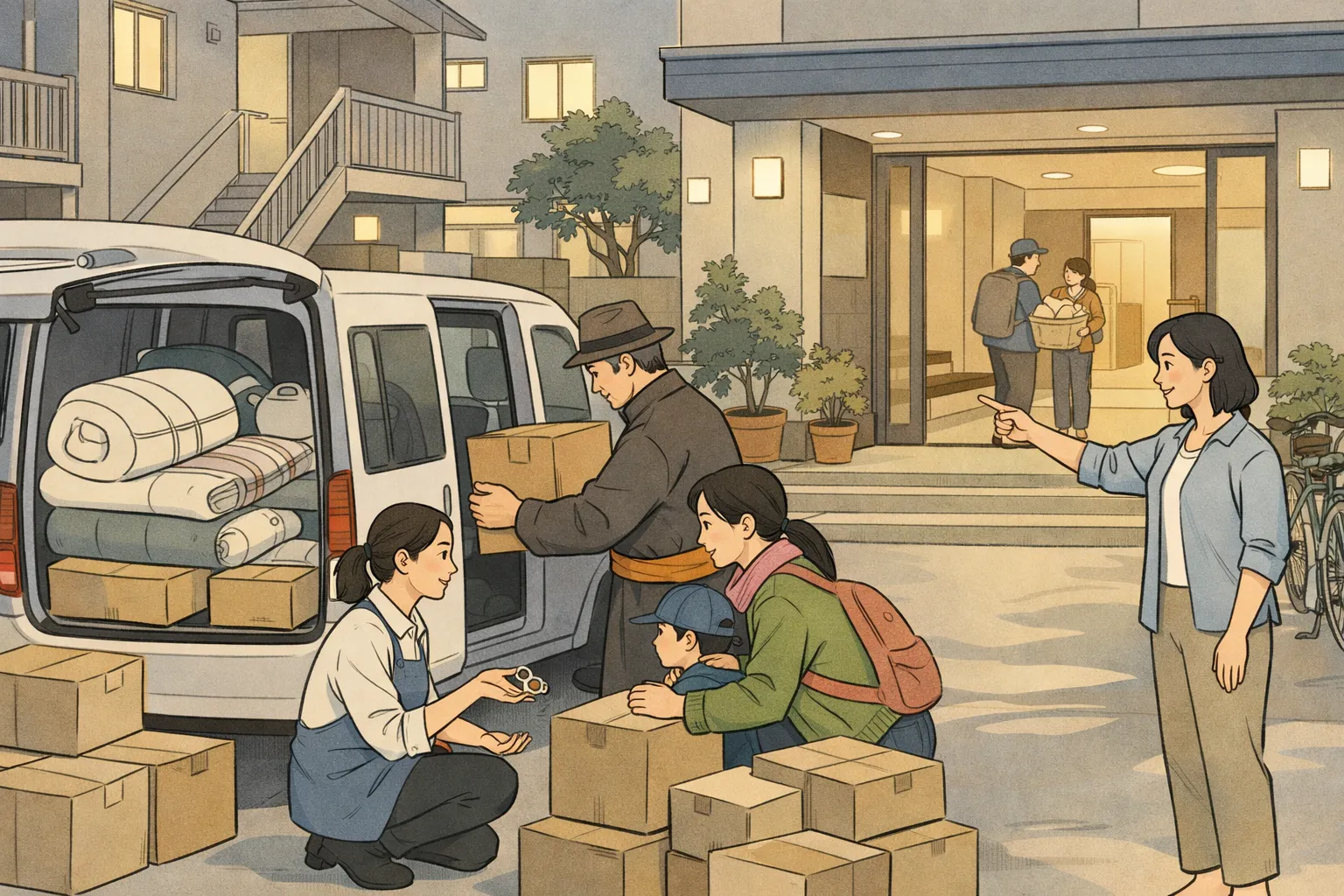
Advantages
- With dormitory and housing support, living in Japan can start smoothly.
- Initial costs are kept low, making it less burdensome for Mongolian applicants.
Disadvantages
- There may be limited freedom, and housing options can be restricted.
- Depending on the contract, long-term residence may be required.
Considering options with dormitory and housing support for Mongolian individuals who want to find employment in Japan is very important. Here, we will introduce several forms and clearly organize the advantages and disadvantages of each.
Employee dormitories are accommodations provided by companies that offer a stable living environment for Mongolians working in Japan. Dormitories are relatively inexpensive, making them particularly suitable for single individuals. However, a disadvantage is that privacy is limited.
Next, leased company housing offers even more freedom, allowing you to choose accommodations that fit your lifestyle. It is suitable for those who frequently move with their families, but generally, the rent burden can become significant.
Additionally, housing allowances are subsidies for housing costs provided by companies, which can reduce the cost of living in Japan. This is advantageous for those considering short-term employment, but the allowance may not always be sufficient.
Furthermore, there is also the option of real estate introduction + guarantee company arrangement. You can quickly find properties that match your desired area and move in immediately, but the procedures with the guarantee company can be complicated.
Finally, furnished apartments / living support is a form that allows you to start your new life smoothly and without hassle. It is particularly suitable for Mongolians seeking a new life in a new land, but there may be limitations on the properties available for rent.
When checking job listings, be sure to check the following terms: dormitory fees, utilities, key money and deposit, conditions for moving out. This will allow you to accurately understand the actual housing costs and start your life in Japan with peace of mind.
Checkpoints
For Mongolians considering employment in Japan, there are various options for dormitory and housing support. Employee dormitories, company-leased housing, housing allowances, real estate introductions, and furnished options are available, each with its own advantages and disadvantages. It is important to check dormitory fees, utilities, key money and deposit, and conditions for moving out in the job listings.
Reference: International Students / International Exchange | Shinshu University Faculty of Economics
Types and Conditions of Immediately Available Housing
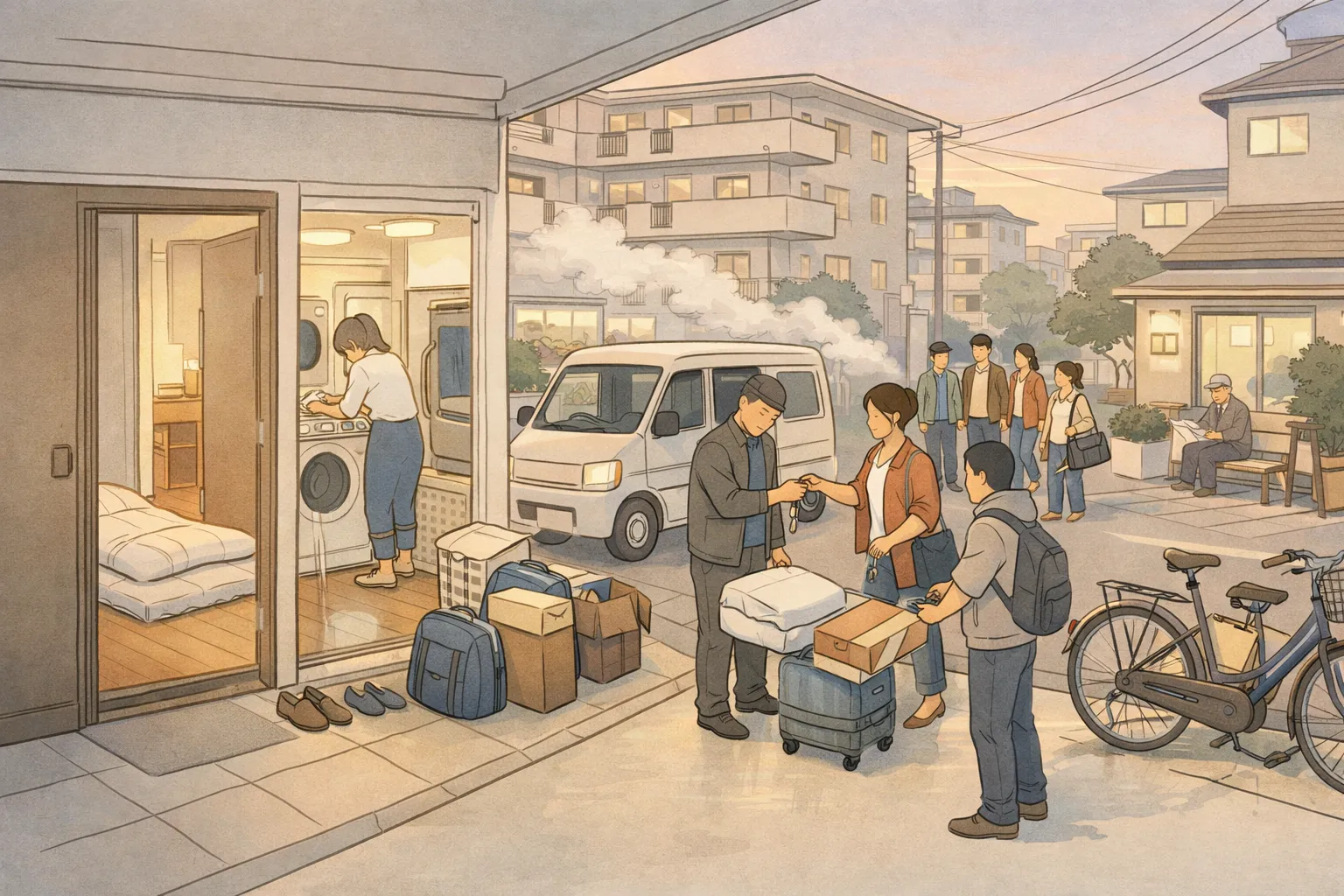
Types and Conditions of Immediately Available Housing
Immediately Available generally refers to housing that is available within a few days of receiving a job offer or on the day of arrival in Japan. This type of housing includes monthly apartments, furnished Leopalace, share houses, and company-arranged short-term accommodations. For Mongolian job seekers in particular, these options are crucial elements that help facilitate a smooth transition to living in Japan.
To utilize immediately available housing, there are several conditions. First, a form of identification and a residence card (or documents in application) are required. Additionally, the provision of initial costs and an emergency contact is necessary. If the start date of employment is already determined, this is also important information. The necessary steps will be explained according to the following timeline.
Moreover, typical patterns of inability to move in include lack of necessary documents, unprepared initial costs, or mismatched start and move-in dates. To avoid these issues, it is important to prepare the required documents in advance and to adjust the move-in date and start date of employment as early as possible.
Finally, Mongolians aiming for employment in Japan can smoothly start their new life by utilizing housing with dormitory and housing support. Choosing housing that is immediately available has a significant impact on subsequent life satisfaction, so careful consideration is required.
Key Points for Immediate Occupancy
Mongolians hoping for employment in Japan can start their new life smoothly by choosing housing that is immediately available. It is important to check the necessary conditions and prepare early.
| Conditions | Details |
|---|---|
| Identification | Required |
| Initial Costs | Preparation Required |
| Emergency Contact | Required Submission |
How Mongolians Can Navigate Job Hunting in Japan
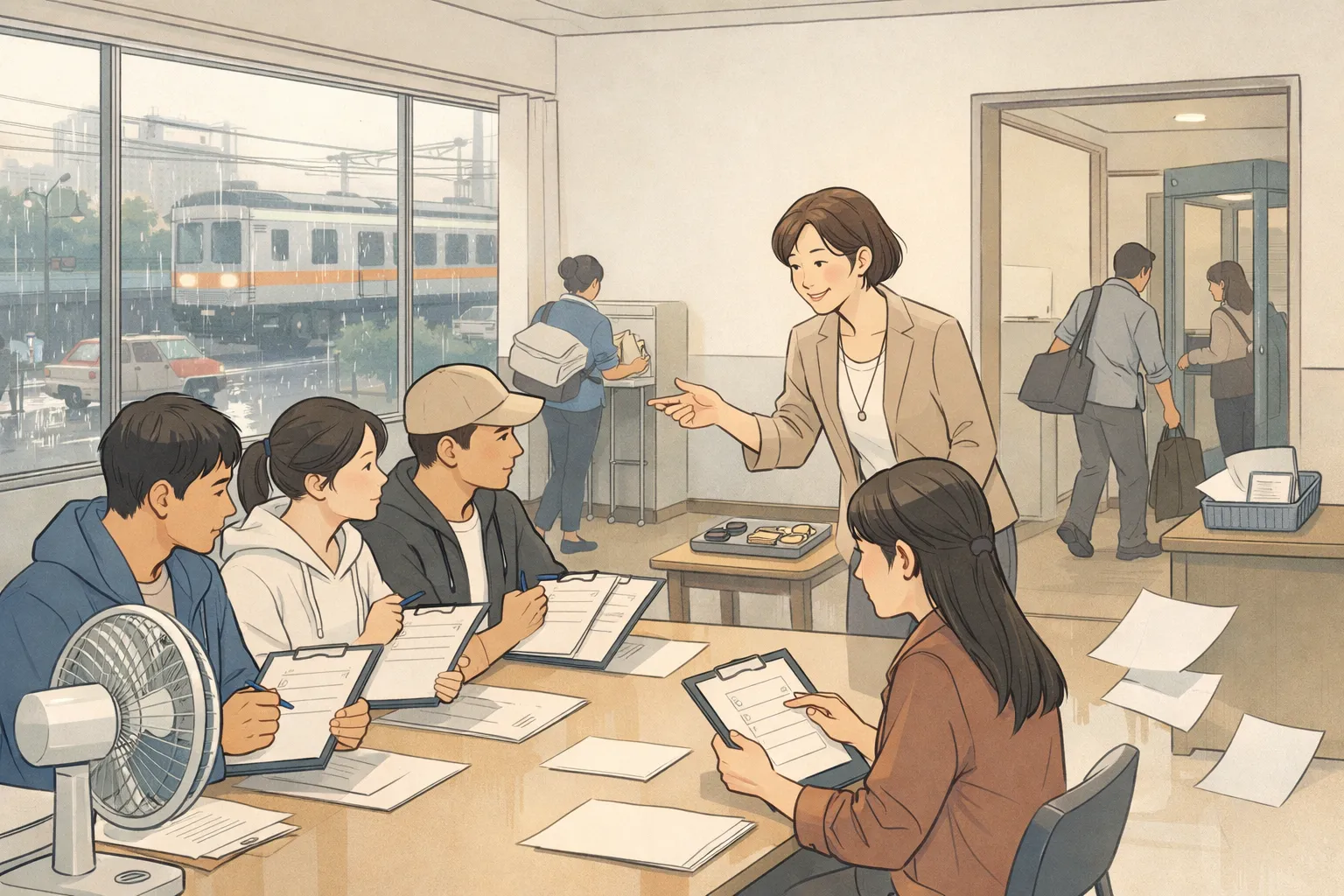
Job hunting in Japan involves a particularly complex process for Mongolians. The overall flow is "Preparation → Application → Interview → Job Offer → Visa Procedures → Joining the Company → Securing Housing (Dormitory/Housing Support / Immediate Move-in)" and it is important to thoroughly understand each stage. For those currently residing in Japan as well as those overseas, the specific approach may vary depending on the situation. For example, if you are a Mongolian living in Japan, you can apply efficiently while obtaining local information. On the other hand, those living abroad need to gather information online and seek support.
Perspectives also differ based on experience. Experienced individuals can search for job listings that utilize their skills and narrow down to specific job types, while those without experience need to consider a wider range of job listings. Additionally, the approach based on Japanese language proficiency is important. Fluent Mongolians in Japanese will have more options available, but if you lack confidence in the language, choosing job listings that offer support from the beginning becomes a strategy. Thus, gathering information and responding according to each individual's situation is the path to success.
In the next step, we will provide a detailed explanation of how to "search for job listings" and "preparation strategies" to overcome the selection process, ultimately offering valuable information to help Mongolians achieve employment in their desired workplace. This will support career development in Japan and help find ways to maximize the option of dormitory/housing support for immediate move-in.
💡 Points
Job hunting in Japan requires strategies tailored to each individual's situation. Let's gather information in a way that suits you best.

Comment from the author
Job hunting for Mongolians in Japan offers a variety of options and ample support. Choose a method that fits your situation, and by utilizing immediate accommodation with dormitory and housing support, you can make a smooth start. Challenge yourself with confidence. We support you in achieving your dreams.
How to search for and utilize job information

When searching for job information, it is important to utilize various methods. Here, we will focus on how to find job information specifically for Mongolians.
First, one way to search for jobs is through job sites. These sites generally have a large number of job listings and allow you to search with various conditions. For example, when looking for jobs with "dormitory or housing support," you can enter your desired work location and apply the filter for "immediate occupancy." Furthermore, if a residence status is required, you can also search based on that specific condition. Many Japanese companies post job listings in this format, making it a very effective method.
Recruitment agencies, especially those specializing in foreigners, are also recommended. These services can suggest job listings that match the needs of job seekers, allowing for more effective information gathering. By using recruitment services, you can effectively utilize conditions that are difficult to find directly on company hiring pages (such as no experience required or related to Japanese language requirements).
Next, it is also important to check the hiring pages of companies. Especially for large companies, specialized information is published on their own pages, making it easier to obtain detailed information about working conditions, benefits, and dormitory or housing support. Additionally, by directly contacting the company, it becomes easier to resolve any questions regarding job listings.
Also, let's utilize social media and communities. In many regions, there are groups for Mongolians and foreigners. Information exchange here is beneficial, and you can gain hints for finding safe job listings from the experiences of others. Real-time updates of job information can be expected, so quick action is required.
Finally, don't overlook Hello Work and local support organizations. Especially when there is a language barrier, consulting with such public institutions can be helpful. You can obtain specific information about job conditions and procedures, allowing you to search with peace of mind.
Keep a close eye on job information and be aware of the following points to avoid risks.
- Be cautious of job listings that have fees or penalties.
- Avoid cases where the method of salary payment is unclear.
- Carefully check the details of the contract.
Here are the steps to find the best job openings.
- First, clarify your desired conditions.
- Gather information from job sites and recruitment services.
- Check the recruitment pages of reliable companies.
- Listen to opinions on social media and in communities.
- Utilize the consultation services of Hello Work.
By following these steps, you can make your job search in Japan more successful. In particular, when looking for job listings that leverage your characteristics as a Mongolian, thorough information gathering is key.
Key Points

When searching for job information, utilize various means such as job sites, recruitment agencies, company recruitment pages, and social media. Also, choose reliable sources of information and be cautious of fees and opaque contracts. By clarifying your desired conditions and taking action, you can proceed with your job search with peace of mind.
Interview preparation and resume tips

Preparing for an interview is especially important for Mongolians seeking employment in Japan. A resume and a work history are the first steps to being evaluated. First, regarding the structure of your motivation statement, it is key to specifically show how your skills and experiences can contribute to the company, focusing on "why you want to work for that company." For example, a statement like, "I would like to contribute to your company's △△ project by utilizing my skills in 〇〇" is effective.
Next, quantifying your experience is a very important point. By using specific numbers, you can clearly convey the results you have achieved. For example, writing, "In my previous job, I improved 〇〇 by ××%" can make an impact on employers. Additionally, it is important to indicate your Japanese language level, with specific expressions like "I can hold daily conversations" being desirable. Be sure to include your residency status and do not forget to communicate your preference for conditions such as "with dormitory or housing support." This will help demonstrate your willingness to move in immediately.
Common interview questions include working conditions, night shifts, reasons for changing jobs, and willingness to work long-term. Below is a template in Q&A format.
Q: What are your preferred working conditions?
A: "I hope for a work environment with 〇〇 days off and minimal overtime."
Q: What are your thoughts on night shifts?
A: "I am open to night shifts, but I would like consideration to be given to avoid consecutive shifts for health reasons."
Q: What is your reason for changing jobs?
A: "I want to challenge myself with a more specialized job, and I resonate with your company's philosophy."
Q: Do you have the intention to work long-term?
A: "I hope to grow within your company and contribute in the long term."
It is also important to pay attention to the use of honorifics. For example, the correct expression is "I will do my best," while a non-recommended example is "I will take care of it." Using polite language creates a sense of trust, so let's make sure to use proper honorifics.
While keeping these points in mind, let's make the most of our characteristics as Mongolians and approach job hunting in Japan. By utilizing job information that offers support in a conducive environment, including dormitory and housing assistance, a smooth transition can be achieved. By expressing a desire for immediate occupancy, you can start your new life with peace of mind.
Summary of Points
Mongolians seeking employment in Japan should clearly state their motivation in their resumes and quantify their experience with numbers. In interviews, solid answers regarding working conditions, night shifts, reasons for changing jobs, and long-term employment intentions are required. Don't forget to mention your preference for honorifics and "dormitory and housing support."
How to Find Immediate Move-In Properties for Mongolians
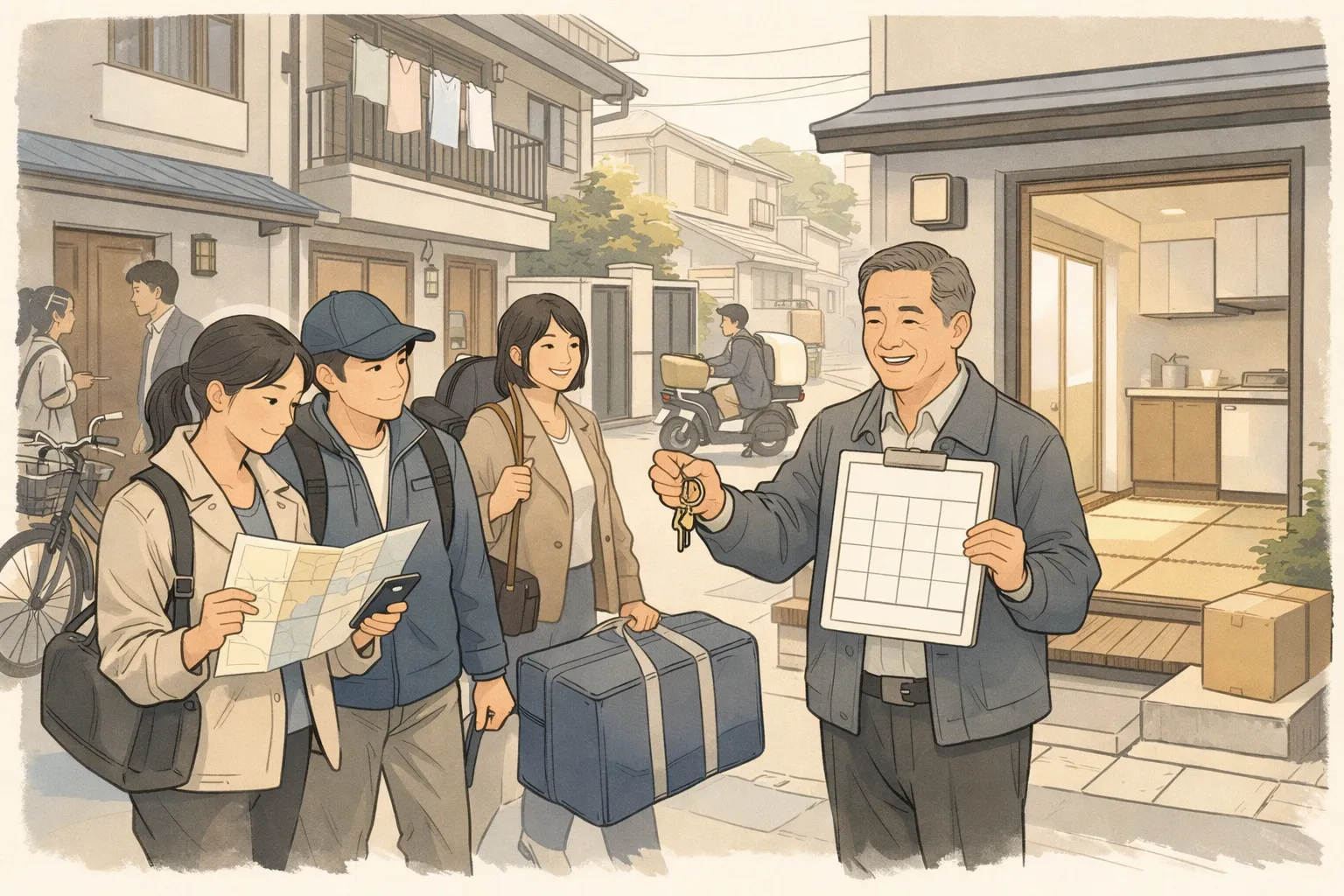
When searching for immediate move-in properties for Mongolians in Japan, a strategy of simultaneously advancing job hunting and housing search is effective. In particular, it is common to prioritize properties with company dormitories or housing support. By moving into a dormitory, there is the advantage of reducing the burden of contracts and initial costs. Furthermore, securing housing immediately after employment allows for a more relaxed mindset to focus on work. On the other hand, there is also the method of finding immediate move-in properties independently. While there is the freedom to choose properties that match one's own conditions, careful verification is necessary when signing contracts.
To avoid troubles, it is important to carefully check the contents of the contract. There may be cases where the initial costs are higher than expected or where there are specific conditions. Additionally, be sure to carefully confirm the process regarding the residence card. Entering into a contract during a period when residence in Japan is not permitted may lead to problems later on.
Since the properties and real estate companies vary by region, it is important to gather information thoroughly in advance. In particular, utilizing areas where many Mongolians live or real estate agents who are proficient in Japanese will help facilitate the property search. Consider the characteristics of the area, transportation convenience, and living environment to choose the optimal living conditions. Regarding immediate move-in, it is important to pay attention to the condition of the property and contract terms to ensure everything is in order. Many real estate companies provide information and advice, so it is advisable to actively consult them.
For Mongolians, securing employment and housing in Japan are important elements that mutually influence each other. By fulfilling both, a foundation for smooth living and work is established. Utilizing properties with dormitory or housing support and independent property searches will lead to the best choices and success.
Comment from the author
Job hunting and finding a place to live in Japan can be a significant challenge, but with a solid plan, it can proceed smoothly. In particular, by utilizing company dormitories and housing support, you can start your new life with peace of mind. Find a property that suits you and realize a fulfilling life in Japan.
Introduction to easy-to-find areas and real estate companies

When searching for properties that are immediately available for Mongolian employment with dormitory and housing support, the following areas and real estate companies are beneficial.
Areas that are easy to find include urban areas with a rich history of accepting foreigners (e.g., Tokyo, Osaka, Nagoya), industrial zones (e.g., Aichi Prefecture, Shizuoka Prefecture), and areas around universities (e.g., around universities in Kyoto, Osaka, and Tokyo).
As a specific real estate company, the following companies provide properties that are available for immediate occupancy with dormitory and housing support for Mongolian individuals after employment.
(Reference: Unity-inc)
_Tokyo, Japan_
We provide properties that are available for immediate occupancy with dormitory and housing support for foreigners after employment.
(Reference: Housecom Co., Ltd.)
_Tokyo, Japan_
We offer properties available for immediate occupancy with dormitory and housing support.
(Reference: Meiko Homes)
_Tokyo, Japan_
We provide properties available for immediate occupancy with dormitory and housing support for foreign residents.
(Reference: ASIJ Co., Ltd. (All Service in Japan))
_Tokyo, Japan_
We provide properties that are immediately available for rent with dormitory and housing support for foreigners.
(Reference: COCO ROOM)
_Tokyo, Japan_
We provide properties that are available for immediate move-in with dormitory and housing support for foreigners through our online real estate brokerage service.
(Reference: OHEYAGO)
_Tokyo, Japan_
We offer properties that are available for immediate move-in with dormitory and housing support for foreigners on our self-viewing rental site.
(Reference: Mooovin)
_Tokyo, Japan_
We provide rental property information for foreigners, handling dormitory and housing support with immediate move-in available properties.
(Reference: NASON HOME)
_Tokyo, Japan_
We provide real estate support specialized for foreigners, offering dormitory and housing support with immediate move-in available properties.
These real estate companies provide properties that are available for Mongolian people with employment support for dormitory and housing that are immediately available for move-in. Please check the services and areas covered by each company to choose the best real estate company for you.
As evaluation criteria for selection, the following points can be mentioned:
- Foreign language support: If you are unsure about Japanese, it is reassuring to choose a real estate company that can provide multilingual support.
- Guarantee company support: If you do not have a guarantor, check if you can use a guarantee company.
- Initial cost installment: It is advisable to confirm in advance whether they support installment payments for initial costs.
- Online Viewing:If you are searching for properties from a distance, check if online viewings are available.
- Immediate Move-In:It is smooth to inquire in advance if there are properties available for immediate move-in.
As an example of a Japanese sentence for inquiries, the following text can be considered:
In the case of email:
Subject: Inquiry about the property
Dear Sir/Madam, I apologize for the sudden contact.
I am interested in the Mongolian properties that come with dormitory and housing support and are available for immediate move-in.
I am looking for properties that meet the following conditions:
- Employment destination: XX Corporation
- Desired area: XX City
- Desired rent: within ¥〇〇 per month
- Desired move-in date: 〇〇 year 〇〇 month 〇〇 day
I apologize for the inconvenience, but could you please let me know if there are any properties that match?
Thank you very much for your consideration.
Sincerely
In case of a phone call:
Thank you for your continued support.
I called to inquire about the housing support for Mongolian people with dormitory and housing support properties that are available for immediate move-in provided by your company.
I am looking for properties with the following conditions:
- Employment destination: XX Corporation
- Desired area: 〇〇 City
- Desired rent: Within 〇〇 yen per month
- Desired move-in date: 〇〇 Year 〇〇 Month 〇〇 Day
If there are any properties that match, could you please let me know?
Thank you very much.
By referring to these example sentences and conveying specific conditions and preferences, smooth communication can be achieved.
Summary of Key Points

When Mongolians in Japan are looking for properties that offer dormitory or housing support and are available for immediate move-in, areas with a high track record of accepting foreigners, such as Tokyo and Osaka, are convenient. Please refer to specific real estate companies and points for selection, and also utilize the example sentences when making inquiries.
Points to Consider When Choosing Dormitories or Housing
ℹ️ Additional Information
There are various options for Mongolian housing with dormitory and housing support that are immediately available in Japan, but it is very important to check multiple points of caution at the time of contract.
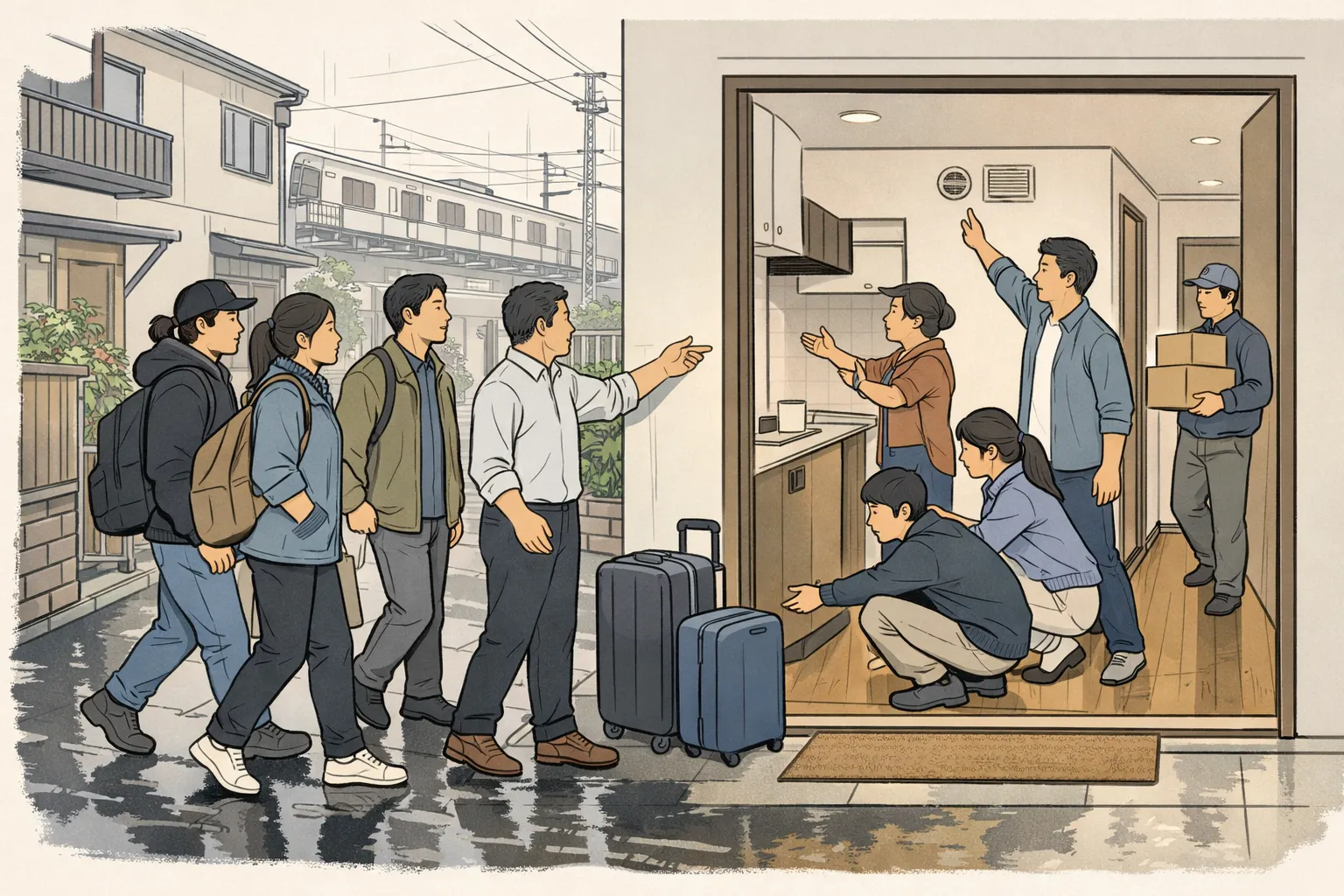
When considering Mongolian employment in Japan, there are several potential troubles that may arise when looking at immediately available properties with dormitory and housing support. First and foremost, it is essential to fully understand the contract details. In particular, regarding costs such as dormitory fees, security deposits, and key money, the contents specified in the contract may differ from the actual conditions, so be sure to check before signing the contract.
Next, attention is also needed regarding the rules of living. In properties with dormitory and housing support, there may be strict rules regarding the use of common spaces and curfews. In some cases, entry and exit may be restricted early in the morning or late at night, so it is advisable to understand the rules in advance. Additionally, regarding housemates, if you do not confirm in advance, it may lead to troubles later on.
Furthermore, be sure not to neglect checking the conditions for moving out. You need to be careful of excessive penalties for breach of contract or if the notice period for moving out is too short. Especially in cases where sudden moving out is necessary due to changes in the workplace, it is important to thoroughly check whether appropriate moving out conditions are established.
Finally, please refer to the following documents/items checklist to confirm and proceed with your dormitory and housing selection:
- Dormitory fees and amounts for security deposits, key money, and renewal fees
- Details of penalties
- Confirmation of salary deductions and contracts
- Condition of keys and facilities
- Whether cohabitation is allowed and the presence of curfews
- Wi-Fi Environment Setup Status
By utilizing these checklists, you can start your life after employment with peace of mind. It is especially important to thoroughly confirm any doubts regarding black conditions and to take preventive measures against potential issues in advance. Let's make careful choices so that Mongolians can live comfortably.
Overview of Points
When selecting immediate move-in properties for Mongolians in Japan, be sure to check the contract details, costs, living rules, and conditions for moving out. It is crucial to fully understand the conditions of dormitory and housing support and to clarify any uncertainties.
Checklist
- Contract and Cost Details
- Living Rules and Co-habitation Eligibility
- Existence of Move-out Conditions
- Confirmation of Salary Deductions Details
Cost of Living and Housing Market in Japan
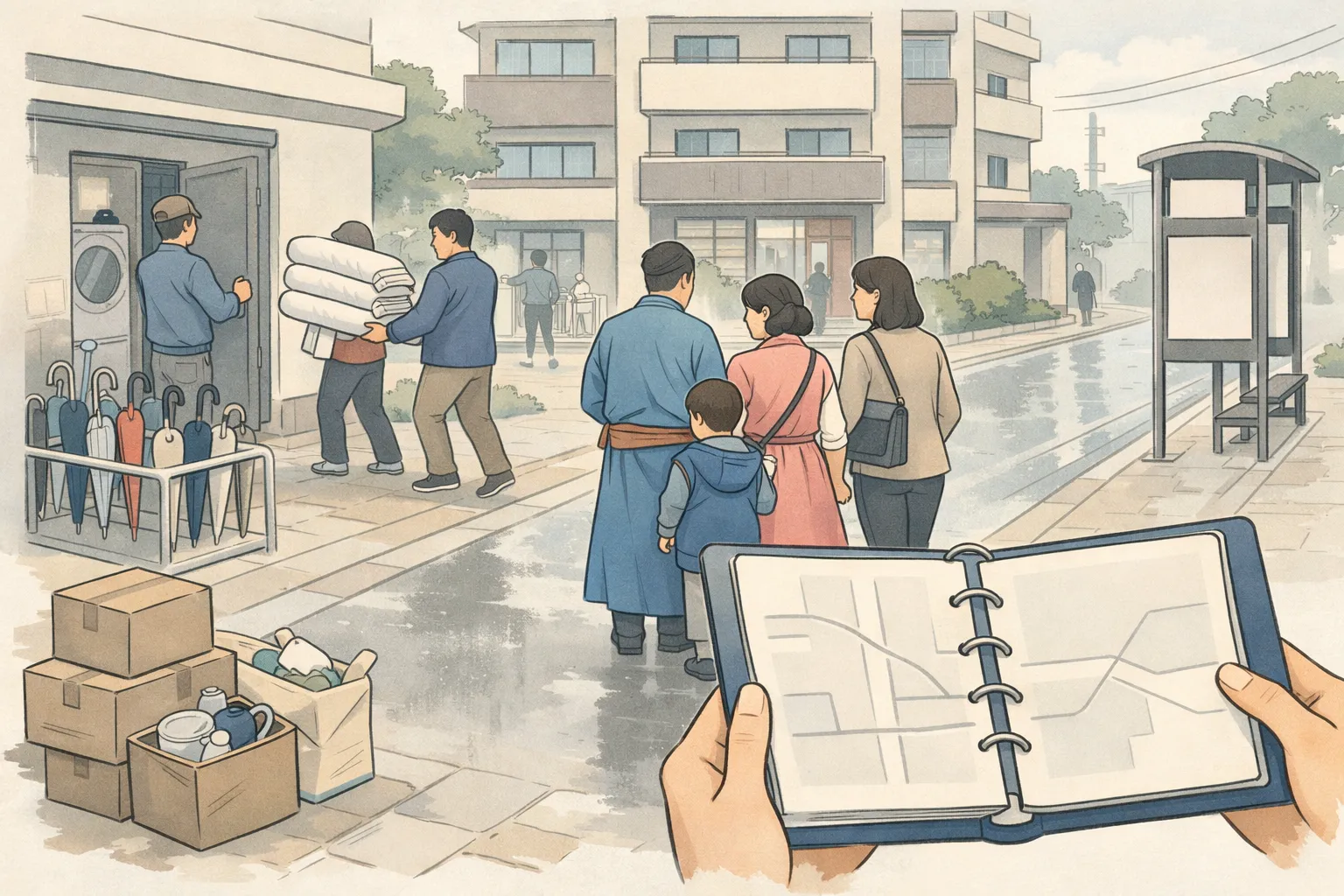
The cost of living in Japan varies depending on the region and individual lifestyle, but the general breakdown and average amounts are as follows.
- Rent: For those living alone, the national average is about 21,667 yen per month. It tends to be higher in urban areas. (Reference: cdedirect.co.jp)
- Utilities: The average monthly cost for electricity, gas, and water combined is about 13,333 yen. It varies depending on the season and usage. (Reference: cdedirect.co.jp)
- Communication expenses: The average monthly cost for mobile phone and internet usage is about 6,403 yen. (Reference: cdedirect.co.jp)
- Food expenses: The average monthly cost for both home cooking and dining out is about 44,659 yen. It varies depending on the frequency of dining out and the choice of ingredients. (Reference: cdedirect.co.jp)
- Transportation Costs:An average of about 4,390 yen per month is needed for public transportation or the maintenance costs of a private vehicle. (Reference: cdedirect.co.jp)
- Insurance and Pension:An average of about 8,690 yen per month is required for social insurance premiums such as health insurance and pensions. (Reference: cdedirect.co.jp)
- Taxes:Income tax and resident tax are imposed, but the specific amounts vary depending on income and residence.
- Miscellaneous Expenses:An average of about 34,611 yen per month is incurred for other expenses such as daily necessities and entertainment. (Reference: cdedirect.co.jp)
When these costs are totaled, the average monthly living expenses for a single person in Japan is about 173,042 yen. (Reference: cdedirect.co.jp)
Dormitory and housing support included allows you to utilize immediate move-in properties, which can mainly reduce the following costs:
- Rent: A portion is often deducted from your salary as dormitory fees, which can be lower than signing an individual rental contract.
- Initial costs: Initial costs such as security deposits, key money, and brokerage fees are often not required.
- Utilities: Utilities are often included in the dormitory fees, eliminating the need for separate payments.
- Communication costs: If internet is available in the dormitory, there is no need to sign a separate contract.
- Food expenses: If meals are provided in the dormitory, you can reduce the costs of eating out and cooking for yourself.
These reductions make it possible to significantly lower living expenses in Japan.
Next, let's take a closer look at budget planning and market estimates.
Comment from the author
Living expenses in Japan vary, but choosing immediate accommodation with dormitory and housing support can significantly reduce financial burdens. In particular, there are substantial benefits in terms of initial costs and rent. I hope this helps as many people as possible to efficiently establish their employment and living environment.
Budgeting to Support the Lives of Mongolians

Budgeting to Support the Lives of Mongolians
How to Create a Monthly Budget Based on Net Income
For Mongolians who have found employment in Japan, creating a monthly budget based on their net income is essential for stabilizing their lives. First, understand the amount of net income, and then deduct the necessary expenses from it. It is effective to categorize the budget into four categories: fixed costs, variable costs, savings, and emergency funds.
Fixed Costs
Fixed costs are expenses that occur every month, including rent, utility bills, and communication fees. In cases with dormitory or housing support, dormitory fees are often deducted from the salary, making these costs stable. On the other hand, if you contract on your own, initial costs such as security deposits, key money, and brokerage fees are required, which become a temporary burden.
Variable costs
Variable costs are expenses that fluctuate each month, including food expenses, transportation costs, and entertainment expenses. In cases with dormitory or housing support, meals may be provided, which can reduce the burden of food expenses. In self-contracted cases, food expenses vary depending on the frequency of dining out or cooking at home, requiring adjustments based on lifestyle.
Savings
Savings are contributions for the future, and it is recommended to save a certain amount each month. In cases with dormitory or housing support, the burden of initial costs is reduced, making it easier to start saving. In self-contracted cases, it is common to start saving after incurring initial expenses.
Emergency Fund
Emergency Fund is money set aside to prepare for unexpected expenses, covering medical costs and sudden expenditures. In the case of housing support, the stability of living expenses makes it easier to save for the emergency fund. In the case of self-contracting, fluctuations in living expenses can make it difficult to save for the emergency fund.
Differences in Money Needed for the First 1-2 Months
In the case of housing support, initial costs are reduced, so living expenses for the first 1-2 months are relatively low. In the case of self-contracting, initial costs such as security deposits, key money, and brokerage fees are required, and these costs can be a temporary burden.
Budget Setting Template
Below is a template for the monthly budget. Please enter your own figures for each item and create a specific budget.
| Item | Description | Amount (Yen) |
|---|---|---|
| Net Income | Monthly net income amount | |
| Fixed costs | Expenses that occur every month, such as rent, utilities, and communication fees | |
| Variable costs | Expenses that fluctuate monthly, such as food, transportation, and entertainment costs | |
| Savings | Amount to save for the future | |
| Emergency Fund | Funds to prepare for unexpected expenses | |
| Total Expenditure | Fixed costs + Variable costs + Savings + Emergency funds | |
| Remaining balance | Net income - Total expenses |
Utilize this template to set a budget to support your life as a Mongolian after employment in Japan, and build a stable living foundation.
Caution
When budgeting, it's important to check the actual amounts carefully, as expenses vary depending on the region and individual lifestyle. Additionally, the initial costs and fixed expenses required for cases with dormitory or housing support versus self-contracting will differ, so please understand the characteristics of each and plan accordingly.
Estimated rent and living expenses

When a Mongolian starts a new life after finding a job in Japan, options for housing include one-room apartments, share houses, and dormitories. The rent and living expenses for these types of housing can vary significantly depending on the region and facilities.
The average rent differs between urban areas and rural areas. For example, in Tokyo and other urban areas, the rent for a one-room apartment is about 70,000 yen per month, while in rural areas, it is around 30,000 yen, resulting in a difference of approximately 40,000 yen. (Reference: colivinginjapan.com)
Additionally, in the case of share houses or dormitories, the rent is often set lower than that of a one-room apartment. For example, in a student dormitory, the dormitory fee is said to be around 28,000 yen per month. (Reference: studyinjapan.go.jp)
Rent is not the only cost; there are also expenses such as fire insurance premiums, guarantee fees, renewal fees, and key exchange costs. Fire insurance premiums typically range from 8,000 yen to 15,000 yen per year. Guarantee fees may require 50% to 100% of the rent as an initial payment. Renewal fees are generally equivalent to one month's rent. Key exchange costs are typically around 10,000 yen to 20,000 yen. (Reference: studyinjapan.go.jp)
Housing with dormitory and housing support often has lower initial costs and allows for immediate occupancy. This enables Mongolians to smoothly start their life in Japan after employment.
Rent and living expenses
After finding employment in Japan, the differences in rent between urban and rural areas and the importance of dormitory and housing support become prominent for Mongolians. It is possible to reduce the burden of initial costs and build a stable life.
| Item | Amount (Yen) |
|---|---|
| Urban Rent | 70,000 |
| Regional Rent | 30,000 |
| Dormitory Fee | 28,000 |
By utilizing this knowledge, you will be able to help Mongolians build a stable foundation for their lives.
Tips for Mongolians to Succeed in Japan

For Mongolians to succeed after getting a job in Japan, it is important to be aware of the three axes of work, life, and relationships. First of all, in terms of work, it is necessary to understand your role and strive to engage in behaviors that are valued. By valuing skill improvement and teamwork, opportunities for raises and job changes will increase. For example, by leveraging the unique perspectives and multicultural experiences that Mongolians possess, their contributions in the workplace will be recognized. Utilizing training and self-development opportunities to obtain necessary certifications and qualifications is also a good strategy.
Next, in terms of living, especially by utilizing dormitory and housing support with immediate occupancy properties, you can reduce monthly expenses. Since rent and utility costs are lowered, it is possible to maintain a comfortable lifestyle while having some flexibility in your budget. Living in a dormitory also fosters interaction with other Mongolians and Japanese, contributing to a stable living foundation. Especially in regional cities, there are no initial costs, which alleviates financial burdens and makes it easier to save money.
Finally, building relationships is key to success. Understanding and adapting to Japanese culture is important for integrating into the workplace and local community. For example, participating in company events and local festivals increases opportunities to expand your network. Deepening connections among Mongolians is also important for a sense of security and mutual support. By enjoying cultural differences and nurturing relationships with diverse people, you can promote personal growth and achieve a richer life.
Points
For Mongolians to succeed in Japan, it is important to evaluate work, manage living expenses, and build relationships.
Let's utilize properties with dormitory and housing support, aiming for stability in life while actively participating in the community.
| Elements | Effect |
|---|---|
| Job | Increase in salary raises and job change opportunities |
| Living | Reduction in living expenses, comfortable living environment |
| Interpersonal Relationships | Cultural Adaptation and Network Building |
Cultural Adaptation and Communication Strategies

Cultural adaptation is an important element for working smoothly in Japanese workplaces. By understanding and improving points where friction is likely to occur, communication can become more fluid. Below, we organize points to be mindful of in Japanese workplaces.
Example of Misunderstanding: Hōrensō (reporting, contacting, and consulting) may be considered insufficient.
Improvement phrase: Say, "I will inform you immediately if something happens."
Action: Regularly report progress and questions to your supervisor and team members.
Example of misunderstanding: Due to differing sense of time, being late or a lack of awareness of deadlines may be perceived.
Improvement phrase: Communicate, "I am committed to being punctual."
Action: Be mindful of daily arrival times and deadlines.
Misunderstanding example: The way instructions are received is often perceived as lacking flexibility.
Improvement phrase: Ask, "Could you provide more specific instructions?"
Action: Confirm the received instructions and ask questions immediately if there are any unclear points.
Misunderstanding example: The use of honorifics may be pointed out as inadequate.
Improvement phrase: Request from those around you, "Please let me know if I am being rude."
Action: Always be mindful of using honorific language and accept feedback from colleagues.
Example of misunderstanding: It is often difficult to understand tacit knowledge.
Improvement phrase: Ask, "Can you tell me about the background of this culture?"
Action: Ask veteran colleagues about culture and customs.
Next, understanding the rules of dormitory life will make your life easier right after moving in. Here are some key points to keep in mind.
- Be mindful not to make noise, especially at night.
- Check the rules for taking out the trash and thoroughly recycle.
- Keep shared spaces clean and cooperate with other residents.
- Do not leave personal belongings in shared spaces.
By following these points, you can smoothly adapt to the Japanese workplace environment and dormitory life, allowing you to start your new life as a Mongolian with peace of mind. Please make sure to practice these points to prevent potential troubles you may face after moving in immediately.
Attention
In Japanese workplaces and dormitory life, misunderstandings can arise due to cultural and habitual differences. It is especially important to understand communication and rules. By being mindful of actions suited to specific situations and building relationships with those around you, you can lead a smooth life.
Building and Utilizing Networks

For Mongolian people who have found employment in Japan, there are multiple channels to obtain information. First, it is about building a network within the company. By establishing good relationships with colleagues and superiors, you can quickly obtain important information related to your work. Additionally, it provides a good opportunity to learn about Japanese culture and customs through work. A point to note is to clarify your intentions and objectives when gathering information to avoid misunderstandings.
Next, the hometown community is very beneficial. Information from fellow Mongolian peers around you is a good means to learn about real experiences regarding the workplace environment and life in Japan. However, sometimes communities can harbor incorrect information or excessive solicitations, so prioritize information from trusted peers.
Attending Japanese language schools and vocational training can also be an important source of information. Here, you can improve your language skills while expanding your network through interactions with other students. However, sometimes you may have to pay high tuition fees, so it is essential to carefully compare costs and benefits.
Additionally, local governments and international exchange associations provide various forms of support. Many events are held to obtain information related to employment and daily life. However, if you expect too much from these benefits, it may lead to misunderstandings during the support process, so caution is necessary.
Finally, consider utilizing professional communities. By building connections with other professionals in specific fields, you can facilitate closer information exchange. However, these communities are often highly competitive, so it is important to maintain an open attitude.
When seeking advice in times of trouble, I recommend gathering information in the following order: 1st is trusted colleagues or seniors. 2nd is teachers at Japanese language schools. It is also good to mention local governments and international exchange associations as the 3rd option. If problems arise, it is also important to consult with the managers of the dormitory or residence where you have just moved in.
Points
There are various channels for information gathering, such as "within the company," "hometown community," and "Japanese language schools and vocational training." It is important to utilize trustworthy colleagues and specialized organizations and to act with caution in mind.
| 1st: Colleagues and seniors |
| 2nd: Japanese language school teachers |
| 3rd: Local governments and international exchange associations |
Popular Career Columns
- ALL
- MONTHLY
- WEEKLY
-


2026.07.30
A Comprehensive Guide to the Conditions for Mongolians to Get a Job and Obtain Permanent Residency in Japan!
-

2026.07.30
The Importance of Japanese and Language Skills - For International Job Seekers
-


2026.08.03
Compensation, Benefits, and Social Insurance Guide (for Foreigners Looking to Work in Japan)
-


2026.08.03
Guide to Permanent Residency Application for Indonesians Working in Japan
-

2026.08.03
Obtaining Permanent Residency and Required Years for Indonesians to Work in Japan
-

2026.08.03
Guide to Permanent Residency Requirements for Vietnamese Aiming to Work in Japan
-

2026.08.03
Comprehensive Job Guide for N1 Holders in Japan
-

2026.08.03
How to Obtain a Visa to Work as a Full-Time Employee in Japan
-

2026.08.03
Employment Guide in Japan: Dormitory Fees with Housing Support for Indonesians
-

2026.08.03
A Job Guide for Mongolian People to Become Full-Time Employees in Japan from Inexperience
-
2026.07.30
A Comprehensive Guide to the Conditions for Mongolians to Get a Job and Obtain Permanent Residency in Japan!
-
2026.07.30
The Importance of Japanese and Language Skills - For International Job Seekers
-
2026.08.03
Compensation, Benefits, and Social Insurance Guide (for Foreigners Looking to Work in Japan)
-
2026.08.03
Guide to Permanent Residency Application for Indonesians Working in Japan
-
2026.08.03
Obtaining Permanent Residency and Required Years for Indonesians to Work in Japan
-
2026.08.03
Guide to Permanent Residency Requirements for Vietnamese Aiming to Work in Japan
-
2026.08.03
Comprehensive Job Guide for N1 Holders in Japan
-
2026.08.03
How to Obtain a Visa to Work as a Full-Time Employee in Japan
-
2026.08.03
Employment Guide in Japan: Dormitory Fees with Housing Support for Indonesians
-
2026.08.03
A Job Guide for Mongolian People to Become Full-Time Employees in Japan from Inexperience
 COLUMN CATEGORY
-
Visas
We explain the types of work visas (such as Engineering/Humanities/International Services, Skills, etc.), the procedures for obtaining or changing residence status, the required documents and review points, and the flow of procedures that employers must handle.
-
Japanese Language and Language Skills
We introduce guidelines for Japanese proficiency (JLPT, etc.), the language skills required by industry, study methods and materials, and how to prepare for Japanese in interviews and write language proficiency certificates.
-
Resume and Work History
We explain how to write a resume and work history documents for Japan (format and translation points), provide sample wording for self-promotion and reasons for applying, and show with concrete examples how to organize attached documents.
-
Salary, Benefits, and Social Insurance
We explain salary benchmarks by industry, how to calculate take-home pay, overtime pay, how social insurance, pensions, and taxes work, and negotiation points such as welfare benefits and housing allowances.
-
Work Style and Workplace Culture
We explain Japanese workplace customs (reporting and communication, hierarchy, teamwork), how to handle long working hours and take time off, measures against harassment, and how to map out career paths.
-
Job Support and Using Placement Agencies
We introduce how to choose a job-change agency or job site, what to watch for when registering, interview scheduling and follow-up after an offer, and how to use free support services and event information.
-
Mongolians
We provide helpful information for Mongolians who are considering finding a job in Japan.
-
Nepalese
We provide helpful information for Nepalese who are considering finding a job in Japan.
-
Indonesians
We provide helpful information for Indonesians who are considering finding a job in Japan.
-
Vietnamese
We provide helpful information for Vietnamese who are considering finding a job in Japan.
-
N1
The JLPT N1 is the highest level of Japanese-language proficiency, and it is one of the strongest assets a foreign national can have when looking for a job in Japan. It proves you have the advanced Japanese skills needed in real business settings, opening doors to general and specialized positions as well as roles at major companies. In this category, we bring together job listings and career tips to help foreign nationals with N1 succeed in their job search in Japan.
-
N2
The JLPT N2 is a practical level of Japanese-language proficiency that many companies use as a benchmark when hiring, making it a valuable asset for foreign nationals looking for a job in Japan. It proves you can handle not only everyday conversation but also business Japanese across a wide range of situations, greatly expanding your options—from office and administrative roles to many other positions. In this category, we bring together job listings and useful tips to help foreign nationals with N2 succeed in their job search in Japan.
-
N3
The JLPT N3 shows that a foreign national has a solid, basic command of Japanese when looking for a job in Japan. It demonstrates that you can handle everyday conversation and simple work-related exchanges, so you'll find options well suited to a first job—such as roles you can start with no experience and on-site full-time positions. In this category, we bring together job listings and useful tips to help foreign nationals with N3 find a job in Japan.
関連foreign nationals' employment in Japanの転職コラム
RELATION COLUMN
The Current Situation and Overview of Mongolian Employment in Major Japanese Companies
 2026.08.03
Employment of Mongolians in Japan: Annual Income of Major Companies and Secrets to Success
2026.08.03
\ Easy 30-second sign-up /
Free sign-up · consultation only is welcome too!
Apply for foreign nationals' employment in Japancareer change support

Comment from the author
When Mongolians challenge themselves to find employment in Japan, various issues await them, but prior preparation and information gathering are extremely important. In particular, by utilizing job offers with dormitory and housing support, you can stabilize your living situation, so please make use of this. Wishing you success!