Employment Support for Mongolians in Japan: Furnished Properties with Dormitory and Housing Support
Employment Support for Mongolians in Japan: Furnished Properties with Dormitory and Housing Support
Mongolians
寮・住居サポート付
2026.08.03
Current Employment Situation and Challenges for Mongolians in Japan
There is a tendency for those hoping for employment as Mongolians in Japan to simultaneously search for dormitory and housing support as well as furnished accommodations. This is thought to stem from the need to alleviate concerns about both work and housing at the same time. However, in terms of employment for Mongolians, there are challenges such as employment trends by residency status, job type trends, as well as language, housing contracts, guarantors, initial costs, and lack of information. This article organizes these current situations and challenges and provides information to alleviate concerns regarding employment and housing for Mongolians. However, please note that individual circumstances and regions may vary, so consider this information as a reference.
Caution
The conditions regarding employment and housing for Mongolians can vary significantly depending on individual circumstances and regions. Additionally, laws and systems may change, so it is important to check the latest information and make choices that suit your situation. In particular, detailed verification is necessary regarding options with dormitory and housing support or furnished accommodations.
Reasons for the increasing demand for Mongolian workers
Industry factors (occupations with labor shortages)
In the Japanese labor market, there is a severe labor shortage in fields such as nursing care, food service, accommodation, manufacturing, agriculture, and construction. In particular, in the nursing care and construction industries, the demand for labor is rapidly increasing due to the aging society. These industries are progressing in accepting foreign workers, including Mongolians, and the employment of Mongolians is on the rise.
System factors (flow from technical intern training to specified skilled workers, etc.)
The Japanese government is promoting the transition from the Technical Intern Training program to the Specified Skilled Worker program. This change in the system has expanded the acceptance of foreign workers, including Mongolians, and increased employment opportunities for Mongolians. In particular, the Specified Skilled Worker program offers benefits that allow foreign workers, such as Mongolians, to work for a longer term.
Benefits for Companies (Support for Retention, Ease of Providing Dormitories)
Companies are working to improve retention rates by providing dormitory and housing support and furnished housing for Mongolian workers. This has improved the living conditions of Mongolian workers and has helped establish long-term employment relationships. Additionally, the acceptance of Mongolian workers contributes to the internationalization of companies and the promotion of multicultural coexistence.
Overall Trends in Foreign Employment and the Positioning of Mongolians
According to data from the Ministry of Internal Affairs and Communications, the total number of foreigners living in Japan is approximately 4,125,395 as of the end of 2025, which is about three times the number from 30 years ago. Statistics from the Immigration Services Agency indicate that the number of Mongolian residents is on the rise, particularly in urban areas such as Chiba Prefecture and Tokyo. These statistics suggest that the acceptance of Mongolian workers is progressing.
Summary of Key Points
In Japan, there is a serious labor shortage in industries such as nursing and construction. Systematically, the acceptance of foreign workers, including Mongolians, is progressing, and companies are providing dormitory and housing support to promote retention. As a result, employment opportunities for Mongolian workers are increasing.
Language and Cultural Barriers in Employment in Japan
In employment in Japan, Mongolians face various language and cultural barriers. First and foremost, insufficient understanding of Japanese is the biggest obstacle. In particular, many Mongolians feel difficulties with keigo, telephone communication, and even reading and writing. For example, since polite language is required when speaking to superiors and clients, there are many cases that lead to misunderstandings, making it difficult to gain trust in business settings. To overcome this barrier, it is important to thoroughly learn the basics of Japanese. In particular, focusing on practical conversation-oriented learning methods and utilizing collections of expressions used in business settings is effective.
Next, it is necessary to consider the barriers that arise in the workplace culture. For Mongolians to succeed in the workplace, they must understand Hōrensō (reporting, contacting, and consulting), a sense of time, and the tacit knowledge based on unspoken agreements. For example, if issues are not reported quickly when they arise, it can hinder business operations. In this case, training to understand the workplace culture in advance and guidance from seniors can be effective. Especially in the first few months, it is important to build good relationships with key persons.
Furthermore, barriers related to lifestyle culture cannot be ignored. For Mongolians to adapt to a new environment, understanding waste separation, relationships with neighbors, and contract customs is required. For example, if one makes a mistake in how to dispose of garbage, there is a possibility of being fined, so caution is necessary. As a countermeasure, utilizing lifestyle guidebooks and local support groups can be helpful.
To lower these barriers, dormitory and housing support and furnished housing are particularly effective. This reduces the burden of setting up a life and allows for a stable living foundation. Additionally, having an environment where interpretation and accompanying support can be received when one is not confident in Japanese provides the benefit of being able to start living with peace of mind. Thus, to overcome the barriers for Mongolians seeking employment in Japan, improving the living environment is essential.
Points:
In seeking employment in Japan,
understanding Japanese becomes a barrier.
Be aware of the differences in workplace culture and lifestyle culture.
You can live with peace of mind with dormitory and housing support.
About dormitory and housing support available for Mongolians in Japan
The dormitory and housing support available for Mongolians in Japan is an important option when seeking employment. In particular, there are options such as dormitories, company housing, rented company housing, as well as furnished rentals and monthly rentals. Each of these has different characteristics, and it is important to choose based on the needs of Mongolians. First, regarding initial costs, dormitories are often the most reasonable, generally not requiring a security deposit or key money. In contrast, furnished rentals tend to have higher initial costs.
Next, regarding the difficulty of contracts, company housing and leased company housing are provided through companies, so the necessary documents and contracts are usually simple. However, general rental properties may require a guarantor and involve complex procedures, which can feel like a high hurdle for some Mongolians. The speed of moving in also affects the choice, and monthly rentals are available for immediate occupancy after application, making them attractive for those in a hurry.
In Japan, there are various options for housing support for Mongolian people, including dormitories, company housing, and furnished rentals. By comparing the initial costs, contract difficulties, speed of move-in, living essentials, and conditions for moving out, it becomes easier to find the most suitable accommodation. Conduct thorough research to start your new life with peace of mind.
What is a furnished residence? Introduction of options and benefits
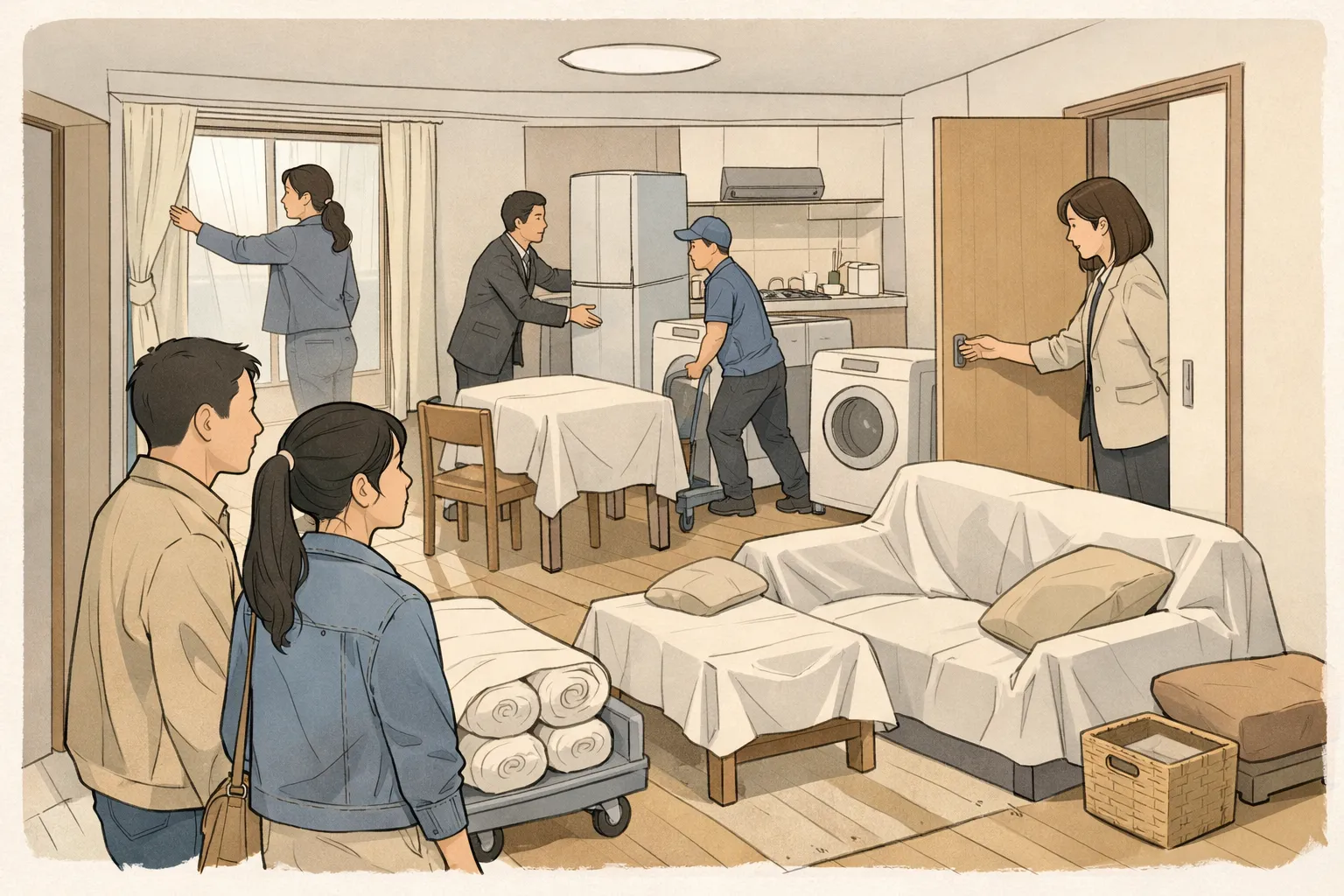
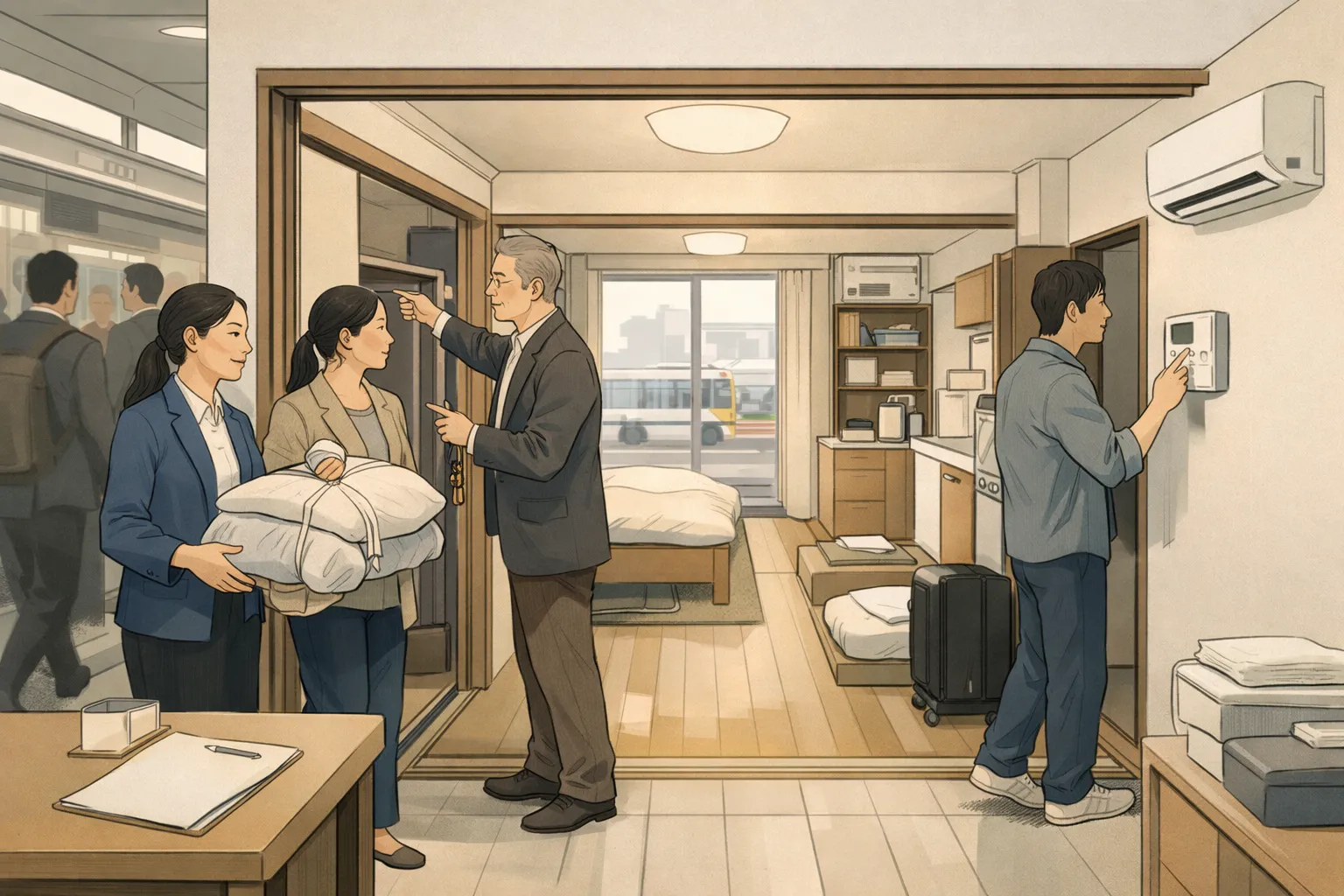
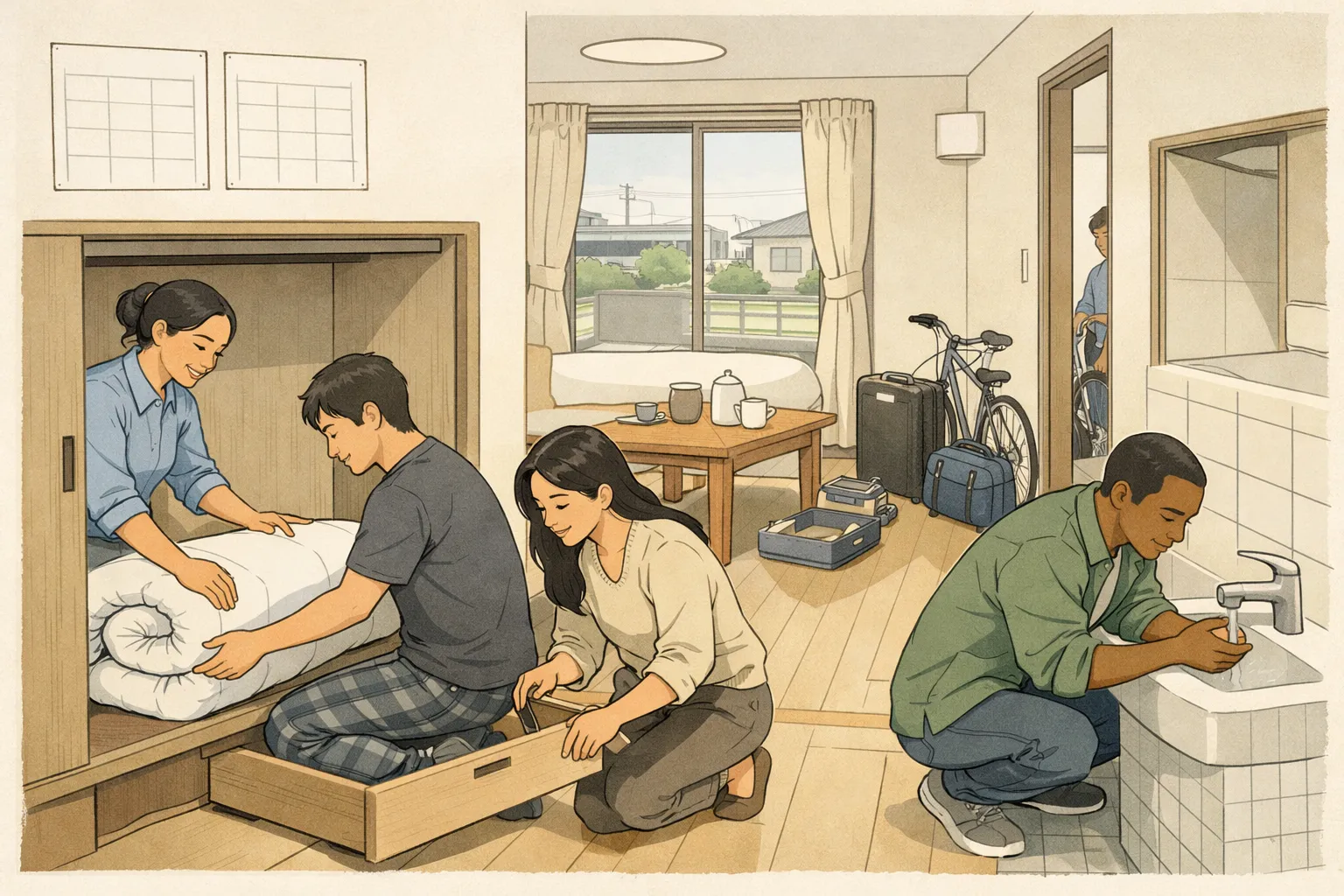
Furnished residences are very convenient when starting a new life. Generally, furnished residences often include a bed, refrigerator, washing machine, air conditioner, and Wi-Fi, allowing residents to start a comfortable life immediately. Especially for Mongolians considering employment in Japan, residences equipped with these facilities are very popular as they significantly reduce costs and effort.
As options for housing, there are company-provided dormitories, leased company housing, furnished rental apartments, and even monthly rentals and share houses. Each of these options has its own characteristics, and there are people who are suited or not suited to them depending on their lifestyle, budget, and employment type. For example, dormitories are attractive due to their many facilities and low cost, but they offer little privacy, making them unsuitable for those who value personal living space. On the other hand, furnished rental apartments are ideal for Mongolians seeking an independent lifestyle from the start, as they provide ample facilities and high flexibility.
The advantages of furnished housing are that it reduces initial costs and allows for quick move-in. With many furniture and appliances already provided, setting up a new life becomes smooth. This is especially beneficial for Mongolians who have just started employment in Japan, as they do not need to prepare daily necessities immediately. However, it is important to note that there may be differences in the quality of furnishings, potential costs upon moving out, and restrictions based on the contract, so it is necessary to check these details in advance. Choosing a living environment that suits you is the first step towards a comfortable life.
Furnished Housing
A living space equipped with facilities such as a bed, refrigerator, washing machine, air conditioner, and Wi-Fi.
Dormitory and Housing Support
As part of the housing support provided by companies, residents can reduce their housing costs and receive lifestyle support.
Summary of Key Points
Furnished housing is equipped with beds, refrigerators, washing machines, air conditioners, Wi-Fi, and is a convenient option for Mongolians working in Japan. There are various forms such as dormitories and rentals, which facilitate a smooth setup of life and help keep initial costs down, but it is important to check the contract conditions.
Types of Dormitory and Housing Support and Their Application Procedures
Job Application
First, you will apply for the desired position. At this stage, you will prepare your resume and work history to submit your application.
Job Offer
You will receive a job offer notification from the company, and the employment contract will be officially established. At this time, you will also need to prepare the necessary documents.
Residence Status / Employment Procedures
Prepare the necessary documents for obtaining a residence status (residence card, passport, employment contract, etc.) and complete the onboarding procedures.
Housing Decision
If you choose the company's dormitory or a rented company housing, you will make a housing decision. If you are renting on your own, you will need to search for a property.
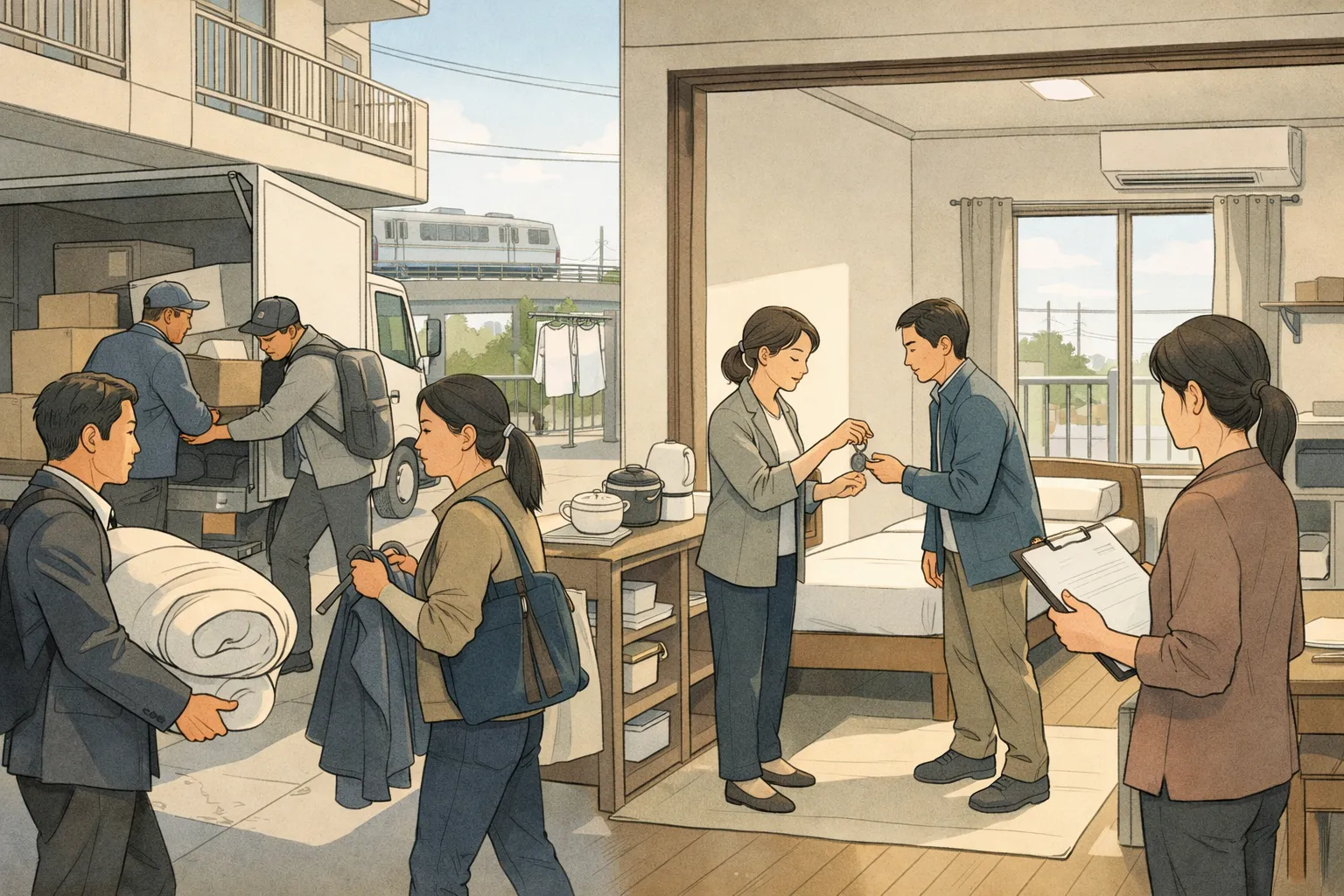
Move In
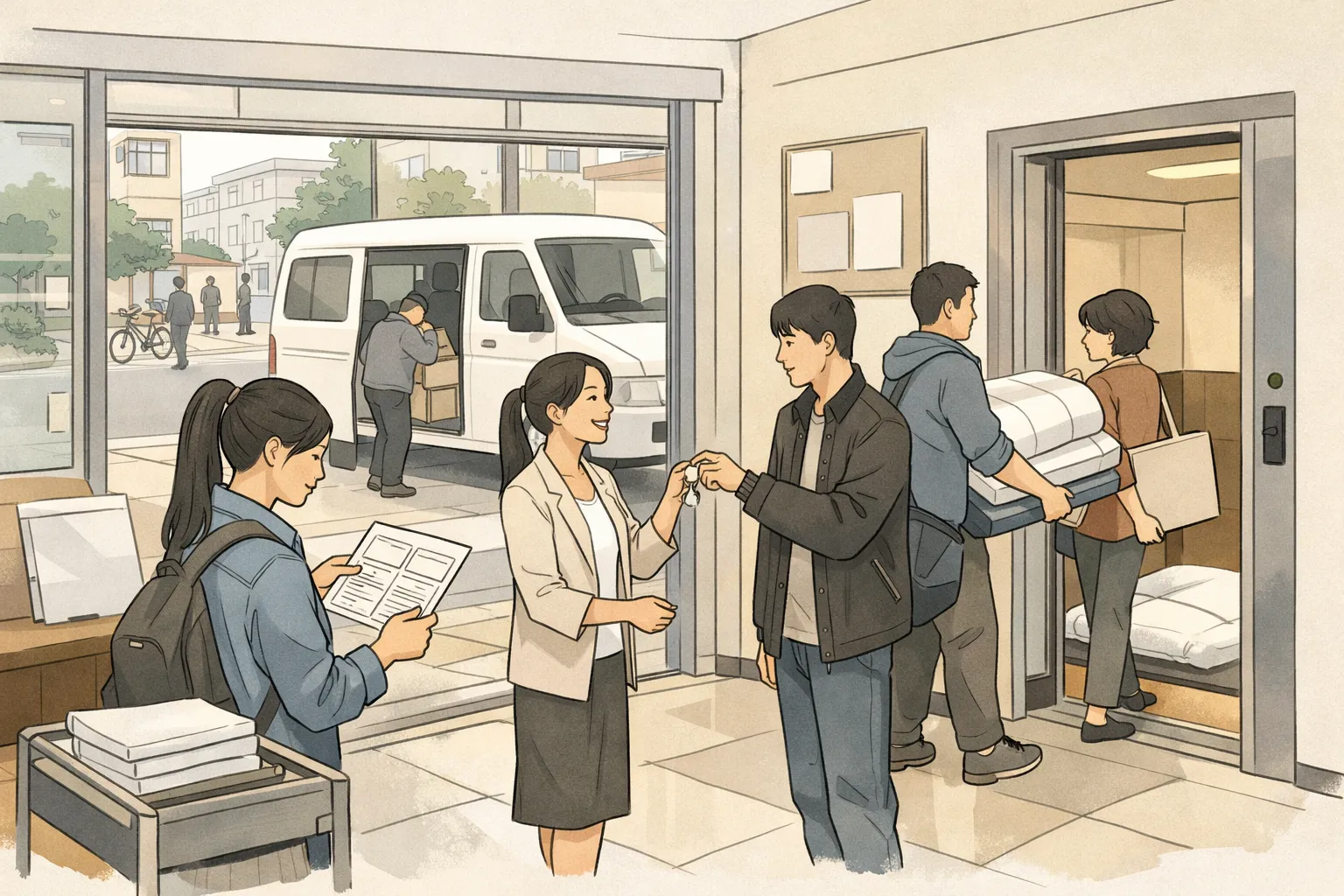
You will move into the chosen residence. Especially in furnished accommodations, you can start your life early.
Lifelines
You will make contracts for lifelines such as electricity, water, and gas. In furnished accommodations, these are often provided, but if not, you will need to handle the procedures yourself.
Government Procedures
You will proceed with procedures at the government office, such as registering your residence and handling health insurance. This officially marks the beginning of your life in Japan.
Support for housing when Mongolians find employment in Japan requires a step-by-step process. The flow begins with "job application". Here, the selection of job types and the preparation of necessary documents are required. Next, there is the acquisition of "job offer", and a labor contract is concluded. At this time, necessary documents should also be prepared. Documents related to residency status and employment procedures, such as "residence card" and "employment contract", are necessary, so be sure to check them carefully.
After that, you will proceed to "housing decision". The options here include company-provided dormitories, leased company housing, or renting on your own. If you choose the company dormitory, initial costs are generally reduced, but it is necessary to confirm in advance as a "guarantor" and "emergency contact" are required. In the case of self-renting, initial costs can be high, and choosing the right property is also important.
Next, the "move-in" will take place, and from here, a new life begins. Don't overlook the contracts for "lifelines". Especially in Japan, it is essential for Mongolians to handle procedures for electricity and gas to live comfortably. Finally, the "government office procedures" await. Registration of residence and other tasks are necessary, and official life in Japan will start. It is important to understand this series of processes and proceed smoothly.
Support for housing when Mongolians find employment in Japan requires a step-by-step process.
The process starts with "Job Application," followed by "Job Offer," and then you will proceed with "Residence Status" and "Housing Decision."
Necessary documents include residence card and employment contract, and consider privacy and economic benefits as well.
Stage
Content
Application
Resume Submission
Job Offer
Completion of Employment Contract
Move-in
Moving into Residence
Points to Consider When Mongolians Choose Furnished Housing
When Mongolians choose furnished housing in Japan, it is important to consider multiple selection criteria. In particular, by thoroughly evaluating work conditions (location and shifts) and living conditions (cost, commuting, safety, and support), you can find a more comfortable home. First, regarding the work location, prioritizing the convenience of commuting can ensure an environment where you can work without stress. If the commuting time is short, you will have more private time, which also contributes to improved work performance.
Next, it is also essential to clearly understand housing costs. Furnished rental properties often have higher initial costs, but in the long run, they may be economical as they save you from having to purchase living essentials. Depending on your lifestyle, dormitories can also be a cost-effective and attractive option. It is important to pay attention not only to costs but also to safety, as choosing a safe area is key to supporting a comfortable life.
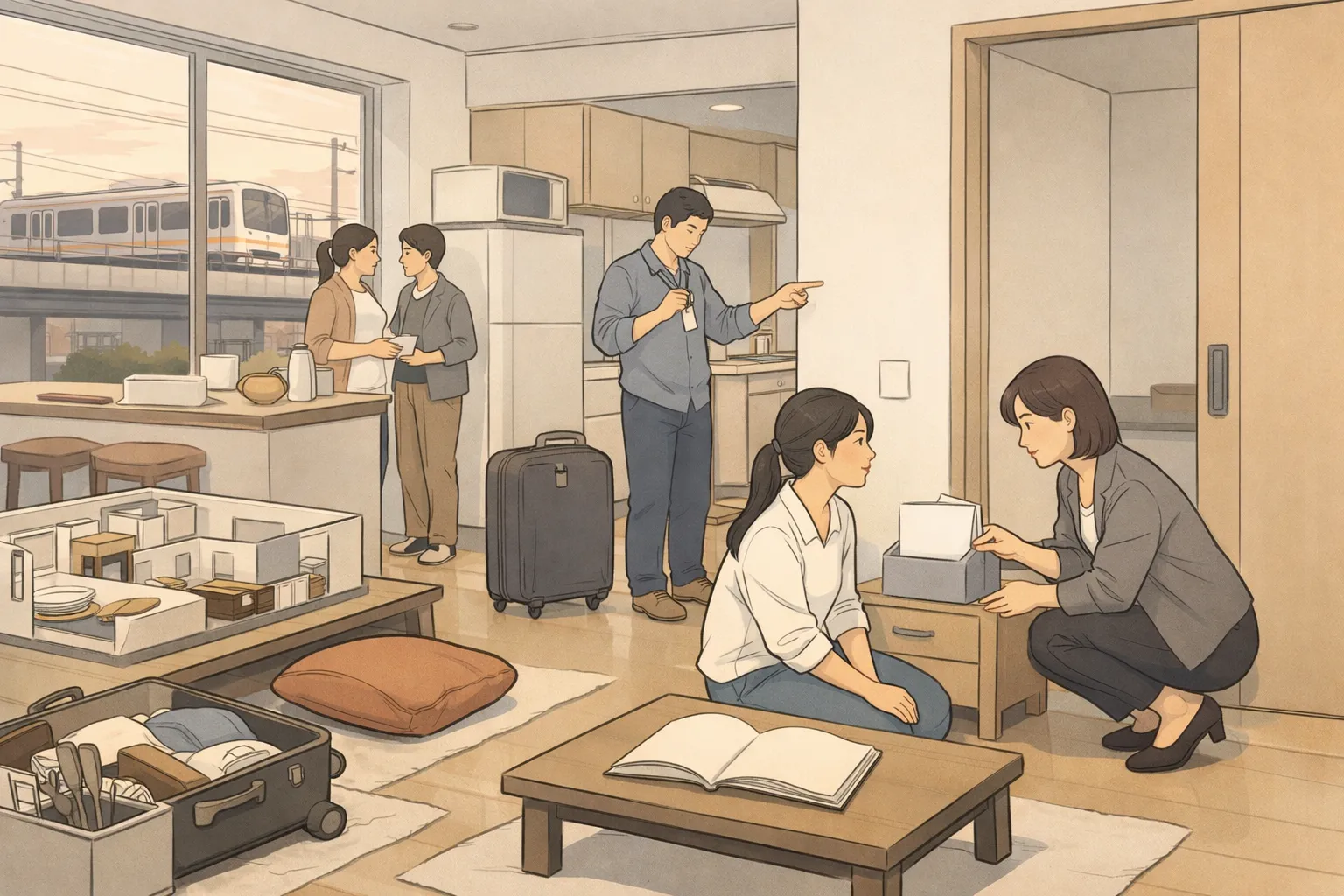
Furthermore, support after moving in is also important. For Mongolians working in Japan, a support system in Japanese is a great help. While feeling the cultural differences and hurdles of daily life, choosing properties with strong local support allows you to start your new life with peace of mind. Living in a new environment comes with anxiety, but having an appropriate support system can help alleviate that anxiety, even if just a little.
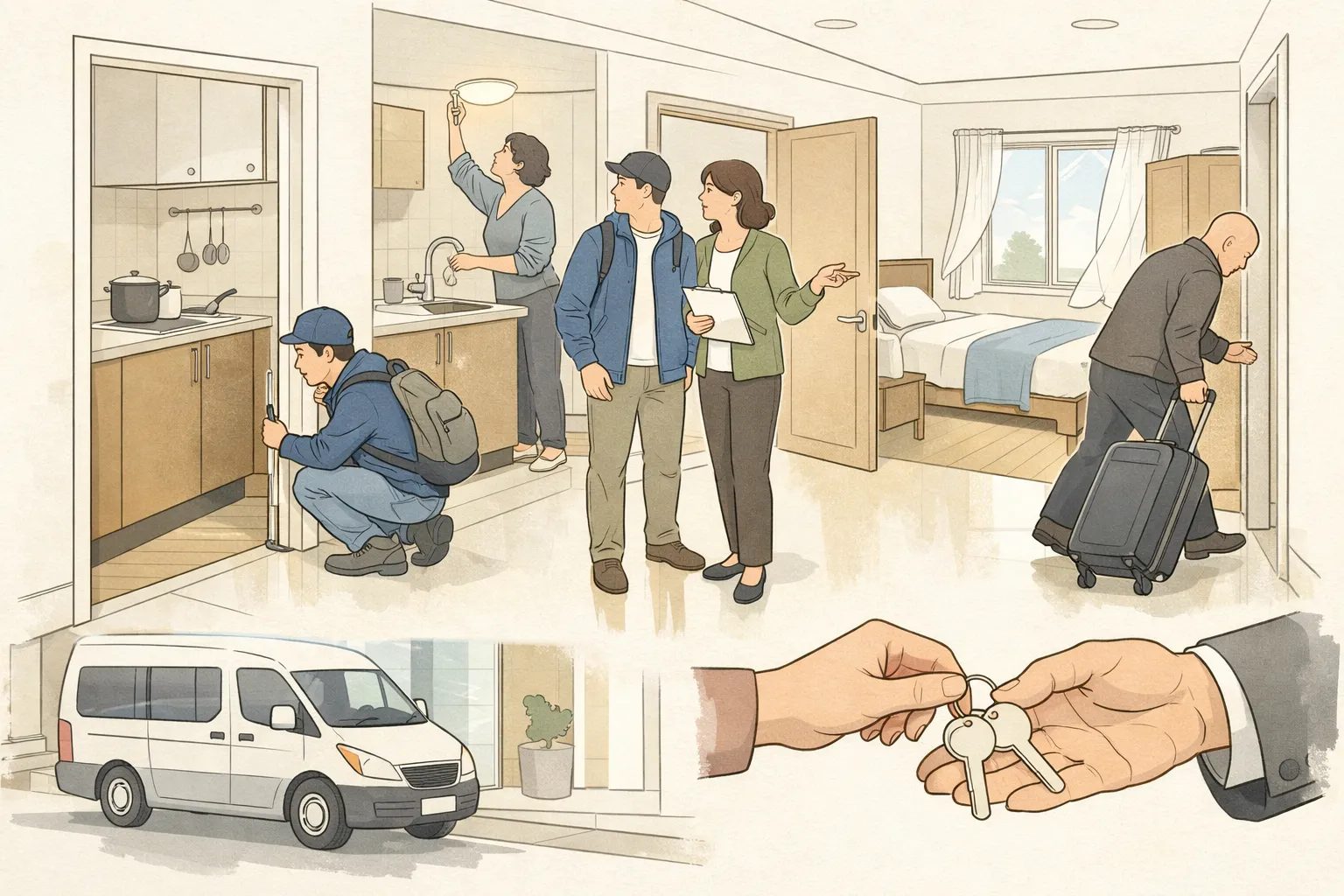
Additionally, it is important to check the contract details and move-out conditions. Furnished properties have specific contract conditions and procedures for moving out, so it is necessary to understand the predetermined conditions in advance. In particular, by researching and understanding the rules regarding deposits, move-out fees, and contract cancellations beforehand, you can avoid unnecessary troubles.
Since the details of contracts and move-out confirmations vary by property, it is crucial to check in advance. Especially when considering properties with dormitory and housing support, it is important to thoroughly confirm the conditions and make choices that fit your lifestyle.
Taking the above points into account, Mongolians will be able to search for the most suitable housing that meets their needs while considering many aspects when choosing a living environment in Japan.
Key Points
When Mongolians choose furnished housing in Japan, it is important to thoroughly check the workplace, costs, safety, and support systems, as well as to understand the contract details and conditions for moving out. This will help you find a comfortable home that suits your lifestyle.
Criteria and Considerations for Choosing Furnished Properties
Rent and Common Service Fees should be checked. It is important to understand the total monthly costs.
Check if utility costs and internet fees are included. Let's calculate the living costs including these expenses.
Don't forget to check the necessary items for initial costs (such as key money and deposit). This will make it easier to create a financial plan.
Check whether using a guarantee company is mandatory. This will allow you to contract your residence with peace of mind.
Also check the regulations regarding penalty fees and move-out costs. Make sure that unexpected expenses do not arise when moving out early.
Check the list of furniture and appliances and choose a property that fits your lifestyle. It's important to ensure that you have everything you need.
Also check the noise levels and the rules within the residence. This is an important point to avoid troubles with other residents.
The convenience of commuting and the surrounding shopping environment are also important factors. Let's investigate commuting times and the availability of shopping facilities when making a choice.
Check if there is sufficient language support. If you are particularly unsure about Japanese, choosing a property with language support will provide peace of mind.
Examples of questions to confirm before viewing or moving in are especially helpful if you are unsure about Japanese. Here are some of them:
What is included in the rent?
How much are the initial costs when moving in?
What procedures are necessary when moving out?
How well-furnished is the place?
Are there shopping facilities nearby?
Based on these points, Mongolian individuals can establish criteria for finding employment in Japan and comfortable dormitories or residences. Choosing furnished properties with dormitory and housing support will be the first step towards a secure life in Japan.
Caution
When choosing a property, it is important to carefully check the points mentioned above. In particular, initial costs and monthly expenses have a significant impact on your household budget. Additionally, noise and housing rules also affect livability, so be sure to check these in advance. Sufficient information gathering is necessary for a comfortable life.
Popular Areas for Mongolians and Their Characteristics
When Mongolians look for jobs in Japan and search for properties with dormitory and housing support that are furnished, there are several common conditions in areas that are often chosen.
First, areas with a high number of companies that accept foreigners are attractive to Mongolians. These companies embrace a multicultural environment, increasing job opportunities for Mongolians. For example, in urban areas, there is a concentration of multinational companies, providing abundant job opportunities for Mongolians.
Next, areas where the rent range matches the budget of Mongolians are also likely to be chosen. While rents are higher in urban areas, in regional industrial zones, there is a possibility of finding properties with dormitory and housing support at relatively affordable rents that are furnished.
Transportation convenience is also an important factor. In urban areas, public transportation is well-developed, making commuting and daily life convenient. On the other hand, in rural industrial areas, a car is often necessary, and securing transportation options is required.
Furthermore, the existence of a community is important for Mongolians. In urban areas, diverse cultures coexist, and Mongolian communities are also formed. This makes it easier to receive support and exchange information in daily life.
Considering all of the above factors comprehensively, when Mongolians seek employment in Japan and look for housing support with furnished properties, there are advantages and disadvantages to both urban areas and rural industrial areas.
When comparing the advantages and disadvantages of urban areas, it looks like this:
Advantages
There are many companies accepting foreign workers.
Public transportation is well developed.
The Mongolian community is formed by the coexistence of diverse cultures.
Disadvantages
Rent is relatively high.
The overall cost of living tends to be high.
On the other hand, when comparing the advantages and disadvantages of regional industrial areas, it looks like this:
Advantages
Rent is relatively affordable.
The overall cost of living tends to be low.
Disadvantages
Public transportation is often underdeveloped.
There may be a small Mongolian community.
Please use this information as a reference to help Mongolians select areas when looking for accommodation support with dormitories and housing in furnished properties in Japan.
Support for Mongolians seeking employment in Japan
When Mongolians consider employment in Japan, properties that come with **dormitory and housing support** and are **furnished** are important. Excellent areas tend to have **companies that accept foreigners**, affordable rent, and convenient transportation.
Selection Points
Check the **rent**
Convenience of **transportation**
Formation of **community**
Resources for Mongolians Useful in the Japanese Job Market
In the job search of Mongolians in Japan, securing housing with dormitory and housing support and furnished accommodations directly contributes to stability in life and improved job performance. Below, we will organize the sources of information available from public institutions, private recruitment and registration support organizations, and hometown communities, along with points to consider when using each.
Public Institutions
Public institutions such as Hello Work provide information on housing with dormitory and housing support and furnished accommodations for Mongolians. These institutions have reliability in providing accurate information regarding residency status and working conditions. However, depending on the frequency of information updates and the region, it may not always be possible to find properties that meet desired conditions. Therefore, regular information gathering and utilizing multiple institutions is recommended.
Private recruitment and registration support organizations
Private recruitment agencies and registered support organizations support Mongolian job seekers and provide information on furnished housing with dormitory and housing support. These organizations may charge fees, so it is important to confirm the presence and amount of fees before signing a contract. Additionally, it is necessary to check in advance whether the residency status matches the desired job type and conditions to receive appropriate support.
Hometown community
Mongolianhometown networks and communities share information about living conditions and furnished housing with dormitory and housing support. However, this information is often based on personal experiences and subjective views, which may lack accuracy and reliability. Therefore, it is necessary to carefully assess the information obtained by comparing it with other reliable sources.
Points to note when using
- Check fees: When using private recruitment agencies or registered support organizations, it is important to confirm the presence and amount of fees in advance and proceed with the contract only after understanding and agreeing.
- Confirmation of Contract Details: When signing a furnished residence with dormitory and housing support, it is essential to carefully review the contents of the contract, particularly the conditions for moving out and the arrangements regarding the security deposit.
- Eligibility of Residence Status: It is necessary to confirm in advance whether the desired job type and conditions are compatible with the residence status, and to receive appropriate support.
To ensure that Mongolians succeed in their job search in Japan, it is crucial to utilize these information sources, gather information from reliable sources, and thoroughly check the details of the contract. Additionally, it is important to fully understand the residence status, fees, and contract conditions, and to make careful judgments.
Summary of Key Points
When Mongolians seek employment in Japan, it is important to utilize public agencies, private recruitment services, and local communities to find furnished residences with dormitory and housing support. By thoroughly checking the contract details, fees, and eligibility of residence status, one can make careful judgments and start a new life with peace of mind.
Support organizations and networks useful for job hunting
Q1: In Japan, where are the Mongolian job support organizations for activities?
A1: In Japan, there are the following organizations that support the job activities of Mongolians:
- General Office of Labor and Social Welfare Services of Mongolia (GOLWS): This is an official agency of the Mongolian government that provides job support for Mongolians. Please check the official website for details.
- Embassy of Japan in Mongolia: It provides information and consultation regarding the job opportunities for Mongolians. Please visit the official website for the latest information.
Q2: Where can I receive support for learning Japanese?
A2: The following organizations provide support for learning Japanese:
- Mongolia Japanese Language School: Japanese courses are offered for Mongolians.
- Mongolia National Labor and Social Welfare Service Comprehensive Office (GOLWS): Provides programs to support Mongolians in learning Japanese.
Q3: Where can I receive support for finding housing for Mongolians in Japan?
A3:Mongolian housing search support organizations include the following:
- Embassy of Japan in Mongolia: Provides information and consultation regarding housing searches for Mongolians.
- Mongolia National Labor and Social Welfare Service Comprehensive Office (GOLWS): Offers programs to assist Mongolians in their housing search.
Information to prepare before consultation:
- Desired job type: What kind of job you are hoping for.
- Residency Status: Current residency status and type of visa.
- Preferred Work Location: Desired work location or area.
- Budget: Monthly budget for housing.
By organizing this information in advance, you can facilitate a smoother job search and housing search.
Note
It is important to check official information and the latest updates. In particular, please verify the details regarding the institutions and programs mentioned on their respective official websites. Additionally, since there are different conditions and laws for job hunting and housing searches for Mongolians depending on the region, it is necessary to conduct research in advance.
Tools and books for understanding Japanese workplace culture
To understand Japanese workplace culture, various tools and books can be helpful. In particular, it is important for Mongolians to effectively utilize these resources when engaging in job hunting in Japan. Below, we introduce tools categorized by type.
First, regarding Japanese language learning, there are many materials available to master honorifics and business conversation. Since you can choose materials based on your level, it is important to identify those that match your abilities. Utilize free online resources and paid specialized books to acquire Japanese language skills that can adapt to the work environment.
Next, resources are needed to understand manners. You can use introductory books and video courses to learn business manners and cultural differences. In particular, content related to communication and etiquette in the workplace should be beneficial for Mongolians.
Next, there are many resources available to understand the basics of labor law. This is important to prevent potential issues that may arise after employment in Japan. It is advisable to refer to information from reliable publishers and consider consulting experts as needed.
Additionally, understanding the basics of housing contracts is essential for Mongolians to live comfortably in Japan. By gathering information on rental agreements and troubleshooting housing issues, you can acquire the knowledge necessary for a smooth housing arrangement.
Finally, there are many apps that can assist with translation and interpretation. These are particularly useful tools for those who are anxious about language barriers. There are plenty of free and paid options available, so it would be good to find an easy-to-use app.
Below are points to consider when selecting tools for each category. Please use this as a reference to find the resources you need.
Choose materials that match your Japanese language level.
Mongolian specialized content to find.
Compare free and paid resources.
Aim for sustainable learning through regular study.
By utilizing these tools and understanding Japanese workplace culture, Mongolians will be able to conduct better job searches and create an environment where they can live comfortably.
Point
To understand Japanese workplace culture, resources such as Mongolian language learning, manners, labor laws, and housing contracts are important. Choosing them should consider the level and price, and continuous learning is key.
Category
Points
Japanese Language Learning
Choose materials suitable for your level.
Manners
Understanding business manners is important.
Specific advice for successful job hunting with dormitory and housing support
In job hunting for Mongolians in Japan, understanding how crucial dormitory and housing support with furnished housing is can be the key to success. During the selection process, support in terms of housing is often evaluated as a factor that contributes to job retention, commuting convenience, and even stability in life. A well-established physical living environment makes it easier to focus on work and improves the quality of life. Therefore, it is necessary to dispel any concerns about the foundation of living in application documents and interviews, and to emphasize a positive attitude. For example, simply saying, "I have a furnished residence with support, and commuting is convenient" can provide reassurance to companies.
When preparing for interviews and documents, it is effective to include specific points and clearly convey how helpful housing support can be. For Mongolians to succeed in Japan, expressing the existence of housing support positively during the selection process is key. Next, I will show a specific practical template, so please pay attention to this.
💡 Points
By preparing a message to alleviate concerns about housing in your application documents and interviews, you can advance the selection process favorably.
Key Points
Having housing support improves the stability of Mongolian job seekers. During interviews, highlighting stability in commuting and living through furnished housing with dormitory or housing support is a key point that leaves a good impression in the selection process.
Key points for self-promotion and resume writing
Points on how to write a self-promotion and resume
Utilizing self-promotion templates
In Japanese resumes and work history documents, aspects such as reproducibility, numbers, roles, cooperativeness, and perseverance are emphasized. To effectively convey these elements, let's utilize the following self-promotion template.
1. Conclusion: Briefly state your strengths and characteristics.
2. Evidence: Explain the experiences or skills that support those strengths.
3. Specific Examples: I will provide concrete episodes and achievements from the past.
4. Contribution: I will demonstrate how I can be of use to the company I am applying to.
Example Sentence:
"I possess highly reproducible project management skills. In my previous job, I led a team of five members and increased sales by 20% over six months. I believe I can leverage this experience to contribute to improving team performance in your projects."
How to Express Housing Support Needs:
When seeking support for dormitory or housing, it is important to convey it as a negotiation of conditions rather than as a plan for stable living. This can give a positive impression to the company.
Example sentence:
"To smoothly start my new life in Japan, I hope for an environment with dormitory and housing support. This will allow me to focus on my work in Japan and adapt to the Japanese corporate culture early on."
NG example:
- "I am anxious about living in Japan, so I require dormitory and housing support as a necessity."
- "Please cover all housing costs in Japan."
These expressions may be perceived as too strong of a demand and can give a vague impression.
Here is the point
In your resume and work history, it is important to demonstrate reproducibility and specific numbers, and to highlight your role and teamwork. Additionally, when requesting dormitory or housing support, it is better to communicate it as a plan for stabilizing your living situation rather than as a negotiation of conditions. The key is to clearly show your strengths with specific examples.
Interview preparation and practical communication techniques
The expected questions you may face during the interview include your motivation for applying, residency status, working conditions, reasons for housing preferences, Japanese language proficiency, and how you handle difficulties. It is important to have clear frameworks for your answers and to prepare in advance. Especially for Mongolians aiming to work in Japan, conditions such as housing support and communication skills in Japanese are attractive points. Therefore, it is reassuring to have specific example answers prepared.
For example, regarding your motivation for applying, you might say, "I am attracted to the business environment in Japan and would like to contribute to your company's global expansion." For residency status, you can convey, "I hope to work in Japan and am preparing the necessary documents." Additionally, it is important to honestly communicate your preferences regarding working conditions.
Next, for those who are anxious about using honorifics, I recommend "useful set phrases." For example, simple greetings like, "Nice to meet you, my name is 〇〇. I look forward to working with you," or phrases like, "May I take a moment to consider the details you provided?" can be helpful. Such conversation examples will assist you in approaching the interview with confidence.
In online interviews and face-to-face interviews, it is important to pay attention to the state of the connection and the angle of the camera. In online settings, be mindful of potential technical issues and aim for a relaxed pace. Furthermore, if an interpreter is present, it is crucial to thoroughly confirm what they are saying and ensure smooth communication through the interpreter.
Ultimately, by preparing these aspects, it will be a significant step for Mongolians to successfully engage in job hunting in Japan. Receiving assistance with housing support is essential for living in a new environment. By thoroughly preparing for interviews in this way, you can experience ease of working in Japan and make a good start towards your future.
Key Points for Interview Preparation
In an interview, preparation for **anticipated questions** is essential. Clearly communicate your motivation for applying and your working conditions. If you are unsure about using honorifics, it is a good idea to utilize set phrases.
Key Points to Note:
Clarification of Motivation for Applying
Proper Use of Honorifics
Understanding the Differences Between Online and In-Person
Through these preparations, you will be able to smoothly advance your job search in **Japan**.
Summary: Overview of Employment and Housing Support for Mongolians in Japan
The job search for Mongolians in Japan involves various factors. The first important step is the job selection phase. It is essential not only to choose a position that matches your skills and experience but also to check the employment conditions and workplace environment. In particular, by looking for companies that offer housing support (dormitory), you can establish a stable living foundation, making it easier to focus on work. Some companies provide furnished housing that is available immediately after joining, so it is important to consider such options.
Next, let’s consider the importance of housing (dormitory/furnished). When your living arrangements are in place, your worries about work are alleviated. With commuting time, living expenses, and a comfortable living environment sorted out, your motivation for work will also increase. Additionally, companies recognize that with housing support, employees can work more stably. Thus, housing support is a factor that positively influences work motivation.
Finally, preparations before employment, such as documentation/interviews/living, are essential. In your application documents, emphasize the availability of housing support and explain your stable living foundation. During interviews, it is necessary to showcase your enthusiasm while also working to alleviate any concerns about housing. It is also important to prepare the necessary documents in advance and gather preliminary information about living conditions.
In light of this, the next actions to take include checking for companies that provide robust support for Mongolian individuals and workplaces that offer dormitory and housing support. Additionally, consider reliable consultation sources and establish a system to receive necessary support. Finally, by executing the checklist, you can advance your job search in a planned and effective manner.
For Mongolians seeking employment in Japan, job selection, housing support, and preparation are crucial.
Securing housing (dormitory or furnished) serves as a foundation for working with peace of mind, and
identifying the necessary conditions for Mongolians is the key to success.
Next actions: Check job listings, consider consultation sources, execute the checklist
The importance of future career prospects and housing selection
Benefits
Furnished housing reduces the burden during moving.
Dormitories have lower initial costs, allowing for more financial flexibility.
Disadvantages
It can be difficult to ensure privacy.
There may also be restrictions on lifestyle.
Finding employment in a new environment is a significant step towards a bright future, especially for Mongolians. However, the choice of housing can greatly impact subsequent career development. Housing provides a foundation for securing a stable life through settlement and honing skills. Initially, utilizing furnished accommodations or dormitories allows one to adapt to a new workplace while keeping fixed costs low. This reduces financial pressure and creates room to acquire skills and qualifications, preparing for better job opportunities.
Once a solid foundation is established, considering options for relocation can be beneficial. Especially at the stage of adapting to life in Japan as a Mongolian, transitioning to a more comfortable living environment is possible. Thus, the living environment is closely related to career advancement and job changes, and the initial choice can lead to long-term success. However, every option has its pros and cons, so information is needed to make a confident choice.
For Mongolians to realize their employment life in Japan, the choice of housing is the key to success. In the initial stages, utilizing furnished options or dormitories can help alleviate financial burdens. By further honing skills and preparing for new challenges, one can build a path towards career growth and a fulfilling life. By keeping options open and making realistic career plans, one can ease future anxieties and gain confidence.
Comment from the author
Choosing housing is a very important factor in career development. Reducing financial burdens in the early stages while aiming for skill enhancement is a step towards success. I sincerely support all Mongolians in building fulfilling lives in Japan. Please find a path that suits you while keeping your options open.
Final Checklist for Smooth Living in Japan
To ensure a smooth life in Japan, it is particularly important for Mongolians to prepare when seeking employment in Japan. We have compiled a clear checklist of items to confirm before and after joining a company. Essential items to keep in mind include Residence Card, Resident Registration, Bank Account, Mobile Phone, Insurance, Pension, Seal/Signature, Garbage Rules, Emergency Contact, Supplies, Wi-Fi, Commute Route, and Workplace Communication Methods. Confirming these items is essential for a smooth social life.
Furthermore, one must not forget the specific points related to dormitories and furnished accommodations. For Mongolians considering the use of dormitories and furnished accommodations, it is particularly important to understand the procedures for dealing with damage to supplies and the conditions for moving out. It is necessary to confirm these details thoroughly upon moving in. Additionally, rules regarding curfews and visitors, as well as the use of common areas, should be checked and understood in advance to ensure a comfortable living experience. This information is fundamental to avoiding troubles in daily life.
Below, we have listed important items to confirm. Use this as a reference to clarify what is necessary for your life.
Acquisition and Confirmation of Residence Card
Resident registration procedures
Opening a bank account
Mobile phone contract
Acquisition of health insurance
Understanding pensions
Preparation of daily necessities (hanko and signature)
Learning the rules for waste separation
Setting up emergency contacts
Management of furniture and equipment
Checking the Wi-Fi environment
Understanding Your Commute Route
Confirming Workplace Communication Methods
Utilize this checklist to properly prepare for life in Japan. It is especially important for Mongolians starting new jobs to thoroughly understand how to choose housing and the basics of living, in order to smoothly integrate into Japanese society with peace of mind.
Improving the Lives of Mongolians in Japan
For Mongolians aiming to find employment in Japan, establishing a solid foundation for living is essential. Let's check the following points:
Confirmation of residence card and resident registration
Bank account and mobile contract
Understanding health insurance and pension
In particular, it is important to understand the rules of dormitories and furnished accommodations.

 03-6222-9855
 Guide to Working in Japan
 History
 About this site
 Login


 About this site
 Contact

























 COLUMN CATEGORY
 2026.08.03
Comment from the author
Choosing housing is a very important factor in career development. Reducing financial burdens in the early stages while aiming for skill enhancement is a step towards success. I sincerely support all Mongolians in building fulfilling lives in Japan. Please find a path that suits you while keeping your options open.