Furnished Properties with Dormitory and Housing Support for Indonesians Seeking Employment in Japan
Furnished Properties with Dormitory and Housing Support for Indonesians Seeking Employment in Japan
Indonesians
寮・住居サポート付
2026.08.03
The Importance of Dormitory and Housing Support for Indonesians Seeking Employment in Japan
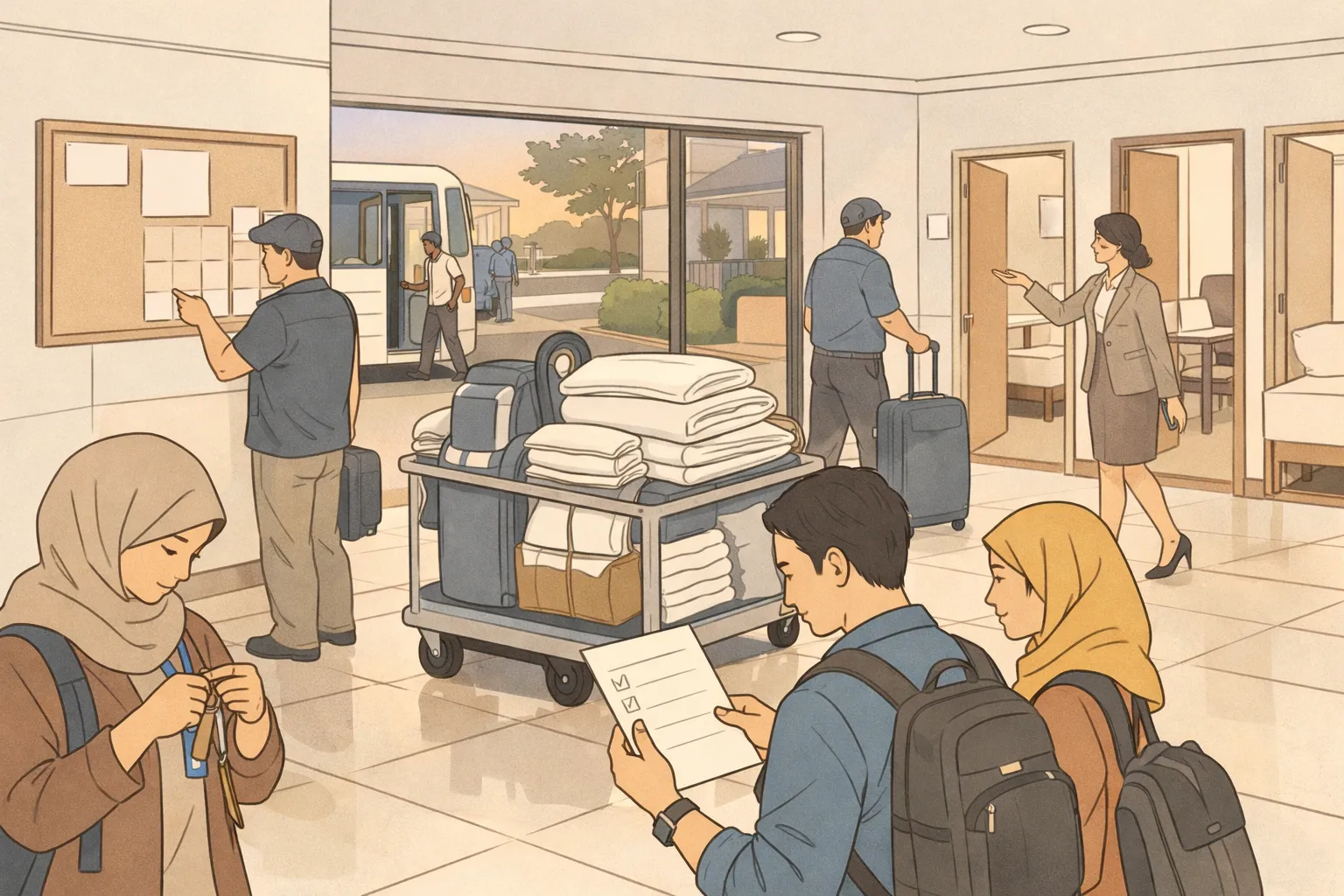
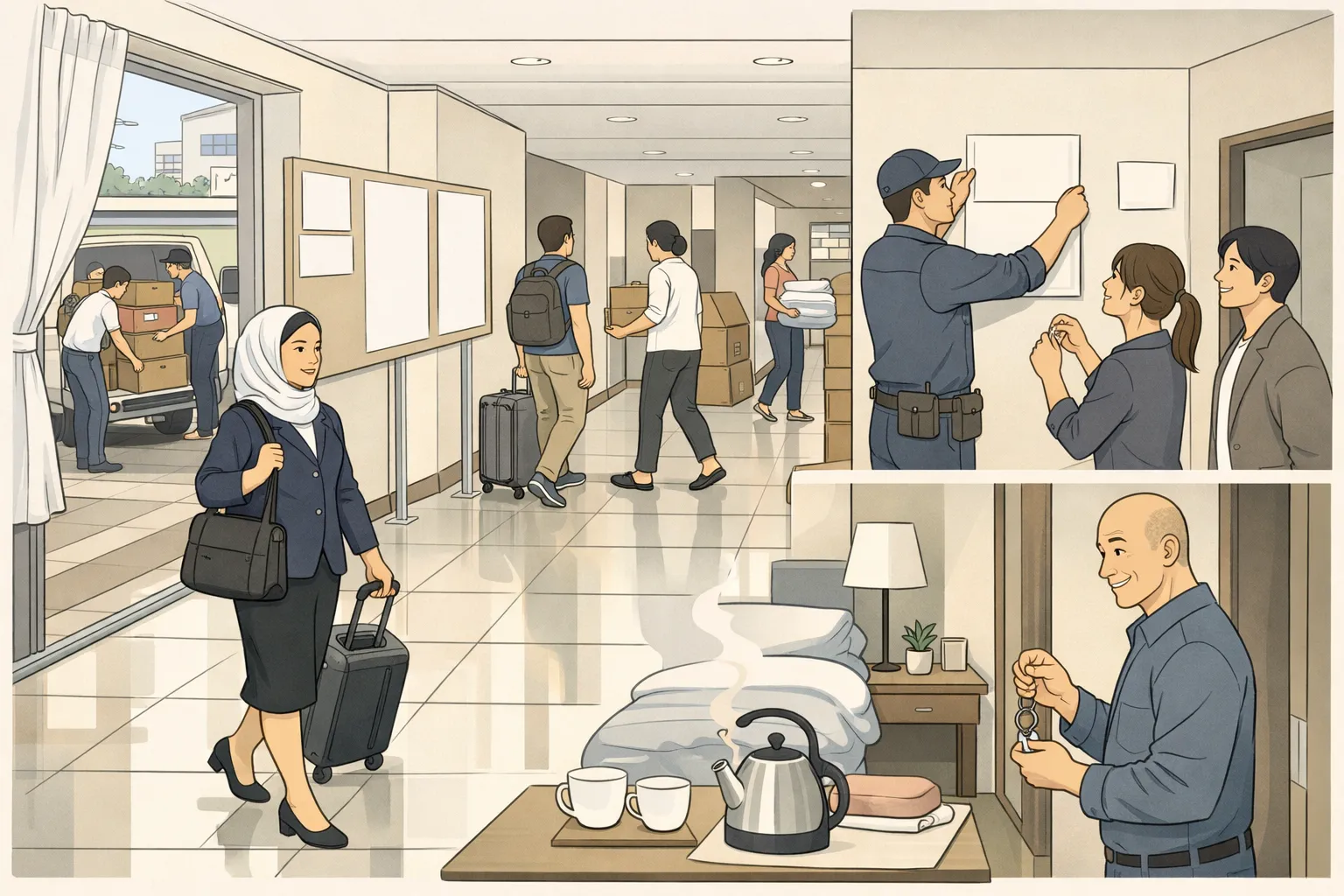
For Indonesians seeking employment in Japan, dormitory and housing support (including furnished options) is extremely important. First, regarding residency status, having appropriate housing is often one of the required conditions for Indonesians trying to find employment in Japan. This is expected to facilitate the conclusion of employment contracts and the acquisition of visas. Housing that allows for temporary stays without high initial costs or long-term contracts is particularly advantageous at the start of employment.
Next, the issue of guarantors should be mentioned. In Japan, it is common to be asked for a guarantor when signing a rental contract, but for foreigners, finding a reliable guarantor can be challenging. Therefore, company-provided housing and company housing become significant options. With these supports, it is possible to secure housing without needing a guarantor, allowing individuals to focus on their work with peace of mind.
Additionally, the language barrier cannot be overlooked. For Indonesians who are not proficient in Japanese, searching for housing can be a major source of stress. Furnished rentals and dormitory and housing support options can help smooth the start of life, providing an environment where they can naturally learn Japanese through communal living in apartment complexes. This, in turn, enhances competitiveness in the market and increases opportunities to utilize specialized skills.
When Indonesians aim to find employment in Japan, you will understand how useful options with dormitory and housing support can be from these perspectives. Not only does such housing make it easier to adapt to a new environment, but it also helps in building a better career path in the future.
Facilities with dormitory and housing support are essential elements, especially for Indonesians living in Japan for the first time, providing a foundation to start a new life with peace of mind.
Note
Since the content of dormitory and housing support varies by company, it is important to carefully check the specific conditions offered by each company. Additionally, the detailed laws and regulations regarding contracts differ by region, so it is crucial to research in advance. Furthermore, deepening your understanding of language support and cultural differences will help you lead a smooth life.
Benefits of Dormitory and Housing Support for Indonesian Job Seekers
Reduction of Initial Costs: In workplaces with dormitory and housing support, initial costs (such as key money and deposit) when searching for housing are often unnecessary, reducing the financial burden.
No Guarantor Required: Many rental properties in Japan require a guarantor, but in dormitories, this requirement is generally waived or relaxed.
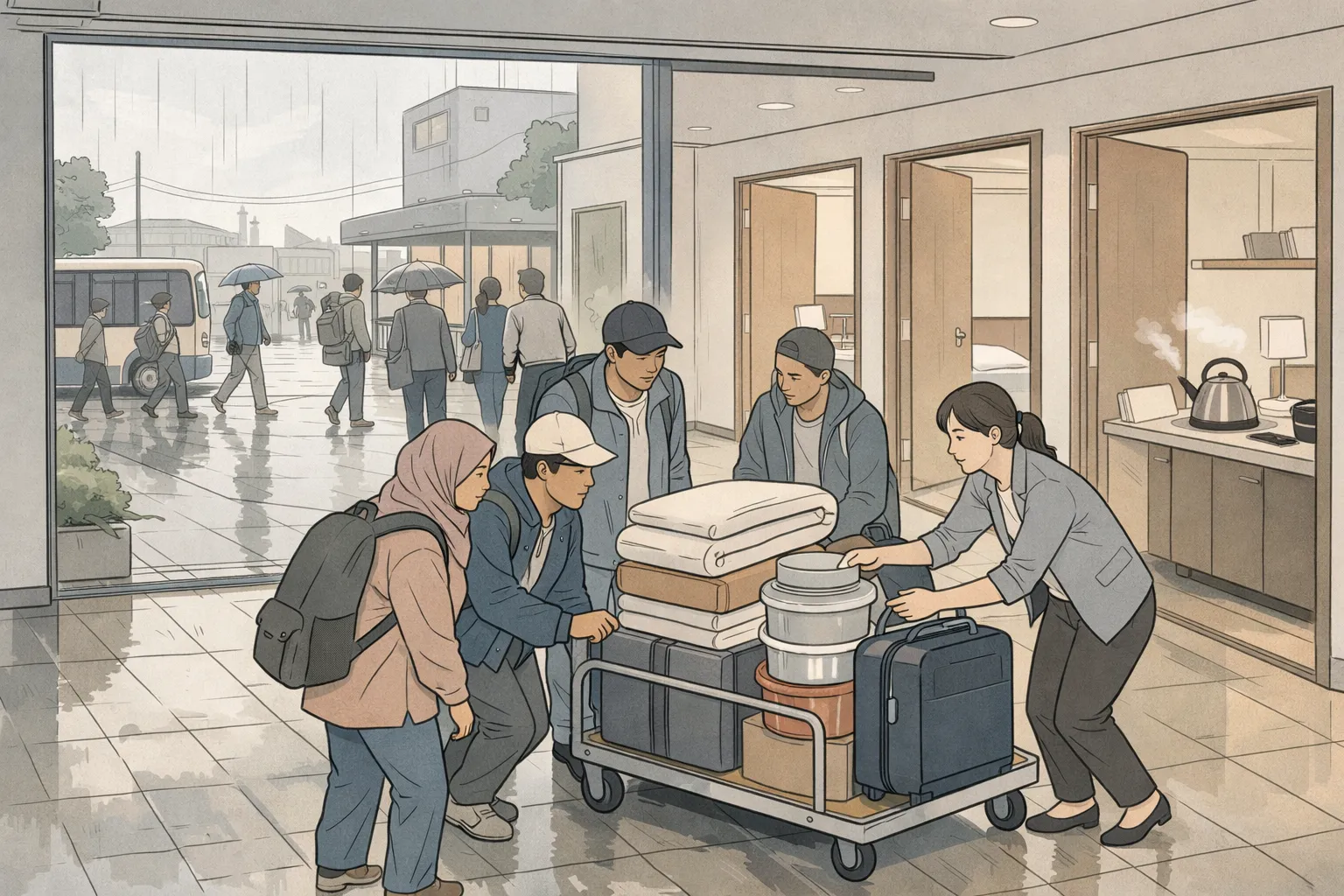
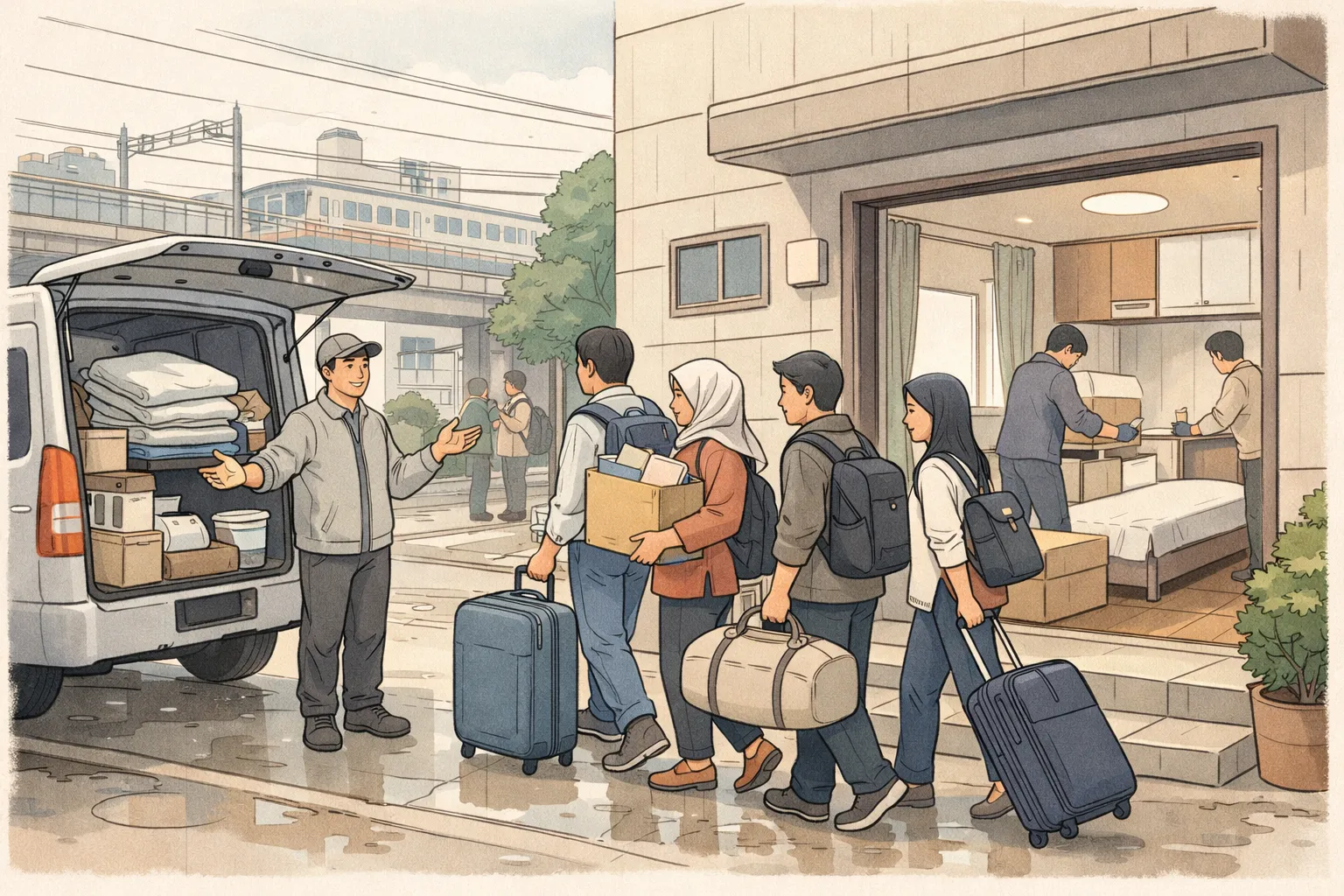
Securing an Address Immediately After Arrival: When Indonesian job seekers arrive in Japan, they can have an address right away, allowing them to start their new life with peace of mind.
Reduced Commuting Burden: Living close to the company shortens commuting time, allowing for more efficient use of working hours.
Japanese Procedure Agency Service:For Indonesian job seekers who are not familiar with Japanese, having a service that can handle necessary contracts and procedures is very helpful.
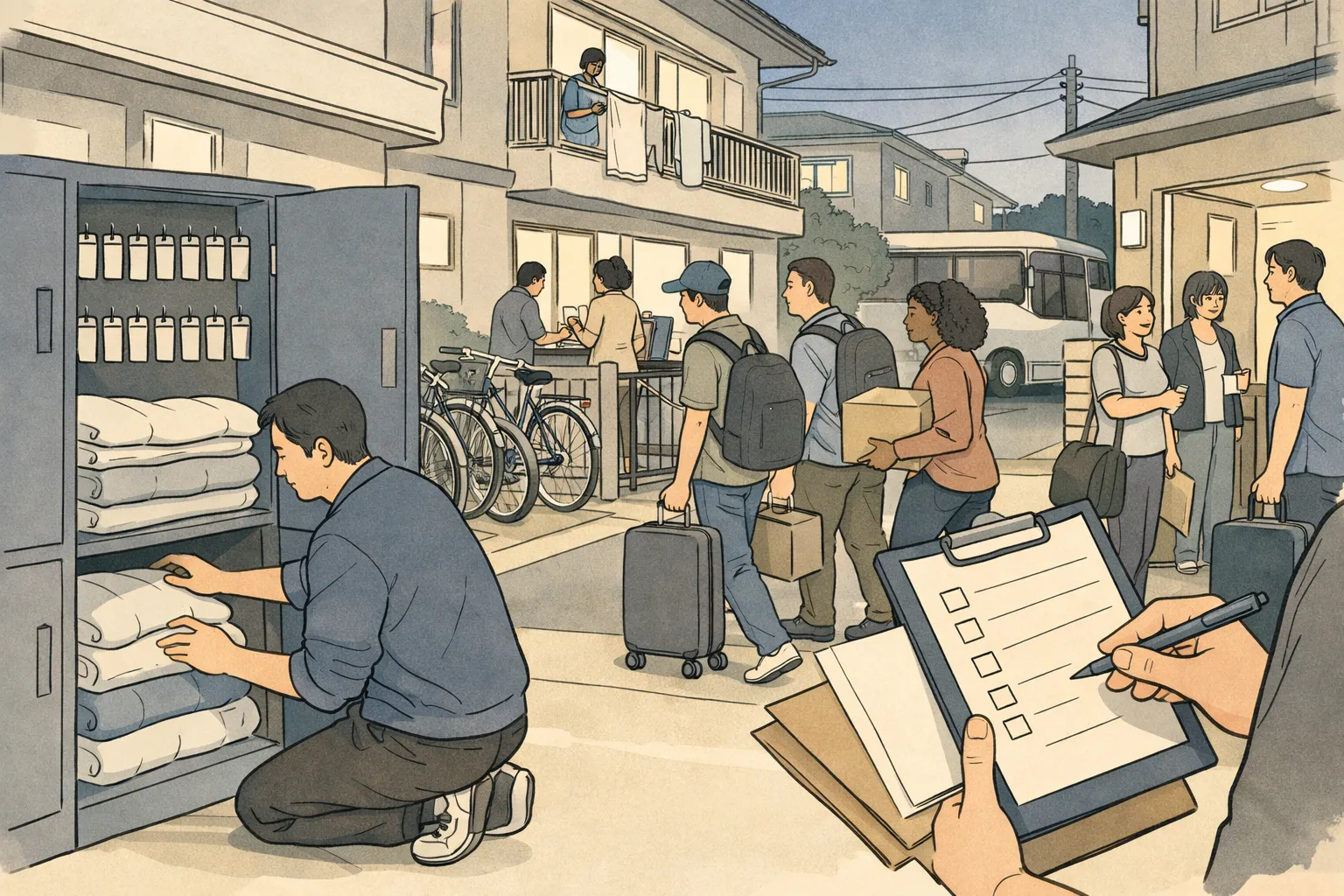
Preparation of Daily Necessities:Dormitories with furniture often come equipped with basic daily necessities, making it easier to adapt to a new environment.
Community Building:Co-living deepens the bonds among Indonesian job seekers in similar circumstances and provides emotional support.
Ease of Saving:By providing low-cost housing, it becomes possible to save on living expenses, making it easier to save money.
In this way, job offers with dormitory and housing support provide many advantages for Indonesian job seekers. In particular, furnished housing lowers the barriers to entry and reduces the burden when starting a new life. Finally, as examples of questions to confirm during the interview, there are the following:
"Could you provide specific information about the dormitory facilities?"
"How are daily necessities prepared?"
"Can you guide me on the means of commuting?"
Through these questions, job seekers will understand the details of dormitory and housing support and be able to make appropriate choices.
Summary of key points
Job offers with dormitory and housing support have many benefits for Indonesian job seekers. They help reduce initial costs, eliminate the need for guarantors, and lessen commuting burdens, while furnished accommodations allow for a smooth start to a new life. It is important to ask specific questions about facilities and daily necessities during interviews.
In job hunting, living environment is a significant factor that greatly affects the performance of job seekers. In particular, commuting time is directly linked to quality of life, and long commutes can increase fatigue and decrease work efficiency. For Indonesians aiming to find employment in Japan, job offers with dormitory and housing support often provide accommodations close to the company, allowing them to enjoy these advantages. On the other hand, environments that require long commuting times can increase burdens, diminish the quality of daily life, and negatively impact job hunting results.
Next, the impact on sleep and health cannot be ignored. A comfortable living environment enables proper sleep and makes it easier to maintain good health. In particular, living in a furnished dormitory reduces the hassle of preparing for daily life, helping Indonesian job seekers adapt to their new environment. Conversely, poor living conditions can be a source of stress and negatively affect sleep quality.
Additionally, the progress of Japanese language learning also depends on the living environment. If the environment is good, it is easier to secure focused time for learning Japanese, participate in the community, and interact with Japanese people, which promotes language acquisition. On the other hand, if the housing situation is inconvenient or stressful, it can diminish motivation to learn and lead to delays in language acquisition.
Furthermore, there is an impact on shift adaptation in working styles. If the living environment is comfortable, it is easier to adapt to flexible working styles, but conversely, if one is living in a stressful place, they may feel increasingly unable to adapt to full-time work. This can lead to lower retention rates and considerations for job changes.
Mental health is also an important aspect. A good living environment serves as a foundation for Indonesian job seekers to engage in their new workplace with peace of mind. On the other hand, spending time in a high-stress environment can significantly increase the risk of turnover. Cost stress is also important. If housing costs are too high or the procedures are complicated, it places a financial burden on job seekers and negatively affects their mental health.
When job seekers self-assess their current living environment, it is important to consider the above aspects. In this way, the impact of the living environment on job hunting and retention is diverse, and particularly, an environment with dormitory and housing support becomes a significant factor in helping Indonesians adapt to life in Japan.
Benefits
Commute times will be shortened, leading to improved work efficiency.
The quality of sleep will improve, making it easier to manage health.
An environment that enhances motivation for learning Japanese is in place.
A mental foundation that allows for安心して働ける is secured.
Financial burdens will be reduced, creating a sense of mental ease.
Disadvantages
If the living environment deteriorates, the risk of leaving the job increases.
Long commuting times can lead to health issues.
Increased stress can lower motivation for learning Japanese.
In an environment with high living costs, one may become mentally unstable.
It may become difficult to adapt to labor shifts.
The impact of the living environment on job hunting
For Indonesians aiming to find employment in Japan,
commuting time, sleep, and mental health are affected.
A good living environment promotes Japanese language learning and increases retention rates.
Conversely, poor conditions may increase the risk of turnover.
Let's review our living environment through self-diagnosis.
Housing system for Indonesians to support employment in Japan
For Indonesians hoping to find employment in Japan, a system with dormitory and housing support is very important. First, the company housing and leased company housing provided by companies help secure the necessary housing for Indonesians working in Japan. These accommodations are generally available furnished, which helps reduce initial costs and allows for a smooth start to life. Additionally, it is a significant advantage to eliminate the hassle of finding a required guarantor. Especially for those coming to Japan for the first time, having an environment where they can receive the necessary support is reassuring.
Next, dormitories established by local governments or schools are also a viable option. These accommodations have good access to schools and workplaces, helping to reduce living costs. They are often designed for students and beginners, and in shared house-style dormitories, residents have the opportunity to interact with others, increasing chances to learn Japanese while experiencing new cultures. This can enhance communication skills in Japan and serve as a factor in advancing job hunting favorably.
Additionally, there is a housing support system for Indonesians aiming to acquire technical training or specific skills. These systems help build a foundation for living in Japan while engaging in specific occupations. Points to consider include housing allowances available upon employment and the use of affiliated real estate. Among the housing support options, particularly when specialized support related to the occupation is available, skill enhancement can be achieved through practical experience.
Moreover, the system with dormitory and housing support provides a foundation for Indonesians to work in Japan with peace of mind. Understanding such housing systems is key to effectively utilizing them according to one's lifestyle and profession. For those seeking employment, gathering information about future systems is essential to make the best housing choices.
ℹ️ Additional Information
Securing appropriate housing is particularly important when seeking employment in Japan. By utilizing housing support systems that fit one's situation, smooth employment becomes possible.
Here are the key points
For Indonesians aiming to find employment in Japan, the system with dormitory and housing support is extremely helpful. Company housing and municipal dormitories require little initial investment and do not need a guarantor, allowing for a安心 start to a new life. This facilitates smooth adaptation and skill development in Japan.
Overview of Housing Support System for Indonesians
Item
Description
Companies
Many companies provide dormitories and offer furnished housing support.
Supervisory Organizations and Registered Support Organizations
Housing support arranged by registered support organizations is also common.
School
There are also dormitories provided by vocational schools and other institutions.
Municipalities
There is also support from municipalities, and some cost subsidies may be available.
Private
Furnished accommodations provided by private rental companies are also an option.
When starting life in Japan, the housing support system for Indonesians is very important. These housing supports are mainly provided by companies, supervising organizations, registered support organizations, schools, local governments, and the private sector. For example, companies provide dormitories and offer a comfortable environment with furniture. Additionally, supervising organizations and support agencies also provide similar assistance, particularly contributing to securing housing, which is the foundation of daily life.
The type of housing can be dormitories or furnished properties. Furthermore, certain programs may include cost subsidies, securing guarantors, and contract support, which are elements that help Indonesians smoothly start their lives in Japan. It is important to note that the rules and conditions for leaving may vary by each system, and in some cases, costs may be deducted. Additionally, it is necessary to confirm the renewal procedures in advance.
In some programs, housing support may be free, while in others, participants may be asked to contribute a portion. This makes it easier for more Indonesians to adapt to life in Japan. Understanding the specific conditions of each system well and choosing a suitable dormitory or housing support is the first step to working with peace of mind.
Caution
The housing support systems are diverse, and the content and conditions vary by provider. It is important to thoroughly check the rules, conditions for leaving, and cost burdens before signing a contract. Additionally, the procedures and conditions for receiving support may change, so it is recommended to check for the latest information.
Conditions and Procedures Required for Dormitory Use
Confirmation at the time of application
When applying for a job,With dormitory and housing supportit is important to confirm the conditions. It is essential to understand what kind of housing is provided in detail.
Job offer
After receiving a job offer, you will be required to submit necessary documents. For example, a residence card and passport will be needed.
Entry/Accommodation
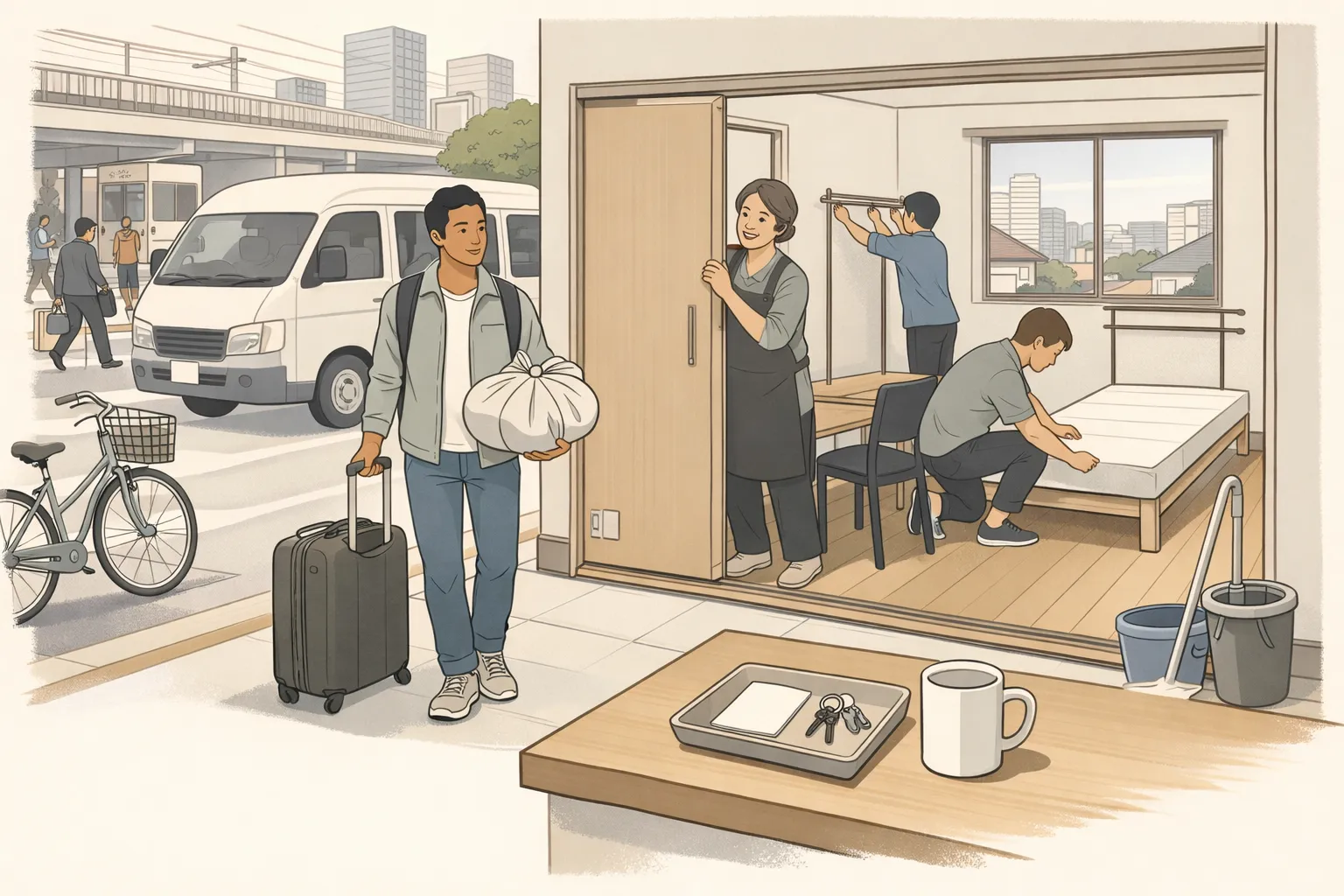
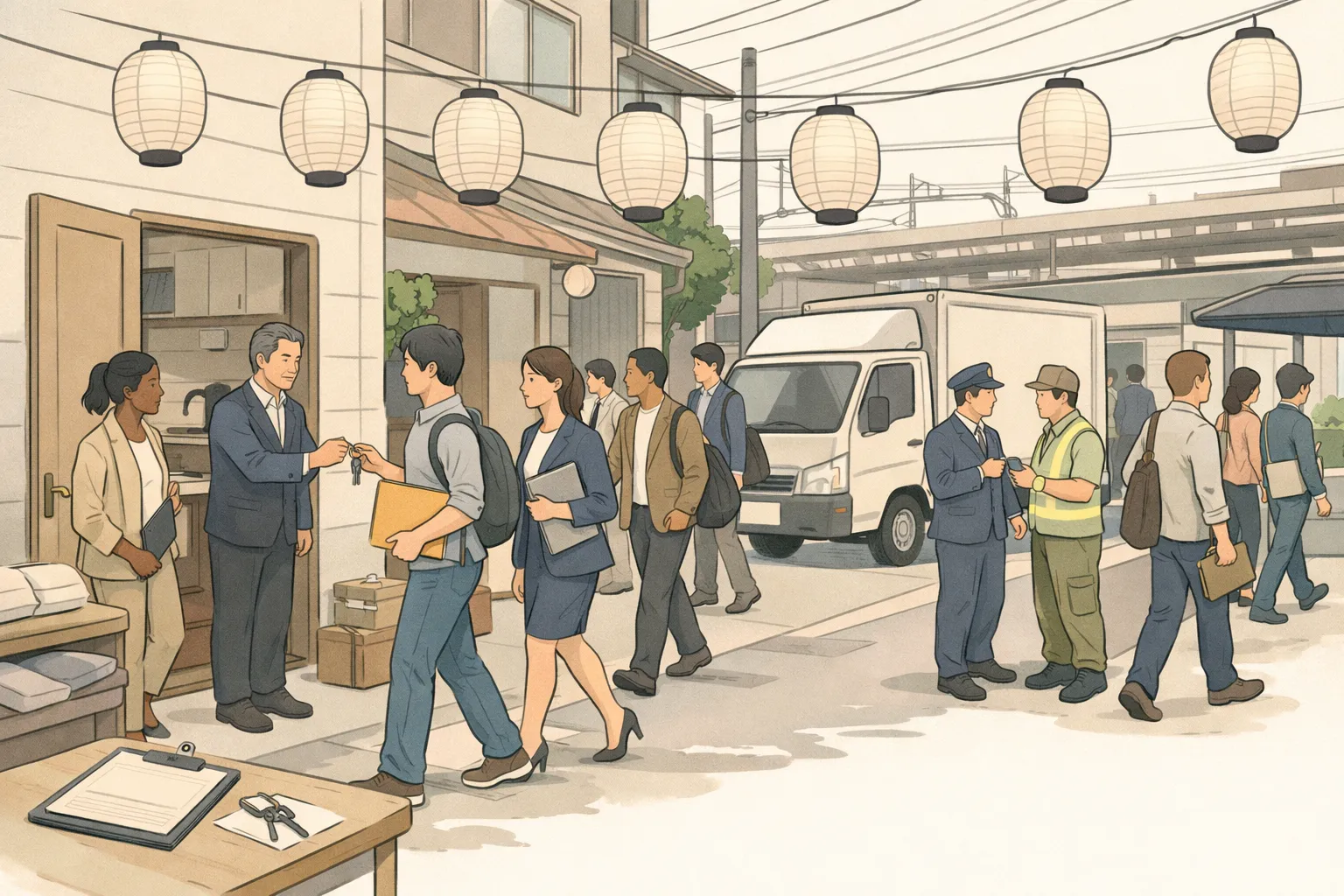
After entering Japan,Accommodation with dormitory and housing supportyou will move into the designated accommodation. At this time, it is important to understand the specified rules in advance.
Confirmation of the Contract
After moving in, you will sign the contract. The contract includes details such as rent, conditions for moving out, and rules for using the residence.
Understanding the Move-in Rules
It is required to thoroughly understand and adhere to the residence's move-in rules. This includes how to use utilities and cleaning rules.
Moving Out Procedures
When leaving, it is often required to give prior notice, and don't forget to complete the refund process for the security deposit.
For Indonesians aspiring to find employment in Japan, the system with dormitory and housing support serves as a significant support for their new life. The period before joining is a crucial starting point, and confirming housing details during the application process is the first step. By preparing the necessary documents and understanding housing conditions at this stage, anxiety can be alleviated.
After receiving a job offer, it is necessary to submit important documents such as the residence card and passport, and preparations for entry begin. After entering the country, it is required to smoothly move into the designated dormitory. Additionally, it is reassuring to check the contents of the housing contract in advance. The contract includes clear information regarding rent and conditions for moving out.
After moving into the dormitory, it is essential to thoroughly understand the various rules for residents and start living. In particular, procedures for resident registration and utility contracts are also important items. For example, it is necessary to confirm the management of keys and the handling of security deposits to avoid confusion. Ultimately, understanding the procedures for moving out in advance allows for a smooth transition to the next step.
To ensure a comfortable stay in the dormitory, here are some preparation checklist items. First, prepare the necessary documents, next, check the details of housing support, and it is also important to receive explanations in Japanese to alleviate your concerns. Additionally, for those who are anxious about the contract in Japanese, it is recommended to seek support in advance.
Points
Indonesians aiming to find employment in Japan need to pay attention to the procedures for dormitory and housing support. Understand the flow from application to entry and contract, and prepare the necessary documents.
Items
Description
Application
Check housing conditions
Entry
Submission of required documents
Let's make sure to understand the key points at each step and start living in Japan with peace of mind.
Points to Consider When Using Furnished Accommodations in Japan
Points to Consider When Using Furnished Accommodations in Japan
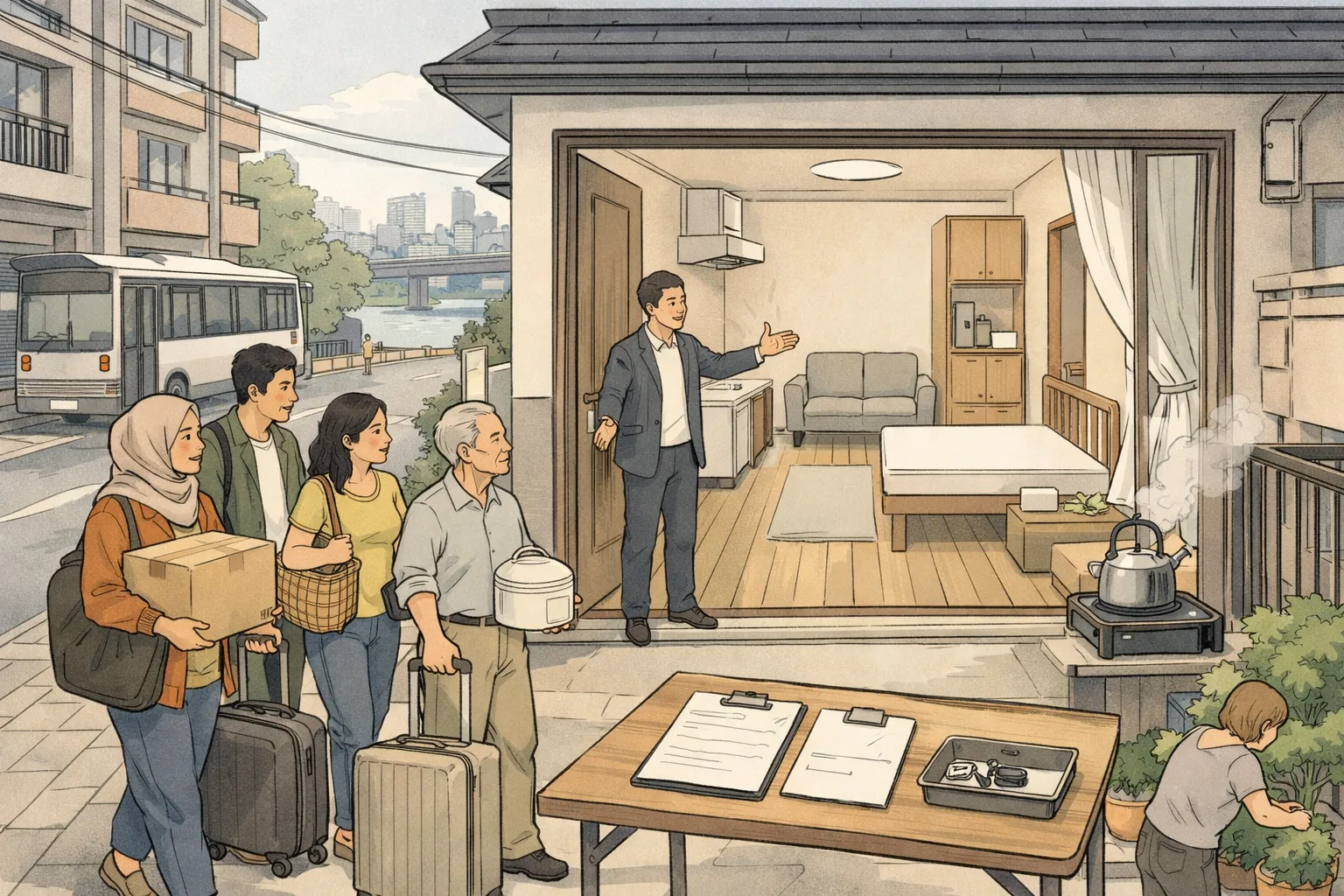
For Indonesians hoping to find employment in Japan, furnished accommodations hold significant value. First, it is important to understand the cost structure. Generally, in addition to rent, there are common service fees, utilities, internet (internet costs), cleaning fees, and other expenses. These costs vary by accommodation, so it is essential to confirm them thoroughly before signing a contract. Additionally, there may be penalties for breaking the contract, so special attention is required. Knowing all the costs at the time of signing is key for Indonesians to avoid future troubles.
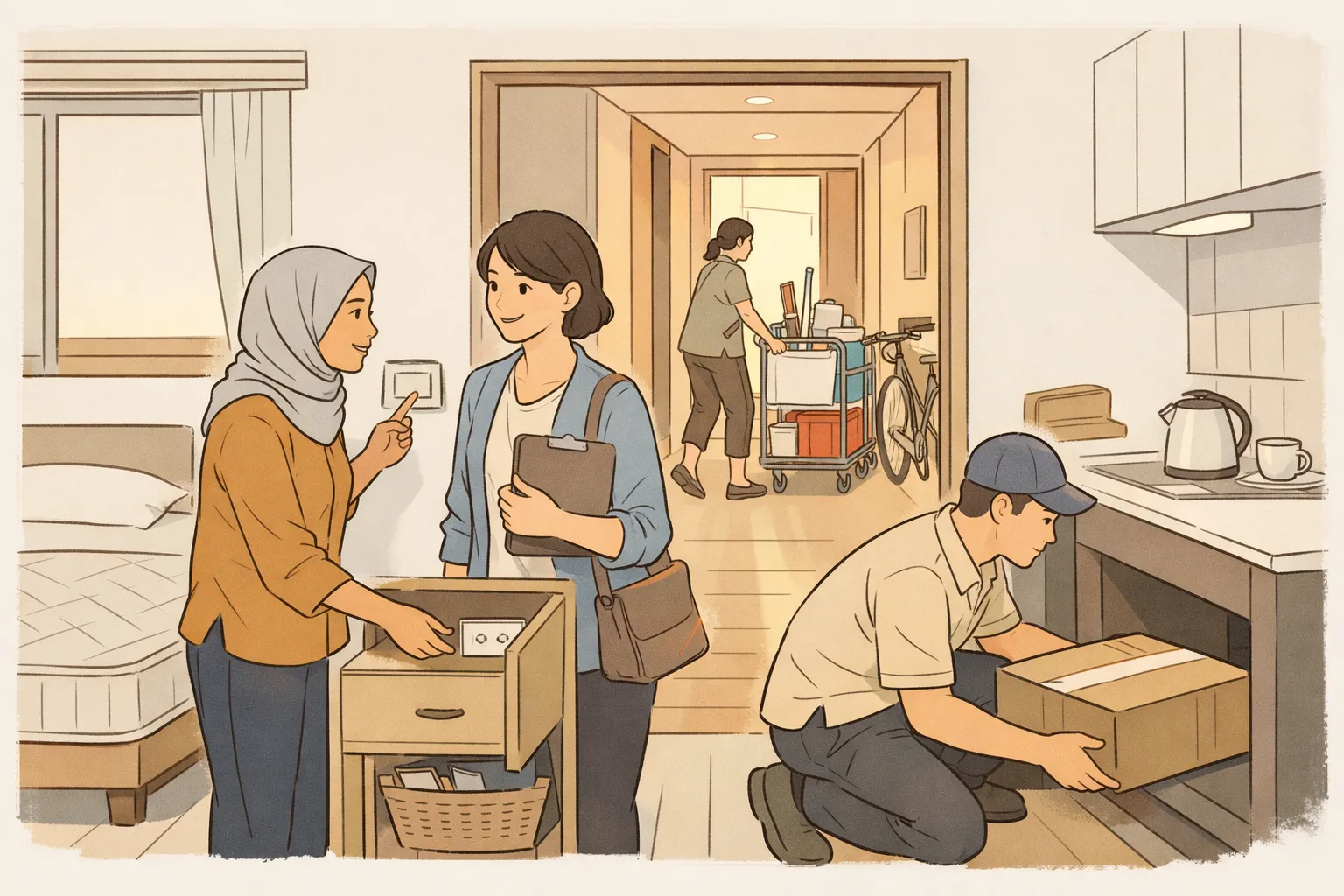
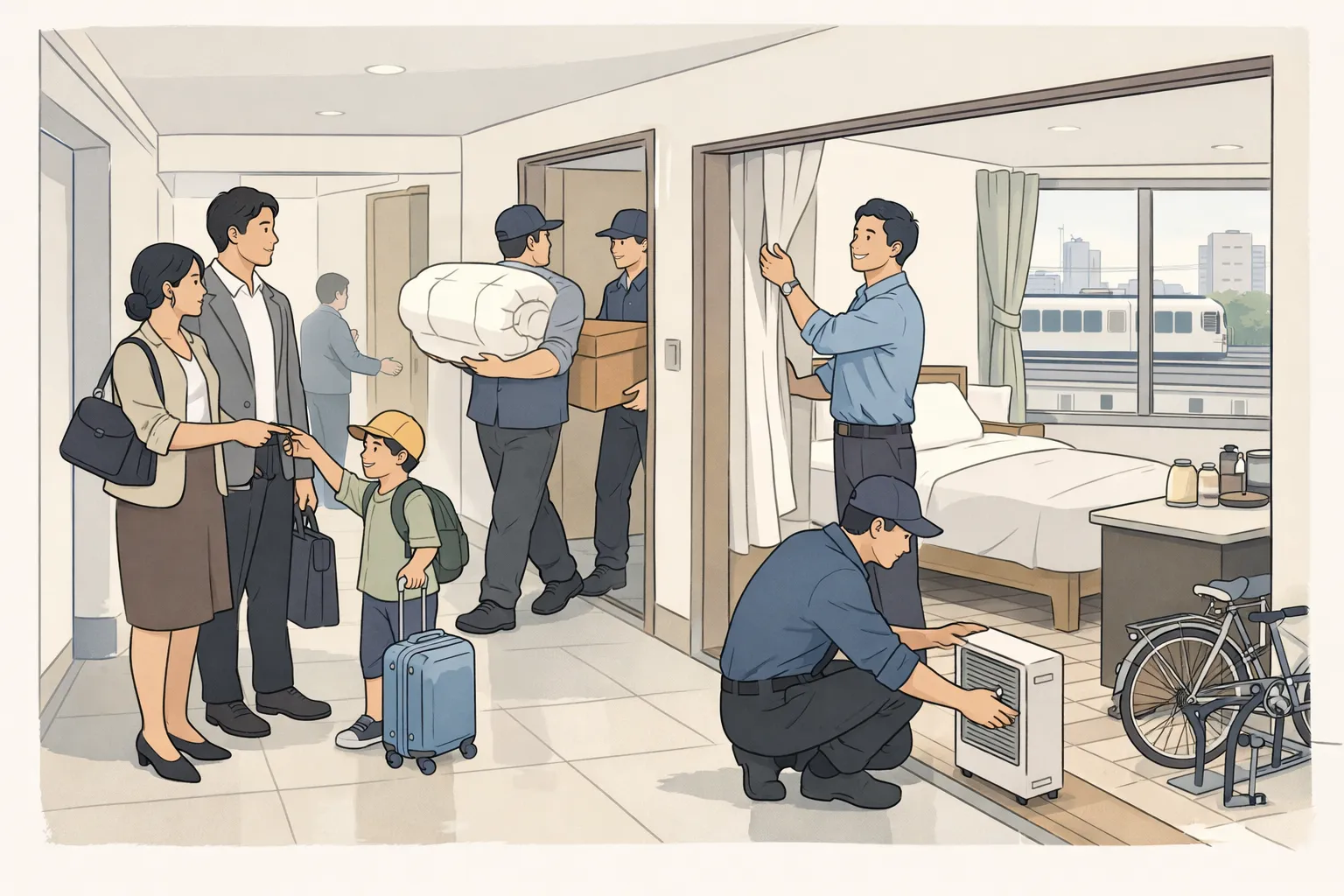
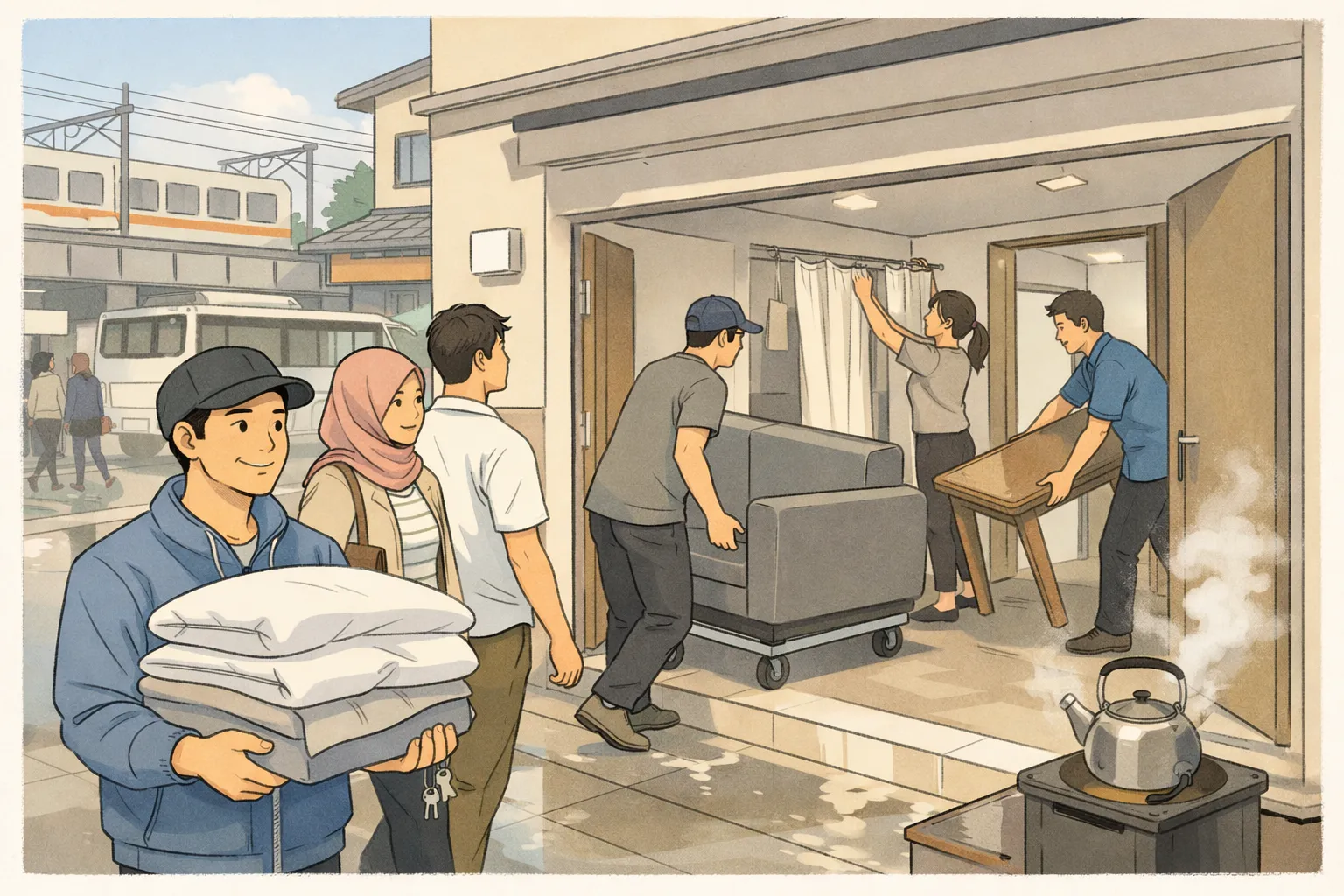
Next, regarding the ease of setting up life, furnished accommodations are particularly advantageous. They simplify the moving process, as most essential items are already provided, allowing for a smooth adaptation to the new environment. Dormitory-style and monthly accommodation formats should also be considered options. This allows for a reduction in initial investment while quickly establishing a living foundation. Therefore, it provides a very supportive environment for Indonesians receiving the necessary assistance when starting to work in Japan.
Let's also pay attention to the flexibility of the contract period. In many furnished residences, short-term contracts ranging from 3 months to 1 year are possible. This allows Indonesians to choose according to their work situation and lifestyle, which is very convenient. Especially for those living in Japan for the first time, long-term contracts can carry risks. By setting a contract period that matches their preferences, they can reduce unnecessary burdens.
Finally, it is essential to check the contract and photos. Carefully reading the contract details and confirming that the stated conditions align with your wishes is an important step to avoid future troubles. Particularly when signing contracts online, it is ideal to see the residence in person before finalizing the agreement. This kind of preliminary verification leads to a smooth start for Indonesians beginning their life in Japan.
Benefits
Initial costs are reduced, alleviating financial burdens.
Furnished, allowing you to start living immediately.
You can choose a flexible contract period, making it easier to adapt to your lifestyle.
You can adapt to a new environment with peace of mind.
Disadvantages
Under certain conditions, the contract may become complicated.
There are many factors that can add to the costs, potentially increasing the total amount.
Depending on the choice of property, the location may not be ideal.
Here is the point
When Indonesians use furnished housing in Japan, it is important to check the cost structure, ease of setting up life, and flexibility of the contract period. Additionally, confirming the contract and photos helps maintain transparency, enabling a smooth start to life.
You can start living immediately, making it ideal for busy Indonesians during their job search.
Short-term contracts are available, providing flexibility in housing usage.
Demerits
Costs can be high and may put pressure on the budget.
The quality and hygiene of the furniture may not be guaranteed.
It is difficult to remove the furniture, making it impossible to change to a preferred style.
Concerns arise regarding costs and troubles that may occur upon moving out.
There is also a risk of noise and troubles with neighbors.
There are many regulations regarding housing, which can sometimes limit freedom.
Furnished housing offers a mix of convenience and challenges, especially for Indonesians aiming to work in Japan. First, the reduction of initial costs and the ability to move in immediately are significant advantages. Additionally, short-term contracts are also available, making it suitable for those considering a job change. However, one must be cautious of high rent and the uncertainty regarding the quality of the furniture. Depending on the living environment and regulations, unexpected troubles may arise.
To succeed in finding a job in Japan, when considering job offers with dormitory or housing support, be sure to check the following conditions. First, regarding costs, it is important to have a clear understanding of rent, utility fees, and deposits. Next, it is necessary to check the condition of the housing facilities and furniture. Finally, understand the rules and agreements related to housing, so you can start your new life with peace of mind.
Summary of Key Points
Furnished housing has advantages such as reduced initial costs and the ability to start living immediately for Indonesians aiming to work in Japan. However, there are also disadvantages like high rent, uncertainty about furniture quality, and non-removable items. When choosing job offers with dormitory or housing support, be sure to thoroughly check costs, facilities, and rules.
Points to Consider When Choosing a Residence and Recommended Areas
Choosing a residence is an important step for Indonesians aiming to work in Japan. In particular, access to the workplace and rental market rates are fundamental elements in selecting a residence. First, it is essential to consider the commuting time to the workplace and choose an area with high convenience. Next, it is also crucial to check whether the rental market rates fit within your budget. Especially for job offers with housing support, it is important to determine whether the rent of the provided housing is within the wage range.
The degree of acceptance of foreigners is also directly related to livability. In particular, the presence of stores that handle halal food and Asian grocery stores nearby is a significant point for Indonesians. Furthermore, disaster risk should also be taken into account. Since natural disasters frequently occur in Japan, it is important to investigate the location conditions and earthquake resistance of the housing. Additionally, the provision of commuting expenses is another factor to consider.
Refer to the checklist below to think about how to choose the most suitable residence for yourself.
How long is the commute to work?
Is the rent within budget?
Is there an environment that is easy for foreigners to live in?
Are there convenient halal/Asian grocery stores nearby?
What is the level of disaster risk?
Is there a commuting allowance?
There are many options, such as regional industrial areas, tourist spots, and suburbs of major cities. By narrowing down housing candidates based on these areas, it becomes easier to find a residence that better suits your conditions. For Indonesians starting their life in Japan, careful selection of housing will enhance their quality of life thereafter.
Key Points for Choosing Housing
Indonesians aiming to find employment in Japan should consider factors such as access to the workplace, rental market rates, acceptance of foreigners, and convenience of living when choosing a residence.
Popular job types and their employment conditions for Indonesians in Japan
Many Indonesians hoping to work in Japan obtain residence statuses such as Specified Skilled Worker and Technical Intern Training, and are active in various job types.
Specific Skills visa holders from Indonesia reached 44,298 by the end of June 2024, making them the second largest group after Vietnam. (Reference: kakemochi.co.jp)
The main job categories include nursing care, food manufacturing, agriculture, industrial product manufacturing, and construction. In particular, the number of Indonesian residents in the nursing care field is high at 9,760, representing a significant proportion of the total. (Reference: kakemochi.co.jp)
In these job categories, it is common to provide dormitory and housing support or furnished housing, making it easier for Indonesians with Technical Intern Training or Specific Skills visas to secure a stable living environment.
When choosing a job category, it is important to consider the following points:
- Japanese language level: It is necessary to confirm the Japanese language skills required for the job and select an appropriate category.
- Physical Strength: Construction and Agriculture are occupations that require physical strength, making it important to maintain health and physical condition.
- Night Shifts: In some occupations such as Nursing and Food Manufacturing, night shifts may be included, necessitating consideration of their impact on your daily rhythm.
- Career: It is advisable to choose occupations with a long-term perspective, considering future career paths and opportunities for skill enhancement.
Considering these factors comprehensively and selecting an occupation that matches your aptitudes and desires is key to successfully job hunting in Japan.
Here are the key points
Indonesians hoping to work in Japan are engaged in various occupations through specified skills and technical internships. There is particularly high demand in the nursing care sector, and support for dormitories and furnished housing is well-established. When choosing a job type, it is important to consider Japanese language proficiency, physical strength, the presence of night shifts, and career paths.
Introduction to Industries Where Many Indonesians Find Employment
Industry
Job Description
Japanese Language Proficiency
Shift/Night Shift
Dormitory with Furniture
Suitable Candidates
Caregiving
Support for the daily lives of the elderly and nursing duties
Conversational level
Shift work, including night shifts
Available
People who enjoy working for others
Dining Out
Hall Service and Cooking Duties
Basic Communication Skills
Shift Work, Including Night Shifts
Available
People who are good at customer service
Manufacturing
Product assembly and inspection in a factory
Above greeting level
Shift system, including night shifts
Exists
People who are good at working steadily
Construction
Construction and management of buildings
Level of understanding of technical terms
Shift system, includes night shifts
Yes
People who are confident in their physical strength
In Japan, there are many industries where Indonesians are employed. In particular, nursing care, food service, manufacturing, and construction are popular industries for Indonesians to work in. Each industry has its own specific job descriptions, required Japanese language proficiency, work styles, availability of dormitories or furnished housing, and characteristics of suitable individuals.
For example, in the nursing care industry, the job involves supporting the elderly, and conversational level Japanese is required. It operates on a shift system with night shifts, and dormitories or furnished housing are also available. It is suitable for those who enjoy working for the benefit of others.
On the other hand, the restaurant industry primarily involves customer service and cooking, requiring basic communication skills. This sector also operates on a shift system with night shifts, and many workplaces offer dormitory conditions. It is a recommended industry for those who excel in customer service.
The manufacturing industry is centered around factory work and can be started with basic Japanese skills, such as greetings. However, it also has a shift system with night shifts, making it suitable for those who are confident in their physical stamina. There are provisions for dormitories and household items, so there is no need to worry about housing.
The construction industry also features physically demanding tasks, requiring a level of Japanese that can understand specialized terminology. There are night shifts in a shift system, and many cases provide dormitories or furnished accommodations, allowing for a secure working environment.
In this way, there are various industries for Indonesians seeking employment in Japan, each with its own characteristics.
Caution
The job descriptions and required Japanese language skills can vary by company and region. Since the availability of shifts, night shifts, and the conditions for dormitories or furnished housing also differ, it is important to check specific information in the job postings. Additionally, please make sure to choose an industry that suits you.
Explanation of support systems and benefits after employment
Explanation of support systems and benefits after employment
A robust support system is very important for Indonesians seeking employment in Japan. Below, we will detail the specific contents in a Q&A format.
Q1: What kind of support is available after joining the company?
A1: The support provided by the registered support organizations includes life orientation and Japanese language learning, as well as consultation services. In life orientation, you can obtain information necessary for daily life and learn about Japanese culture and customs. Additionally, Japanese language learning offers support to improve communication skills in the workplace. Furthermore, interpretation services are also available, allowing you to consult without worrying about language barriers.
Q2: What benefits are included?
A2: Benefits for Indonesians include housing allowance, relocation assistance, and transportation expenses. Especially for employment with dormitory or housing support, you can choose furnished accommodations provided by the company, which helps ensure a stable living situation. Such housing allowances and relocation assistance help alleviate financial burdens.
Q3: Please tell me about social insurance and leave.
A3: In Japanese companies, social insurance such as health insurance, pensions, and employment insurance is fully provided. This allows employees to work with peace of mind in case of accidents or illnesses. Additionally, appropriate leave systems are also implemented, ensuring that employees can refresh themselves when necessary.
Q4: Is there support for mental care?
A4: Many companies provide support related to mental care. There is counseling support to reduce stress and anxiety, which helps alleviate the psychological burden of working in Japan as an Indonesian. Such support is also important for creating a comfortable work environment.
In particular, for jobs with dormitory or housing support, it is common to have assistance with rent and utility costs. Furthermore, there is provision of equipment, allowing new residents to start their lives with necessary furniture and appliances already in place, reducing stress after moving in.
Living orientation
A program to learn the essential knowledge needed for life in Japan.
Housing Allowance
A system where the company subsidizes costs related to housing.
Mental Care
Counseling services to reduce psychological stress and anxiety.
Support System After Employment
Comprehensive support for **life orientation** and **Japanese language learning** for Indonesians in Japan, as well as **mental care**. With **dormitory and housing support**, rent and utility costs are subsidized, allowing you to start your new life with peace of mind.
Points
Content
Support Details
Life orientation, Japanese language learning, consultation desk
Successful cases of Indonesian employment in Japan
In Japan, Indonesians aiming for employment are represented by Mr. A, who obtained a Specified Skills visa and started a new life in Japan.
In the preparation stage, I made efforts to improve my Japanese language skills and actively learned about Japanese culture and lifestyle. This helped alleviate my anxiety about living in Japan and enabled a smooth job search experience.
In choosing a job type, I considered my Japanese language level, my physical strength, and my future career path, and decided to select the nursing field. Nursing is in high demand for Indonesians with a specified skills visa, and is recognized as a stable employment option.
In choosing a residence, I opted for a furnished property with dormitory and housing support. This allowed me to establish a foundation for my life in Japan early on, enabling me to focus on my job search activities in Japan.
As a consultation source, I utilized specialized organizations like RARA Japan. RARA Japan provides total support to meet the diverse needs of those traveling between Japan and Indonesia. In particular, they offer programs to support Indonesians in their job search activities in Japan, and Mr. A also utilized this service.
Considering these common points, it can be said that for Indonesians to successfully find employment in Japan, it is important to engage in prior preparation, choose the appropriate job type, select suitable housing, and utilize reliable consultation sources.
Attention
When aiming for employment in Japan, it is important for Indonesians to choose job types considering their Japanese language skills and physical stamina. Additionally, utilizing furnished properties with dormitory or housing support helps establish a stable living foundation, and leveraging reliable consultation sources for information gathering is key to success.
Success Stories of Indonesians in Employment
June 2025
Anxiety and anticipation before coming to Japan
July 2025
Provision of dormitories and furnished accommodations
August 2025
Key points and overcoming procedures
September 2025
Efforts and strategies for job retention
July 2026
Current Life and Fulfillment
June 2025: Anxieties and Expectations Before Coming to Japan
Having decided to seek employment in Japan from Indonesia, I had many anxieties along with expectations for Japan regarding employment. I was particularly anxious about the cultural differences, lifestyle habits, and language barriers of living in Japan for the first time. However, I also had a strong desire to gain new experiences and achieve personal growth through employment in Japan.
July 2025: Provision of dormitory and furnished housing
After arriving in Japan, life in Japan began, and the provision of dormitories and furnished housing was a great help. While I was getting used to life in Japan, living in a dormitory provided a sense of security. The furnished housing helped reduce initial costs and made starting life smoother. Thanks to this support, I was able to start my new life in Japan with peace of mind.
August 2025: The peak of procedures and overcoming them
In relation to employment in Japan, obtaining a visa, signing a housing contract, and opening a bank account required many procedures. These procedures were a first-time experience, and I often felt confused. However, with the cooperation of Japanese companies and support organizations, I was able to complete these procedures successfully. In particular, the support of Japanese companies in providing dormitories and furnished housing was a great help in advancing the procedures.
September 2025: Strategies and efforts for job stabilization
In Japan, the initial phase of employment was challenging due to language and cultural differences in communication. However, by actively learning Japanese and deepening interactions with colleagues, I became accustomed to my work. Additionally, to understand Japan's corporate culture and work processes, I made it a point to ask senior employees questions and receive feedback. These efforts paid off, and I was able to gain confidence in my work.
July 2026: Current Life and Fulfillment
Currently, my employment life in Japan is progressing smoothly, and I am enjoying fulfilling days. Life in the dormitory is also comfortable, and my interactions with colleagues have deepened. I have become accustomed to Japan's culture and lifestyle, making daily life enjoyable. Through employment in Japan, I have gained a lot of experience and feel a sense of personal growth.
Learning Points
1. When aiming for employment in Japan, having support such as dormitories or furnished housing can alleviate initial anxieties.
2. Understanding Japanese corporate culture and lifestyle habits requires proactive learning and collaboration with colleagues
Checkpoint
I will share my experience as an Indonesian successfully finding employment in Japan. The provision of dormitories and furnished housing alleviated my anxieties, and there was support for the procedures. I faced challenges related to language and cultural differences, made efforts to deepen my relationships with colleagues, and am leading a fulfilling life. Working in Japan has brought me many experiences and growth.
The changes in career and life brought about by working in Japan
The changes in career and life brought about by working in Japan
Career (Skills, Salary Increase, Qualifications, Job Change Potential)
Employment in Japan offers many career opportunities for Indonesians. First, by acquiring the skills that companies seek, you can deepen your professional techniques and knowledge. Additionally, in Japan, where the work environment is well-established, opportunities for salary increases also expand through leadership abilities and project management experience. Furthermore, the longer your tenure in Japan, the more valuable your experience becomes when changing jobs, creating a valuable resume. In this way, employment in Japan leads to professional growth and skill enhancement.
Life (Savings, Remittances, Family)
In Japan, it is expected that you will achieve economic stability. With high salary levels, it is possible to escape a tight financial situation and save money. Additionally, you can secure means to regularly send remittances for your family. However, during the initial period of relocation, living expenses can be high, so managing expenditures is necessary. The availability of dormitories and furnished housing helps reduce initial burdens, allowing you to start your life with peace of mind. This way, you can enjoy an independent life while cherishing your connection with your family.
Adaptation (Japanese Language, Human Relationships)
Living in Japan requires mastering the Japanese language. Overcoming the language barrier is important both in work and in private life. Additionally, in terms of relationships, smooth communication with colleagues can improve the work environment. Actively participating in the team and building relationships contributes to creating a better environment. It may be confusing at first, but through continuous effort, you can gain new friends and networks, enhancing your quality of life.
Risks (loneliness, cultural differences, housing renewal)
There are risks associated with employment life in Japan. In particular, feelings of loneliness due to cultural differences and language barriers can be tough at first. Additionally, renewing or moving housing can become a source of stress if not planned in advance. Furthermore, adapting to an unfamiliar culture requires a flexible mindset. However, if you can overcome these risks, you can gain rich life experiences and grow as an individual.
How to Create a Mid- to Long-Term Plan
Finally, it is important to create a mid- to long-term plan to enrich your employment life in Japan. Please refer to the following points.
Clearly set career goals and create a plan for skill development.
Determine living expenses and savings goals, and manage spending to achieve financial stability.
Progress in Japanese language learning in a planned manner to enhance communication skills in work and life.
Building a network can reduce feelings of loneliness and improve the work environment.
By creating such plans, you can maximize the career opportunities and fulfillment that employment in Japan brings.
Summary of Points
Employment in Japan contributes to career growth and stability in life.
Career: Improvement of skills and technology is expected.
Life: Achieving high economic stability is possible.
Adaptation: Learning Japanese is important.
Risk: Be aware of feelings of loneliness and cultural differences.
Prospects for the Indonesian job market in Japan going forward
Impact of declining birthrate and aging population on labor shortage
Japan's declining birthrate and aging population are leading to a decrease in the working-age population, and labor shortages inJapan are becoming serious. As a result, Japanese companies may strengthen their acceptance of foreign workers, including Indonesians. In particular, there may be a trend of increasing job opportunities in Japan for Indonesianjob seekers.
Expansion of acceptance systems
The Japanese government may expand the fields eligible for the Specified Skilled Worker visa, increasing employment opportunities for Indonesians. This is expected to promote employment for Indonesians in Japan. Please check the latest information on the recent system revisions through a web search.
Impact of Yen Depreciation and Prices
Yen depreciation may affect the cost of living for Indonesians in Japan. The rise in housing costs and daily living expenses in Japan may become a barrier for Indonesians considering employment in Japan. Please check the latest price trends through a web search.
Importance of Housing Costs and Support
Housing costs in Japan are an important factor in the employment activities of Indonesians. The increase in the availability of furnished properties with dormitory and housing support may assist Indonesians in their employment activities in Japan. Please check the latest housing support information through a web search.
Future Job Market for Indonesians
Due to the declining birthrate and aging population, there is a possibility that job opportunities for Indonesians in Japan will increase. With the expansion of specific skills, it has become easier to establish a living foundation in Japan, and furnished properties with dormitory and housing support are also being offered.
Elements
Impact
Declining Birthrate and Aging Population
The labor shortage is becoming serious
Specified Skills
Tendency to accept more Indonesians
Yen depreciation
Impact of living costs
Supply and Demand Balance of Indonesians in the Japanese Labor Market
To understand the supply and demand balance of Indonesians in the Japanese labor market, the following statistical data is useful.
Number of Foreign Residents: As of the end of Reiwa 7, the total number of foreign residents in Japan is 4,125,395, an increase of 356,418 (9.5%) from the end of the previous year. This increase is seen across many nationalities, including Indonesians. (Reference: t.co)
Increase and Decrease by Nationality: At the same point in time, the number of Indonesians residing in Japan is 199,824, an increase of 50,723 (34.1%) from the end of the previous year. This suggests that employment opportunities for Indonesians in Japan are expanding. (Reference: moj.go.jp)
Projected Number of Acceptances by Specified Skilled Fields: The government plans to accept a total of 1,231,900 foreign workers over the next five years until the end of March 2029. Among these, the acceptance of Indonesians may increase. (Reference: smbiz.asahi.com)
Job Trends:Job offers for Indonesians are on the rise, particularly in sectors such as manufacturing and construction. In these industries, Indonesian labor is in demand, and there are increasing cases where housing support and furnished accommodations are provided.
From this data, it can be inferred that job opportunities for Indonesians in Japan are expanding, particularly with an increase in job offers that provide housing support and furnished accommodations.
Key Points
In the Japanese labor market, the number of Indonesians residing in Japan has significantly increased, and job offers in manufacturing and construction are particularly active. There is a growing number of job offers that provide housing support and furnished accommodations, expanding employment opportunities.
Post-COVID Recovery and Its Impact on Indonesian Job Seekers
Post-COVID Recovery and Its Impact on Indonesian Job Seekers
The impacts of post-COVID are organized into "Easing of Entry Restrictions," "Recovery of Tourism and Dining Out," "Online Recruitment," "Rising Housing Costs/Prices," and "Review of Company Dormitory Operations," along with measures for job seekers (confirming contract conditions, estimating initial costs, choosing furnished options, utilizing support organizations).
Easing of Entry Restrictions
The strict entry restrictions imposed due to the COVID pandemic have been eased, leading to an increase in the entry of Indonesians into Japan.**
Recovery of Tourism and Dining Out
The tourism and dining industries are recovering, and employment opportunities for Indonesians within Japan are increasing.**
The online recruitment process
Recruitment activities have moved online, and Japanese companies are increasingly conducting remote interviews and hiring Indonesian job seekers.**
Rising housing costs/prices
Housing costs and prices are rising, and the cost of living for Indonesians in Japan is increasing.**
Review of Company Dormitory Operations
Companies are reviewing the provision methods for dormitory and housing support, and are working to improve the living conditions of Indonesian employees.
Job Seeker Measures
Confirmation of Contract Terms
For Indonesians aiming for employment in Japan, it is important to carefully check the contract terms, including whether dormitory and housing support is provided and whether the housing is furnished.**
Estimate of Initial Costs
Starting a life in Japan requires estimating housing costs and the cost of purchasing daily necessities as initial expenses, and preparing sufficient funds.**
How to Choose Furnished
Furnished housing allows you to reduce initial costs and create a comfortable living environment.
Utilizing Support Organizations
In Japan, there are support organizations for Indonesians, providing assistance for job hunting and daily life. By utilizing these organizations, a smooth life in Japan can be realized.
Post-COVID recovery has expanded job opportunities for Indonesians.Easing of entry restrictions and the revival of the tourism industry have also invigorated the job market.
Companies are providing housing support with dormitories and furnished accommodations, making efforts to improve the living environment.
It is important for job seekers to consider contract conditions, initial costs, and utilize support organizations.

 03-6222-9855
 Guide to Working in Japan
 History
 About this site
 Login


 About this site
 Contact


























 COLUMN CATEGORY
 2026.08.03