What are the Benefits of Employment and Permanent Residency for Indonesians in Japan?
What are the Benefits of Employment and Permanent Residency for Indonesians in Japan?
Indonesians
永住権
2026.08.03
Employment Situation and Benefits for Indonesians in Japan
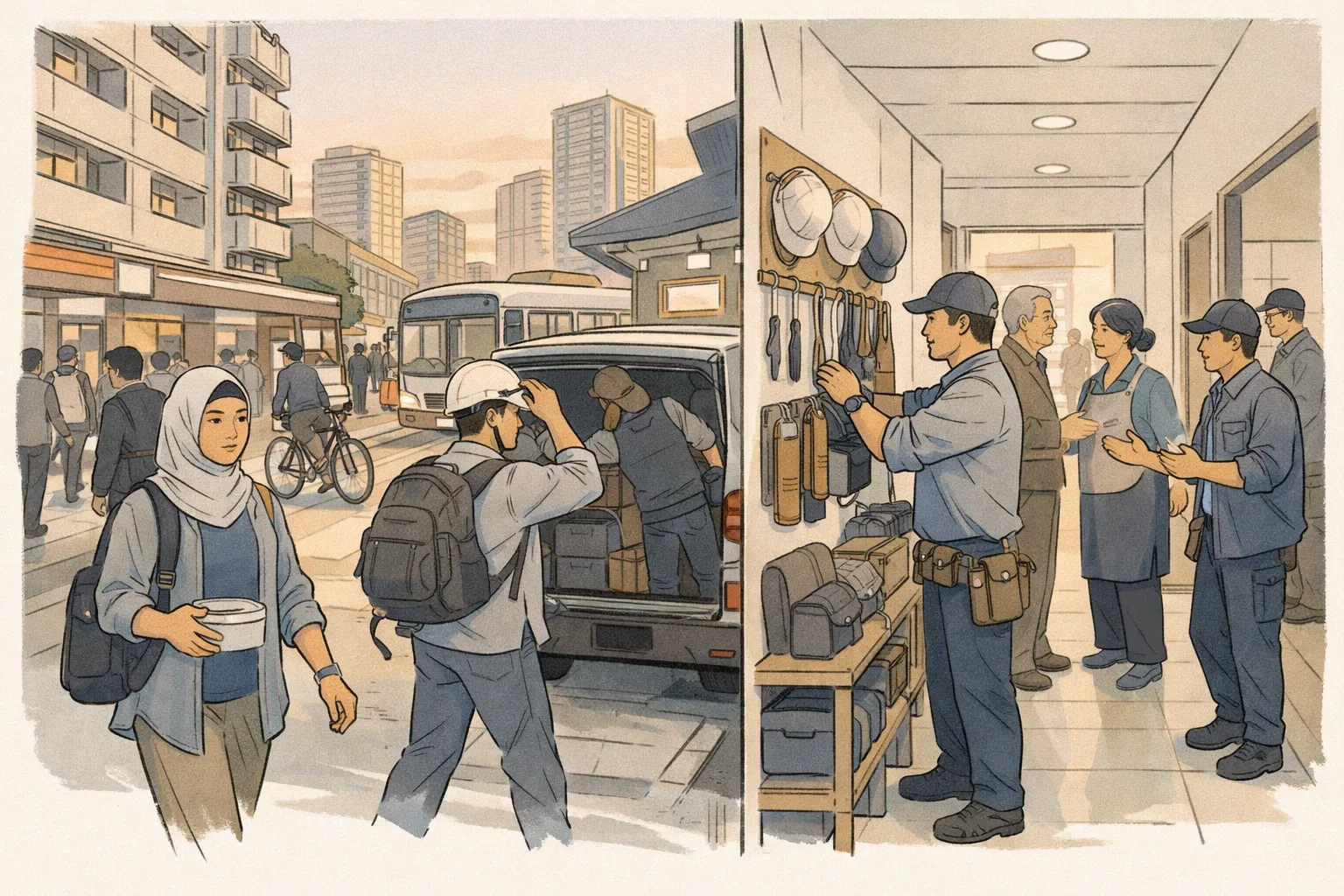
In recent years, there has been a trend of increasing Indonesians in the Japanese job market. This is due to Japan's labor shortage and the promotion of internationalization, particularly in fields such as IT, nursing, and manufacturing, where talent from Indonesia is in demand. As job opportunities in Japan expand, the benefits for Indonesians are diverse. For example, the ability to secure a stable income and develop a career within Japanese companies while honing skills and experience is a significant attraction.
Furthermore, Indonesians working in Japan find it easier to establish a stable living foundation. While living costs vary by region, the income earned from working in Japan is higher compared to Indonesia, providing financial flexibility to support their families. Against this backdrop, adapting to Japanese society also offers opportunities for growth as individuals with an international perspective. Additionally, the cultural experiences gained through living in Japan contribute to personal development.
From a corporate perspective, employing Indonesians brings various benefits. By securing talent that can understand different cultures and respond to multiple languages, companies can enhance their competitiveness in the global market. Moreover, the unique perspectives and ideas that Indonesians bring can contribute to innovation. Thus, for companies, embracing Indonesians is expected to lead to diversity in employment and the creation of new business opportunities.
In the future, employment of Indonesians in Japan is expected to become increasingly active. Along with this, attention is also being drawn to the benefits of obtaining permanent residency and the stability of living in Japan. In the next chapter, we will delve into the specific merits of Indonesians obtaining permanent residency and the processes involved.
Attention
While there are many advantages to the employment situation of Indonesians in Japan, there are also cultural and language differences. Since sources of information and data change daily, it is important to check the latest situation. Additionally, choosing a profession that suits individual experiences and aptitudes is also crucial. Please consider carefully when making your choices.
The Role of Indonesians in the Japanese Labor Market
The Role of Indonesians in the Manufacturing Industry
In Japan's manufacturing industry, Indonesians play an important role. In particular, there is a large acceptance of technical interns, who are engaged in work on the shop floor of the manufacturing industry. These technical interns are expected to learn the technologies and know-how of Japan's manufacturing industry and utilize that knowledge after returning to their home country. Additionally, Indonesians with specified skills or technical, humanities, and international services residency qualifications are also active as professionals in the manufacturing industry. These Indonesians contribute to the productivity improvement and technological innovation of Japan's manufacturing industry.
The Role of Indonesians in the Nursing Industry
In Japan's nursing industry, Indonesians are widely accepted as specified skilled workers and technical interns. These Indonesians are expected to gain experience in Japan's nursing industry and utilize that knowledge after returning to their home country. Furthermore, through the acceptance of Indonesians, Japan's nursing industry is promoting multicultural coexistence and advancing the internationalization of Japan's nursing industry.
The Role of Indonesians in the Food Service Industry
In the Japanese restaurant industry, Indonesians are widely accepted as specified skilled workers and technical intern trainees. These Indonesians are expected to gain experience in the Japanese restaurant industry and utilize that knowledge after returning to their home country. Additionally, in the Japanese restaurant industry, the acceptance of Indonesians promotes multicultural coexistence and advances the internationalization of the Japanese restaurant industry.
The Role of Indonesians in the IT Industry
In the Japanese IT industry, Indonesians are active as professionals holding technical, humanistic knowledge, and international business residency status. These Indonesians contribute to technological innovation and international expansion in the Japanese IT industry. Furthermore, in the Japanese IT industry, the acceptance of Indonesians promotes multicultural coexistence and advances the internationalization of the Japanese IT industry.
Benefits of Employment and Permanent Residency for Indonesians
For Indonesians aiming for employment in Japan, obtaining residency statuses such as technical intern trainees, specified skilled workers, and technical, humanistic knowledge, and international business is important. Through these qualifications, they can gain experience in the Japanese labor market and deepen their understanding of Japanese society and culture. Furthermore, through employment in Japan, they can meet the conditions necessary for obtaining permanent residency. By acquiring permanent residency, their life in Japan becomes more stable, allowing for long-term career development and life planning. Additionally, holding permanent residency enhances trust and credibility in Japanese society, broadening options in the Japanese labor market.
Comment from the author
The presence of Indonesians in the Japanese labor market is becoming increasingly important across various industries. By aiming for employment and career advancement in Japan through various residency statuses, the acquisition of future permanent residency is also within reach. We expect Indonesians with diverse skills and knowledge to contribute to the future of the Japanese economy.
In the Japanese labor market, accepting diverse Indonesians brings new perspectives and ideas.
Employment of Indonesians can complement the labor shortage, particularly in the manufacturing and caregiving industries, ensuring stable staffing is expected.
Finding a job in Japan contributes to career development for Indonesians with an eye towards obtaining permanent residency, improving retention rates.
The cultural diversity brought about enhances the international competitiveness of Japanese companies as well.
Disadvantages
Due to the language barrier, communication can become difficult.
Cultural differences may lead to misunderstandings and friction in the workplace.
Management of residency status and understanding of laws are necessary, which can also place a burden on companies.
Hiring Indonesians in Japanese companies has many advantages and concerns. In particular, by employing Indonesians, it becomes possible to incorporate individuals with diverse cultures and values into Japan. This contributes to the creation of new ideas and enhances competitiveness in the Japanese labor market. On the other hand, language barriers and a lack of cross-cultural understanding are sometimes cited as obstacles to communication and concerns. To successfully accept Indonesians, it is important to fully consider these points.
Furthermore, by improving the employment environment, the likelihood of Indonesians settling in Japan increases. Necessary elements to strengthen the acceptance system include reviewing evaluation systems and creating an environment that considers religion. If these are in place, accepting Indonesians from a long-term perspective will yield very meaningful results for companies. With the prospect of obtaining permanent residency, Indonesians can gain a stable living foundation and further integrate into the corporate culture.
Points:
By hiring Indonesians, Japanese companies can incorporate diverse insights and expect improved performance. However, differences in language and culture are also concerns, so it is essential to establish a support system.
Steps for Indonesians to obtain permanent residency in Japan
Indonesians will proceed through the following steps tofind employment and obtainpermanent residency in Japan.
1. Obtaining a visa: First, you need to obtain the necessary visa foremployment in Japan. Generally, this includeswork visas such asTechnical, Humanities, and International Services. At this stage, Indonesians will startemployment in Japan.
2. Visa renewal: To continueemployment in Japan, you must go through the visa renewal process. Typically, the visa duration is set for 1 or 3 years, and you need to apply for renewal before the expiration of the period. This process is important for Indonesians to continueemployment in Japan.
3. Maintaining stable employment: Throughemployment in Japan, you will maintain a stable income and employment situation. This allows Indonesians to stabilize theiremployment in Japan and build a foundation for obtainingpermanent residency.
4. Application for permanent residency: After fulfilling the necessary duration and conditions throughemployment in Japan, you will apply forpermanent residency. The application requires good conduct, sufficient assets or skills to support an independent livelihood, and alignment with the interests of the Japanese government. Detailed requirements and procedures can be checked on the official website of the Immigration Services Agency.
Please note that the system may change, so it is recommended to check the latest requirements and procedures on the official websites of Immigration Bureau and Ministry of Justice.
Summary of Key Points
For Indonesians to find employment in Japan and obtain permanent residency, it is important to first acquire a residence status and maintain a stable employment situation through repeated renewals. After meeting the conditions, an application for permanent residency should be made, and the latest requirements need to be confirmed with the Immigration Bureau and the Ministry of Justice.
The process from employment visa to permanent residency
The general process for Indonesians to find employment in Japan and obtain permanent residency is as follows.
1. Obtaining Employment and Residence Status
- Job Search: Indonesians who wish to work in Japan must first secure an employment contract with a Japanese company.
- Application for Residence Status: After the employment contract is established, apply for a work visa such as Engineer/Specialist in Humanities/International Services.
2. Renewal of Residence Period
- Extension of Residence Period: Before the initial residence period ends, you must apply for Residence Period Renewal Permission to extend your residence period.
- Submission of Required Documents: At the time of application, documents such as a certificate of employment and a tax payment certificate will be required.
3. Points to Note When Changing Jobs
- Change of Residence Status: If you have decided on a new job, you must apply for Change of Residence Status Permission to obtain a residence status suitable for your new job duties.
- Maintaining Employment Contract: You must continue to meet the conditions of the work visa at your new job.
4. Permanent Residency Application
- Confirmation of Application Requirements: Indonesians must reside in Japan for employment and apply for permanent residency by continuing to stay in Japan for over 10 years, of which at least 5 years must be under work qualifications or residency qualifications. (Reference: visa.aichi.jp)
- Preparation of Application Documents: Required documents include the permanent residency application form, photographs, statement of reasons, employment certificate, tax certificate, etc. (Reference: life.m-ri.co.jp)
5. Review and Notification After Approval
- Review Period: The period from application to approval usually takes about 4 to 6 months. (Reference: life.m-ri.co.jp)
- Post-approval procedures: After obtaining permanent residency, it is necessary to update your residence card and change your resident record, among other procedures.
For Indonesians to work in Japan and obtain permanent residency, it is important to follow the steps outlined above in order.
Key Points
To work in Japan and obtain permanent residency, Indonesians need to go through the process from employment to obtaining and renewing their residency status, paying attention to points during job changes, and then apply for permanent residency. It is important to execute these steps in order and prepare the necessary documents.
Requirements and Necessary Documents for Indonesians to Obtain Permanent Residency in Japan
To obtain permanent residency in Japan, Indonesians need the following requirements and documents.
Review Criteria
- Conduct: It is required to comply with laws and regulations and to exhibit socially acceptable behavior while living in Japan.
- Independent Living Expenses: A stable income that can cover your living expenses is necessary through employment in Japan.
- National Interest: Contributions to Japanese society and the economy are valued.
- Taxes, Pension, and Health Insurance: It is required to properly pay taxes and enroll in pension and health insurance when employed in Japan.
- Period of Stay: A basic requirement is to have a period of stay in Japan of 10 years or more, with at least 5 years under work or residence qualifications.
Category of Submitted Documents
- Certificate of Employment: A document that proves your current employment status.
- Tax Certificate / Tax Payment Certificate: A document that shows your past tax declarations and payment status.
- Resident Tax Payment Certificate: A document that certifies your payment status for resident tax, which is a local tax.
- Pension Payment Certificate: A document that indicates your enrollment status and payment history in the Japanese pension system.
- Letter of Guarantee: A document signed by a guarantor for your life in Japan.
Additional Documents Due to Individual Circumstances
Depending on the applicant's situation, additional documents may be required. For example, in the case of a change application from a family stay visa, documents proving family relationships (such as family registers or marriage certificates) may be necessary. Please check the official website of the Immigration Services Agency for the latest required documents.
Practically “Tricky Documents”
The following documents require particular attention at the time of application:
- Tax Payment Certificate: If there are deficiencies in past tax returns or payment status, the application may be delayed.
- Pension Payment Certificate: Having unpaid periods for your pension may affect the review process.
- Certificate of Employment: If the proof from your employer is insufficient, your application may not be accepted.
It is important to thoroughly check these documents before applying and make any necessary corrections or additions. For the latest information and detailed procedures, please refer to the official website of the Immigration Services Agency.
Key Points for Obtaining Permanent Residency
To obtain permanent residency, it is necessary to confirm conduct, independent livelihood, national interest, tax payment, and pension. Required documents include a Certificate of Employment and a Tax Payment Certificate. Please check the official site for details!
Benefits of Obtaining Permanent Residency for Indonesians in Japan
Benefits of Obtaining Permanent Residency for Indonesians in Japan
Indonesians obtaining permanent residency through employment in Japan brings various advantages. Among these, we can mainly consider four perspectives: "Living", "Career", "Family", and "Credit". First, obtaining permanent residency itself helps establish a stable living foundation in Japan. Indonesians will have less anxiety about job continuity and will be able to live in a mentally stable environment.
Next, there are significant advantages in terms of career. The experience and skills gained through employment in Japan will become powerful assets in your future career. Obtaining permanent residency expands your options for job changes and career choices. This is an important factor for Indonesians to deeply root themselves in Japanese society. It allows for the establishment of long-term stable employment relationships, which also promotes personal growth.
Furthermore, relationships with family are strengthened. By obtaining permanent residency, Indonesians can more easily bring their families over, leading to a more fulfilling family life. This provides families with the opportunity to grow in a better environment in Japan. Especially in terms of children's education, they can benefit from Japan's educational system, broadening their future possibilities.
Finally, social credibility is also an important factor. By holding permanent residency, Indonesians gain a stronger legal presence in Japanese society, making it easier to open bank accounts and obtain loans. This credibility plays a very important role in all aspects of life. Particularly in starting a business or managing assets, it creates an environment where one can act with peace of mind.
In the following H3, we will delve deeper into these benefits, specifically dividing them into aspects of daily life and social participation.
Note
Permanent residency differs from nationality; it indicates the right to reside in Japan for an extended period. Even if an Indonesian obtains a job in Japan and acquires permanent residency, having another nationality does not grant them Japanese citizenship. Additionally, compliance with laws and regulations is required even after obtaining permanent residency. Please verify information carefully.
Stability of Life After Obtaining Permanent Residency
Stability of Life After Obtaining Permanent Residency
When Indonesians aiming to work in Japan obtain permanent residency, their stability of life significantly improves. First, the burden of renewing residency status is alleviated. According to Japanese law, regular residency status requires renewal every few years, but having permanent residency eliminates this process, providing peace of mind. This allows for better focus on work and the ability to lead a fulfilling life.
Furthermore, Indonesian individuals who obtain permanent residency will see an improvement in their creditworthiness when it comes to acquiring housing and loans. Banks and financial institutions find it easier to lend to those with permanent residency, making it possible to firmly establish a foundation for home purchases and family living. As a result, Indonesians can own their homes and prepare for a stable life.
The sense of security regarding family is also an important point not to be overlooked. By holding permanent residency, Indonesians can more easily invite their families to Japan and create a space for them to live together. This forms an environment where all family members can live with peace of mind, bringing about mental stability.
Additionally, having permanent residency greatly increases the freedom to change jobs and expands career options. Indonesians can find jobs that suit them without being tied to specific employers, allowing them to choose their working environment and conditions. This mobility becomes a factor in achieving a healthy and fulfilling life.
However, there are points to be cautious about even after obtaining permanent residency. The possibility of forced departure is not zero, and maintaining an appropriate lifestyle is required. Furthermore, obligations regarding taxes and social insurance still exist, making financial planning continue to be important. Below is a list summarizing the benefits of life after obtaining permanent residency.
Reduction of residence renewal burden
Improving Credit for Home Loan Acquisition
Sense of Security for the Family
Increased Freedom in Job Change
Establishing a Stable Living Foundation
Realizing a Rich Life in Japan
Comment from the author
For Indonesians hoping to find employment in Japan, obtaining permanent residency greatly contributes to stability in life. With increased freedom to live with family and change jobs, it becomes possible to lead a fulfilling social life. Enjoy new challenges while building a stable life.
Deep involvement in Japanese society and building a lasting career
For Indonesians, obtaining permanent residency in Japanese society is an important step in long-term career development. The benefits of this permanent residency, which comes with employment in Japan, go beyond mere expansion of rights, providing many options for promotion, job changes, and building expertise. For example, Indonesians can leverage their backgrounds and understanding of the ASEAN market to open paths in international business.
Permanent residency provides greater stability in employment in Japan. This allows for the opportunity to advance and transfer within a dynamic work environment without missing out, enabling the building of a career that promotes personal growth. Furthermore, employers are generally more open to Indonesians who hold permanent residency, making it easier to transition into roles that utilize professional skills.
Additionally, by engaging in community activities and entrepreneurship, you can expand your network as an Indonesian and deepen relationships. Having a solid local foundation allows for participation in more business opportunities and collaborative projects. Specific activities, such as participating in community-based events or volunteer work, can also be elements that broaden your career scope.
The benefits of permanent residency also significantly impact children's educational plans. Being able to fully utilize Japan's educational system is essential for expanding future possibilities. Indonesians with permanent residency may receive preferential treatment when entering public schools or taking university entrance exams, allowing parents to provide support with peace of mind.
In this way, the short-term and long-term advantages that permanent residency brings to the employment environment in Japan are diverse. While obtaining permanent residency does not guarantee "success," it emphasizes the aspect of "increased options." Therefore, having a platform to achieve personal goals brings significant value.
In employment in Japan, permanent residency is a factor that positively influences promotion, the development of expertise, participation in community activities, and even children's education.
Point
The permanent residency that Indonesians obtain for employment in Japan brings many benefits such as promotions, job changes, and participation in community activities. With more options available, the potential to build a richer career expands.
Specific Advice for Indonesians to Succeed in Japan
Indonesians need to successfully find employment in Japan and maximize the benefits of permanent residency through several key pieces of advice. First and foremost, regarding workplace adaptation, it is essential to maintain a flexible attitude. Japanese business culture values teamwork and the quality of communication, so it is important to actively share opinions and collaborate with other staff. This will enhance your evaluation in the workplace and ultimately increase the likelihood of long-term employment.
Next, learning Japanese is essential. For Indonesians aiming for employment and permanent residency in Japan, Japanese language skills become a significant asset. By deepening understanding beyond the level required for business use, including daily conversation and local culture, smoother communication becomes more achievable. There are many opportunities for Japanese language education, so it is important to actively seek feedback alongside self-study.
Furthermore, it is necessary to consider how to receive evaluations. In Japanese workplaces, self-evaluation and performance reporting are common, so regularly showcasing your achievements is important. Specifically, presenting quantifiable results makes it easier to gain recognition from supervisors and colleagues. This process can be seen as part of how Indonesians build trust in their careers in Japan.
Finally, when issues or challenges arise in the workplace or society, it is important to have a point of consultation. ### By utilizing help, you can alleviate feelings of isolation and continue living comfortably in Japan. Seeking advice from peers, local communities, and even professionals makes it easier to find solutions and ultimately enhances the value of holding permanent residency. By taking these practical steps, Indonesians can firmly root themselves in ### Japanese society. These elements will serve as an important foundation for cultural adaptation and the acquisition of Japanese, which will be discussed in the next H3.
Finding a job in Japan can be a new challenge for Indonesians. In particular, Japanese corporate culture has unique characteristics, and understanding and adapting to these is key to success. For example, in Japanese companies, Hō-Ren-Sō (reporting, communication, consultation) is emphasized and has permeated as the foundation of daily communication. Therefore, Indonesians are required to develop the skill to actively report their opinions and situations.
Additionally, a sense of time is highly valued in Japanese corporate culture. Tardiness and delays in deadlines are not tolerated, and efficient time management is expected. Indonesians can effectively implement a system for managing schedules and completing tasks on time. Specifically, creating daily To-Do lists and weekly plans can be helpful.
Furthermore, there is a lot of tacit knowledge in the Japanese business scene. This refers to information and rules that are not explicitly stated in words or documents. To bridge this gap, it is effective to create templates for asking specific questions to colleagues and superiors, clarifying any doubts. For example, asking, "Could you tell me about the progress of this project?" is an appropriate confirmation question.
In Japanese companies, quality awareness is also very high, with strict standards set for products and services. Indonesians need to understand this culture and be aware of how their work will be evaluated. For instance, it would be good to document quality standards and keep them accessible for reference.
Moreover, there is a unique culture in the management of meetings in Japan. It is important to observe etiquette, such as not interrupting speakers and considering the timing of when to speak. To adapt to this, it is helpful to review the agenda in advance and organize your thoughts.
In job hunting in Japan, it is necessary to consider cultural aspects such as religion and worship and halal. Stating your religious background or offering to take time for worship during self-introductions at the appropriate time can serve as a "negotiation skill" in building a good workplace environment.
You should also consider the benefits of permanent residency that can be obtained by staying in Japan long-term. Having permanent residency facilitates trust-building within the company and increases opportunities for promotion to positions with greater responsibilities. Therefore, understanding and adapting to the corporate culture is a very important factor in the process of building a career in Japan.
Hōrensō
An abbreviation for reporting, contacting, and consulting, it is an important style that promotes smooth communication in Japanese business culture.
Sense of time
In a culture where punctuality and efficient time management are emphasized, meeting deadlines and adhering to meeting times are considered fundamental in business.
Tacit knowledge
Refers to intangible knowledge and rules that exist within an organization but are not documented. Understanding this enables smooth communication.
Quality awareness
High quality standards are required for products and services, and achieving accuracy and high standards in business operations is essential.
Permanent Residency
It is the right for foreigners to live in Japan for an extended period, allowing them to enjoy many benefits such as job stability and education.
Checkpoints
Understanding corporate culture is crucial for Indonesians seeking employment in Japan. It is necessary to learn and adapt to practices such as reporting, communication, time sensitivity, tacit knowledge, quality awareness, and meeting management. Additionally, religious considerations and obtaining permanent residency contribute to building trust, which increases opportunities for career advancement.
For Indonesians aiming to work in Japan, improving Japanese language skills is essential. Resources for learning Japanese are diverse and can be categorized into free and paid, self-study and schools, as well as purpose-specific (interview preparation, business keigo, industry terminology). By effectively utilizing these, you can prepare for job hunting in Japan and for obtaining permanent residency.
Free Resources
When learning through self-study, free online platforms can be helpful. For example, Meshclass is an AI-powered Japanese learning app that covers a wide range from daily conversation to JLPT preparation. Additionally, LinguaAlis offers online lessons with native speakers, allowing you to learn Japanese from the basics to advanced levels.
Paid Resources
If you wish to study at a paid program, Nexora Job School offers Japanese courses, interview preparation, and business etiquette training for foreigners aiming to find employment in Japan. Additionally, Murasaki Japanese Institute is a Japanese school specializing in business communication, offering a Business Japanese course.
Resource by Purpose
- Interview Preparation: Nexora Job School provides specialized instruction for interviews with Japanese companies and offers practical interview practice.
- Business Keigo: Kaiwa Cafe focuses on Keigo and Business Communication, providing a program to learn the necessary Keigo for the workplace in Japan.
- Industry Terminology: Zipan offers an online program to learn about Japanese corporate culture and business etiquette, allowing you to acquire industry-specific Japanese language skills.
Examples of Learning Plans and Performance Indicators
As an effective learning plan, I suggest studying for 5 hours a week. Specifically, this involves studying 1 hour on weekdays and 2 hours on weekends, using materials tailored to each level of JLPT. As performance indicators, we aim for passing the JLPT and set Japanese communication skills and work efficiency in KPI (Key Performance Indicator) as goals in the workplace in Japanese.
The Importance of Continuous Learning for Obtaining Permanent Residency
To obtain permanent residency in Japan, long-term improvement of Japanese language skills is required. For Indonesians aiming to work in Japan, continuous improvement of Japanese skills is a crucial step towards obtaining permanent residency. Through regular study and practice, let’s strive to build a career in Japan and enjoy the benefits of permanent residency.
The Importance of Japanese Language Learning for Indonesians
Indonesians aiming to find employment in Japan need to improve their Japanese language skills. Let's utilize free and paid learning resources and create a study plan tailored to our goals. Long-term study is essential for obtaining permanent residency.
Challenges and Solutions Faced by Indonesians in Employment in Japan
In Japan, the employment challenges faced by Indonesians are diverse. In particular, language barriers and cultural differences often pose obstacles, but these issues cannot be overcome solely by individual efforts. Support from companies is extremely important. For example, by implementing Japanese language training programs and projects that promote cultural understanding, we can support the employment activities of Indonesians. This will create a foundation for employees to adapt to Japanese society for a long time and to form careers with an eye on obtaining permanent residency.
Additionally, to ensure that Indonesians can smoothly navigate their workplace lives, the establishment of consultation services is essential. In the event that they face problems or anxieties at work, utilizing the support provided by the company can help them find solutions. For example, mental health education and intercultural exchange events are effective. With these activities in place, life in Japan can become more fulfilling, and it becomes possible to enjoy the benefits of permanent residency.
Sensitive issues such as discrimination and harassment in the workplace are also influenced by corporate culture. For Indonesians to work with peace of mind, companies must actively respect diversity and respond quickly when problems arise. By having solid company policies and internal systems in place, employees can maximize their abilities, and the success rate of employment in Japan will improve.
Furthermore, to remove obstacles to obtaining permanent residency, career advancement is essential as a step. By voluntarily establishing career support programs or introducing internship systems, companies can provide Indonesians with opportunities to acquire necessary skills. In this process, life in Japan becomes more stable, and long-term retention in the workplace is expected. Such corporate initiatives will also be a significant benefit for Indonesians.
Merits
Employment progresses smoothly with the support of companies available to Indonesians.
Opportunities for cultural understanding and language learning are provided, increasing the chances of obtaining permanent residency.
Demerits
Due to language and cultural differences, adaptation may be difficult in the initial stages.
When feeling difficulties, one is likely to experience a sense of isolation and may choose not to utilize support.
Summary of Key Points
When Indonesians seek employment in Japan, the support from companies and consultation services is crucial. If systems for problem-solving are established, it will become easier to enjoy the benefits of permanent residency. With cultural adaptation and career support, life stabilizes, and retention in the workplace is promoted.
To facilitate cross-cultural communication, there are several important points, especially in Japan. In particular, specific situations that Indonesians face when seeking employment in Japan include how to accept and decline requests, ambiguous expressions, and how to make suggestions. To reduce friction in these situations, it is recommended to utilize practical phrases and behavioral checks.
For example, when accepting a request, using phrases like "Could I have a moment to discuss this matter?" is effective. Such expressions are likely to be well-received in Japanese business culture. On the other hand, when declining, conveying "I will consider it" makes it sound more positive. By mastering such expressions, the job search for Indonesians can become smoother, reducing friction in the workplace.
Next, it is also necessary to consider ambiguous expressions. In Japan, expressions like "Let's try to proceed in that direction" are often preferred over specific opinions. By using such expressions, you can demonstrate a cooperative attitude to the other party. In terms of how to make suggestions, an approach that aligns with Japanese culture is required. It is important to express yourself with consideration rather than directly stating your point.
Additionally, for Indonesians to build meaningful relationships in the workplace in Japan, appropriate communication methods regarding religious events and dietary customs are required. For example, by introducing your own culture with statements like "In my country, ●● is an important event," you can increase opportunities for deeper understanding.
Deepening this cross-cultural understanding is also necessary to maximize the benefits of obtaining permanent residency in Japan for long-term employment success. By building trust, business relationships become stronger, ultimately allowing for more opportunities. Below are points to consider for building trust.
Understand each other's cultures and engage in considerate communication.
Strive for clear expression to avoid misunderstandings with the other party.
Share your own culture appropriately to gain empathy.
Evaluate work results together.
By incorporating these points into daily operations, it will create a foundation for Indonesians to find employment in Japan and build smooth relationships. Even after obtaining permanent residency, the trust established will become a significant advantage and lead to further career opportunities.
Key Points
In cross-cultural communication, how to accept and decline requests, use ambiguous expressions, and make suggestions are important. In Japanese workplaces, communicating with consideration and sharing culture is key to building trust. This increases the likelihood that Indonesians can leverage their permanent residency and succeed in their careers.
Importance of Support Systems in the Work Environment
Support systems in the work environment serve as a foundation for Indonesians to succeed in finding employment in Japan. It is important for companies to establish a solid onboarding process so that first-time employed Indonesians can smoothly integrate into the organizational culture and operations. By assigning mentors and conducting regular evaluation meetings, an environment that promotes personal growth can be established. This will improve the retention rate of Indonesians and, as a result, enhance the productivity of the company.
For each individual Indonesian, having close support for daily living and interpretation can help overcome cultural barriers. Furthermore, through collaboration with administrative scriveners and social insurance labor consultants, it is possible to alleviate anxiety during the permanent residency application process, which also contributes to stability in life after employment. A key point is that these measures can be implemented at low cost even by small businesses. For example, by establishing a regular consultation desk within the company, it becomes possible to resolve issues faced by Indonesians early on.
The checklist items to be introduced include the establishment of a support system, clarification of effective communication methods, and the frequency of evaluation meetings. Additionally, as mutual understanding deepens, Indonesians can work long-term with peace of mind, and opportunities for career advancement after obtaining permanent residency will also expand. The combination of these elements leads to the creation of a stronger organization as an overall benefit to the company.
Key Points
The support system in the work environment is essential for Indonesians to succeed in employment in Japan. It contributes to retention rates and productivity improvement, and also leads to stability in permanent residency applications.
The High Professional Skills of Indonesians and Their Contribution to the Japanese Economy
In the Japanesejob market, the high professional skills of Indonesians are valued in many industries. In particular, in the manufacturing and IT sectors, Indonesians are sought after for their expertise and technical skills. Employment in these fields is an important step towards obtaining permanent residency in Japan and contributes to long-term career development.
Moreover, the high professional skills of Indonesians enhance their competitiveness in the Japanesejob market, leading to long-term success after obtaining permanent residency.
Furthermore, the high professional skills of Indonesians enhance their competitiveness in the Japanesejob market, leading to long-term success after obtaining permanent residency.
Indonesians are highly valued in the Japanesejob market, particularly in the manufacturing and IT sectors, and obtaining permanent residency allows for long-term career development.
This is expected to stabilize life in Japan and further enhance the value of being an Indonesian.
For Indonesians hoping to find employment in Japan, specific skills are in demand. In particular, there is a growing need in the fields of nursing care, manufacturing, IT, tourism, and multilingual support.
In the caregiving field, Japanese language proficiency is highly valued. Specifically, a Japanese Language Proficiency Test (JLPT) N2 or higher qualification is often required. Additionally, having a Certified Care Worker qualification or practical caregiving experience is considered advantageous.
In the manufacturing industry, quality control skills are emphasized. It is common to require a quality control certification and practical experience in manufacturing. Furthermore, Japanese language proficiency is also important, with a level of N3 or higher being desirable.
In the IT field, programming skills and system development experience are required. Specific requirements include knowledge of languages such as Java and Python, practical experience in system development, and Japanese language proficiency.
In the tourism industry, customer service skills and multilingual capabilities are important. Language skills in English and Chinese, as well as Japanese language proficiency, are required. Additionally, having experience in the tourism industry is considered advantageous.
In the field of multilingual support, skills in translation and interpretation are required. Along with Japanese language proficiency, language skills in English and Indonesian are important.
For Indonesians with these skills, obtaining Indonesian permanent residency when seeking employment in Japan is a significant advantage. By possessing specialized skills and continuously working, it becomes possible to obtain permanent residency, allowing for the establishment of a living foundation in Japan. This enables Indonesians to build a long-term career in Japan, thereby increasing their contribution to Japanese society.
Key Points
Indonesians wishing to work in Japan are required to have specific skills such as caregiving, manufacturing, IT, tourism, and multilingual support. Japanese language proficiency and industry experience are important, and obtaining permanent residency allows for the utilization of specialized skills and the possibility of long-term career development.
The positive impact that Indonesians have on Japan's industrial sectors by finding employment in Japan is diverse. First, there is the relief of labor shortages. Particularly in the nursing and manufacturing sectors, there is a lack of workforce, making the hiring of Indonesians essential. In one nursing facility in Japan, it has been reported that hiring Indonesian staff resulted in smoother operations and improved service quality for residents.
Next, the promotion of overseas expansion and inbound activities is also an important factor. By utilizing the multilingual abilities of Indonesian staff, marketing targeting customers from abroad becomes possible. In one manufacturing company, the involvement of Indonesians made access to the Indonesian market easier, leading to an increase in exports. In this way, the presence of Indonesians brings new business opportunities to Japanese companies.
Furthermore, the improvement through workplace diversity cannot be overlooked. As intercultural exchange progresses, the overall atmosphere of the workplace becomes more vibrant, and teamwork improves. In an IT company that established an international team including Indonesians, new ideas and perspectives were incorporated, resulting in improved project quality. Thus, personnel with diverse backgrounds become a factor that further enhances a company's competitiveness.
Ultimately, the acquisition of permanent residency will yield meaningful results for both Indonesians and Japan. As Indonesians settle in Japan for the long term, skill transfer progresses, contributing to the development of the next generation of talent. For example, in one company, Indonesians with permanent residency are involved in mentoring juniors, further spreading technology and culture. Through this process, Indonesians expand their contributions to the Japanese economy as a whole, also contributing to corporate growth and regional economic revitalization.
Indonesians bring impacts through employment in Japan, such as relief of labor shortages, promotion of overseas expansion, and improvement of workplace diversity. As a result, contributions to the Japanese economy increase, and permanent residency acquisition leads to skill transfer.

 03-6222-9855
 Guide to Working in Japan
 History
 About this site
 Login


 About this site
 Contact





































 COLUMN CATEGORY
 2026.08.03
Comment from the author
The presence of Indonesians in the Japanese labor market is becoming increasingly important across various industries. By aiming for employment and career advancement in Japan through various residency statuses, the acquisition of future permanent residency is also within reach. We expect Indonesians with diverse skills and knowledge to contribute to the future of the Japanese economy.