
 03-6222-9855
 Guide to Working in Japan
 History
 About this site
 Login


 About this site
 Contact
求人情報の要点
日本でのベトナム人の正社員求人は増加傾向にあり、 特に製造業や介護業界での求人数が豊富です。 日本語能力N2以上がよく求められ、 実務経験や転勤可が一般的な要件です。
| 要素 | Content |
|---|---|
| Region | IT in urban areas, manufacturing in rural areas |
| Required Skills | Japanese language proficiency N2 or higher, practical experience |



The number of Vietnamese full-time job openings for Vietnamese in Japan has been on the rise in recent years. In particular, many Vietnamese with residency qualifications such as Technical, Humanistic Knowledge, and International Services and Specified Skills are being hired. These residency qualifications serve as the main routes for Vietnamese to work as full-time employees in Japan.
Researching job information confirms that there is an increase in full-time job openings targeted at Vietnamese. For example, job listings on Indeed show numerous full-time job openings for Vietnamese. These job openings indicate a growing demand for Vietnamese full-time hires.
Additionally, full-time job openings for Vietnamese can be found across various industries, including manufacturing and IT. In particular, there is a trend of increasing full-time hiring of Vietnamese in positions such as IT engineers and quality control. This is believed to be due to the high technical skills and diligence of Vietnamese individuals being highly valued.
In this way, Vietnamese full-time job openings are increasing, and there is a growing interest in hiring Vietnamese full-time employees. However, when hiring Vietnamese as full-time employees, there are many points to consider, such as language and cultural differences, and visa requirements. It is important to take these factors into account and establish an appropriate hiring process.

The number of full-time job openings for Vietnamese in Japan is increasing. There is particularly high demand in the IT and manufacturing industries, where technical skills are valued. In the future, it will be important to have a hiring process that takes into account language and cultural differences, so caution is necessary.
Reference: Vietnamese Recruitment, Job Change, and Full-Time Job Site | Foreign Job Network ACE

The background of Vietnamese people finding employment in Japan is mainly due to labor shortages and the advancement of internationalization. In particular, there has been an increase in job openings requiring Vietnamese workers in the manufacturing, nursing, and food service industries, which is boosting the demand for employment in Japan. Additionally, there is a noticeable increase in career-oriented Vietnamese individuals wishing to work as full-time employees, stemming from the technical intern training program. Furthermore, the depreciation of the yen and rising prices have made Japan appear attractive as an option for overseas employment.
The trend of Vietnamese employment in Japan has undergone significant changes in recent years. The increase in people aiming for full-time positions from technical internships and system reforms have accelerated this trend. Particularly, the introduction of specified skills has provided many Vietnamese individuals with opportunities to build new careers. Consequently, changes in the job market continue. Employment in Japan has become a realistic option, leading more Vietnamese individuals to pursue career advancement in Japan.
Ultimately, the key perspectives to consider when reading market trends include regional differences, occupational differences, Japanese language requirements, and residency qualification requirements. Since the content of job openings and the required skills vary by region, Vietnamese individuals need to thoroughly understand these factors. Additionally, the level of Japanese required varies by industry, so it is important to prepare in advance. Therefore, when planning for employment in Japan, it is essential to take these elements into full consideration.

The background of Vietnamese people finding employment in Japan includes labor shortages and internationalization, with an increase in job openings particularly in the manufacturing, nursing, and food service industries. The movement towards full-time positions from technical internships has strengthened, and the introduction of specified skills has accelerated this trend. To understand market trends, it is important to consider regional differences, occupational differences, Japanese language requirements, and residency qualification requirements.
Reference: Job Listings, Work, and Recruitment for Vietnamese People | Find Jobs on Stanby

In Japan, the demand for Vietnamese full-time job listings has significantly increased in recent years. In particular, there is a growing demand for Vietnamese in sectors such as manufacturing, nursing care, and the food service industry, expanding employment opportunities in these industries.
The number of Vietnamese residents in Japan exceeded approximately 400,000 in 2019 and is projected to surpass 500,000 by 2025. This increase is closely related to the growing number of Vietnamese individuals wishing to work as full-time employees.
In job listings, there are many cases where qualifications of Japanese Language Proficiency Test N2 or higher are required. Additionally, conditions such as practical experience and willingness to relocate are also common. These requirements are important points when aiming for employment as a full-time employee.
Furthermore, Vietnamese people in Japan have full-time job listings that vary by region and industry. For example, in urban areas, there are many IT-related job listings, while in rural areas, there is an increase in job listings in manufacturing and nursing care. These trends serve as a reference for Vietnamese job seekers to understand the characteristics of regions and industries and select appropriate job listing information.
このように、日本でのベトナム人の正社員求人は、日本語能力や実務経験、転勤可能などの要件を中心に増加傾向にあります。ベトナム人の就職希望者は、これらの要件を満たすことで、より多くの求人情報にアクセスできるでしょう。
日本でのベトナム人の正社員求人は増加傾向にあり、 特に製造業や介護業界での求人数が豊富です。 日本語能力N2以上がよく求められ、 実務経験や転勤可が一般的な要件です。
| 要素 | Content |
|---|---|
| Region | IT in urban areas, manufacturing in rural areas |
| Required Skills | Japanese language proficiency N2 or higher, practical experience |
Reference: Vietnamese Mid-career Recruitment and Job Change Site | Foreign Job Dot Com

The skill sets that Japanese companies prioritize when hiring Vietnamese employees as full-time staff are diverse. The most important is the ability to use Japanese. In the business environment in Japan, sufficient Japanese skills are required. This involves not only verbal communication but also document preparation and email correspondence, making it essential to acquire practical Japanese language skills. In particular, mastering business terminology and the use of honorifics is necessary.
Next to consider are skills and knowledge in specialized fields. Many Japanese companies seek expertise in specific industries or technologies. Particularly in the IT industry and manufacturing, there are many positions that require advanced technical skills. Employers place importance on having achievements and relevant qualifications, so it is necessary to enhance specialized skills in advance.
Furthermore, important business manners and Hō-Ren-Sō skills should not be overlooked. It is required to understand and practice the unique communication style of Japanese people, appropriate behavior in meetings, and the proper manners for building relationships with superiors and colleagues. Having these skills enables smooth business operations in Japanese companies.
The suitability of residence status cannot be overlooked. To be hired as a full-time employee, it is important to have the appropriate residence status that matches the company you will be employed by. In particular, residence statuses such as Engineer/Specialist in Humanities/International Services and Specified Skilled Worker may apply. This allows companies to confidently hire Vietnamese workers.
Finally, the willingness to work long-term is also important. Japanese companies offer regular evaluations and promotion opportunities, but they hope that candidates can contribute over the long term. Therefore, it is important to specifically discuss your career plans and work motivation during the hiring process. By having a long-term perspective and demonstrating a sincere attitude towards work, your chances of being hired will significantly increase.
💡 Point
By improving Japanese language skills and expertise, the chances of hiring Vietnamese full-time employees increase. Additionally, understanding business manners and aiming for a long-term career is also important.
When Japanese companies hire Vietnamese people as full-time employees, Japanese language skills, expertise, business manners, compliance with residency qualifications, and willingness to work long-term are important. By strengthening each element, the chances of hiring can be increased. In particular, clearly demonstrating a career plan is effective.
Reference: Vietnamese Japanese Language Jobs and Job Information | Job Box

For Vietnamese people aiming to work in Japan, Japanese language proficiency is an essential element. Particularly, holding N1 or N2 qualifications is important as the evaluation varies by job type. For example, in administrative positions, accurate understanding and use of Japanese is required, and reading comprehension is emphasized. On the other hand, in sales and customer service roles, communication skills with customers and creating a pleasant atmosphere are valued, and having N2 may be sufficient. In IT and manufacturing, understanding of technical terms is prioritized, so N1 is not necessarily required.
During the interview, it is effective to discuss specific job descriptions and past experiences as a way to demonstrate your Japanese language skills. Being conscious of keigo (respectful language) and the accuracy of email writing are also important points. Furthermore, taking the Business Japanese Proficiency Test (BJT) in addition to the JLPT can serve as a means to reinforce your Japanese language usage record in practical settings. This allows you to objectively present your Japanese language ability in your resume and work history.
However, it is important to understand that while there are cases where one can pass with an N2, there are also cases where an N1 may not lead to employment. Especially since communication during interviews and practical experience can be emphasized, it is essential to demonstrate comprehensive skills, not just qualifications. Therefore, for Vietnamese individuals to succeed as full-time employees in Japan, it is necessary to not only improve Japanese language ability but also to take sufficient measures for practical experience and interview preparation.
| Job Types | Necessary Skills and Conditions |
|---|---|
| IT Engineer | Programming languages (Java, Python, etc.), practical experience is preferred but inexperienced applicants are also welcome. Career paths are expected to grow into roles such as system analyst or project manager. |
| Sales Position | Communication skills and customer management are important as skills. Many positions allow for inexperienced candidates, and you can acquire skills while receiving guidance from senior colleagues after joining. Career paths may include roles such as sales manager. |
| Manufacturing Operator | Experience in machine operation and knowledge of quality control are required. In many cases, the environment is conducive to hiring inexperienced individuals, allowing you to learn skills while working. In the future, it is also possible to aim for a position in manufacturing management. |
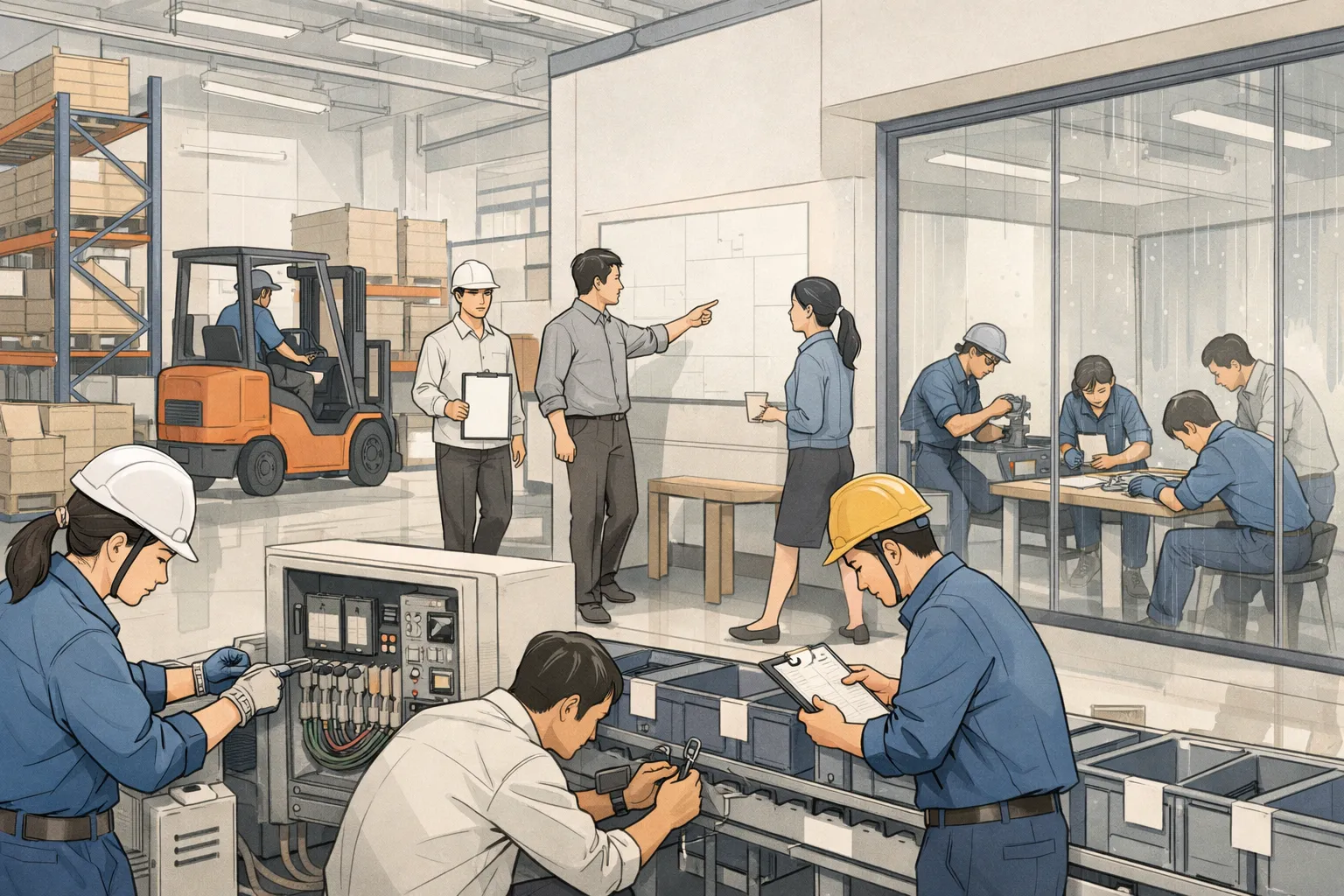
For Vietnamese individuals hoping to secure a full-time position in a Japanese company, there is a high demand for various job types. First, IT engineers are in a field that requires programming language skills, and if you have Japanese language proficiency, it is possible to be hired as a full-time employee even without experience. Career paths include a wealth of growth stages such as system analysts and project managers.
Next, in the sales position, strong communication skills with customers are particularly required. There are many job openings available for inexperienced applicants, and after joining, practical guidance from seniors makes it easy to hone skills. There are also various opportunities for career advancement, such as becoming a sales manager.
Additionally, the manufacturing operator is a position where knowledge of machine operation and quality control is emphasized, making it easier for inexperienced individuals to find employment. You can acquire skills while working, and as your skills improve, it is also possible to aim for a career in manufacturing management.
These job types can be considered important options for Vietnamese people to thrive as full-time employees in Japan. By improving Japanese language skills and acquiring relevant skills and experience, the range of job options can easily expand. For Vietnamese individuals aiming to work in Japan, these positions present significant opportunities.
For Vietnamese individuals aiming to work in Japan, IT engineers, sales positions, and manufacturing operators are in high demand. In these positions, Japanese language proficiency and specialized skills are important, and there are opportunities for inexperienced individuals to aim for full-time employment.
| Job Type | Features |
|---|---|
| IT Engineer | Programming skills are required, and there is a wide range of career advancement opportunities. |
| Sales Position | Communication skills with customers are important, and it is easy for inexperienced individuals to apply. |
| Manufacturing Operator | You can learn machine operation and quality control techniques, and there are opportunities for promotion. |
Reference: Benefits and Considerations of Hiring Vietnamese Workers | Will of Recruitment Journal

To succeed in your job search, choosing the right site is essential. Especially when looking for full-time job offers for Vietnamese people, there are many platforms available. Some Japanese job sites provide information specifically focused on hiring foreigners, and by utilizing these sites, it becomes easier to find job offers that suit you. It is particularly important to choose sites that offer robust support for Vietnamese. While referring to community forums and experiences from seniors, it is effective to browse multiple sites simultaneously.
Next, understanding the actual job postings is very important. By thoroughly understanding the content listed, you can determine whether the company's needs align with your own. Particular attention should be paid to conditions regarding residency status, details about the work location, overtime hours, and salary breakdown. These points can significantly influence the work environment and treatment in the future, so it is necessary to check them carefully. To avoid mismatches, it is recommended to contact the company early if you have any questions.
Application documents are also an important step. Your resume and work history must clearly outline your experiences and skills. In particular, when working for Japanese companies, it is essential to emphasize your Japanese language ability and specialized skills. Since application documents are an important tool for promoting yourself, it is required to check the content carefully and pay attention to the format. Additionally, by specifically demonstrating how your past experiences can be beneficial, you can enhance your fit with the company.
During the interview stage, it becomes a good opportunity to confirm your compatibility with the company. When approaching the interview, it is important to not only prepare your self-promotion but also to research the selecting company in advance and prepare appropriate questions. This allows you to show your interest and understanding of the company. In particular, discussing your career vision after hiring in detail is a good way to convey your long-term employment motivation as a Vietnamese. Companies also value candidates with a strong desire for growth, so a proactive attitude is necessary.
Finally, clearly demonstrating your willingness for long-term employment is key to hiring. Especially in Japanese companies, an understanding of the employment contract and trial period is required. It is important to earn trust as a full-time employee through your performance during the trial period. By maintaining a desire to continuously grow and thriving in a workplace that suits your aptitude, it is possible to build a stable career.

Job searching can be time-consuming, but by establishing a solid strategy, you can get closer to success. In particular, choosing the right sites, interpreting job postings, preparing application documents, and interview preparation are crucial. Let's find a company that suits you and proceed with a smooth job search. Having a long-term perspective and being aware of your own growth are the keys to successful job hunting.
Reference: Vietnamese and Vietnamese Language Job Listings | Foreign Employment.com【GoWell】

Options for Job Media and Their Features
When Vietnamese people seek employment as regular employees in Japan, there are various job media available. The main options include Japanese job sites, foreigner-specialized agents, company recruitment pages, university and vocational school career centers, and referrals from acquaintances among others.
Japanese job sites
Japanese job sites provide a wide range of job information within Japan. When Vietnamese people aim to find employment as regular employees in Japan, these sites serve as useful information sources. In particular, major sites like Indeed Japan and Rikunabi publish job information across various industries and job types, making it easier for job seekers to find positions that match their preferences.
Foreigner-specialized agents
Foreigner-specialized recruitment agencies provide services tailored to foreign job seekers, including Vietnamese individuals. For example, VietScout offers job information for Vietnamese in multiple languages, allowing job seekers to access information in their native language. This makes it easier to proceed with job hunting as a regular employee in Japan without feeling the language barrier.
Company Recruitment Page
The official recruitment page of a company is where each company directly posts job information. For Vietnamese individuals hoping to secure a full-time job in Japan, it is important to regularly check the recruitment pages of companies they are interested in. By understanding the company culture and the type of candidates they seek, applicants can clarify their selling points when applying.
University and Vocational School Career Centers
Career centers at universities and vocational schools provide job information and employment support for current students and graduates. For students studying in Japan from Vietnam or those aiming to secure full-time employment in Japan, these career centers serve as valuable sources of information. In particular, students with Japanese language proficiency of N3 or higher can find employment in specialized fields such as nursing and caregiving. (Reference: mhlw.go.jp)
Referral by Acquaintances
Introductions from acquaintances and friends are one way to obtain reliable job information. An introduction from a Vietnamese acquaintance with experience working in Japan can provide specific advice about internal company information and the hiring process. Additionally, through acquaintances, you can learn about the company's atmosphere and culture in advance, which can be helpful when applying.
Checklist for Choosing Job Media
When selecting job media, it is important to check the following points:
- Correspondence with Residence Status: Whether the job corresponds to the work visa for Vietnamese people (such as Technical, Humanities, International Services, etc.).
- Presence of Unpublished Job Openings: Whether there are job openings that are not publicly disclosed.
- Supported Languages:Whether job information and support are provided in Vietnamese and English.
- Fees and Costs:Whether there are costs associated with job postings and applications.
- Post-Offer Support:Whether support is provided after the job offer, such as visa applications, entry procedures, and housing searches.
By checking these points, Vietnamese individuals can select appropriate job media when seeking employment as full-time employees in Japan.
Job Listing Items to Check Before Applying
When reviewing job postings, it is important to check the following items:
- Job Title and Description: Specific duties and roles.
- Work Location: Address and access methods of the workplace.
- Salary and Benefits: Salary amount, raises and bonuses, welfare benefits, etc.
- Working Hours and Holidays: Working hours, vacation system, and whether overtime is required.
- Application Requirements:Necessary education, experience, qualifications, language skills, etc.
- Selection Process:Number of interviews, exam content, selection schedule.
By confirming this information in advance, you can prevent mismatches after applying and proceed with a smooth job search.
When Vietnamese people seek employment as regular employees in Japan, choosing the right job media is crucial. Understanding the characteristics of Japanese job sites, foreigner-specialized agents, company recruitment pages, university career centers, and referrals from acquaintances, as well as checking points such as residency status and support content, will be the key to success. Additionally, by checking the important items on job postings in advance, you can conduct a better job search.

Specific Advice on Self-PR and Resume Creation
For Vietnamese individuals aiming to secure a full-time job in Japan, writing a resume and work history document is extremely important. In particular, it is essential to grasp the points for effectively promoting oneself in the Japanese-style format. Therefore, we will provide specific advice in the following Q&A format.
What should I write in my self-PR?
A self-promotion is an opportunity to showcase your strengths and experiences. Specifically, it is important to express your desired skills and incorporate episodes based on past achievements. Using the STAR method (Situation, Task, Action, Result), clearly present the situation and conclusion. For example, "As a project manager in Vietnam, I led a team of over 100 members and completed the project two months ahead of schedule. As a result, I increased the company's profits by 20%." By presenting specific numbers and results, you enhance your persuasiveness.
What is your motivation for applying?
Your motivation for applying is the part where you explain why you want to work for that company. It is key to emphasize your interest in the company's philosophy, culture, and working environment while aligning it with your own experiences. For example, express your intention to contribute specifically to the company by saying, "I want to leverage my experience in Japan to contribute to your global expansion."
What about gaps in your resume?
When it comes to gaps in your resume, it is most important to be honest. Particularly, by stating the reasons for the gaps and the activities you engaged in, you can demonstrate a proactive attitude and efforts to improve your skills. Adding something like, "I was attending a Japanese language school to learn Japanese," can create a positive impression.
How to Write Your Japanese Language Level?
If you aim to get a job in Japan, Japanese language proficiency is essential. By specifically stating your Japanese language level and using expressions such as "Japanese Language Proficiency Test N2" or "I can converse without any issues," you can clearly convey your language abilities to the hiring manager.
Examples of What Not to Do and Key Points
Common examples of what not to do in self-promotion and motivation statements include using abstract expressions, long sentences, and overly emphasizing salary. Avoid vague expressions like "I like my job" or "I want to work in a good environment." Additionally, refrain from not using numbers; it is important to present results and achievements concretely.
By understanding and practicing these points, Vietnamese individuals can effectively advance their job search as full-time employees in Japan. It is essential to incorporate these elements thoroughly when creating resumes and work history documents.
When Vietnamese individuals seek employment as full-time employees in Japan, the way to write a resume and work history is crucial. In the self-promotion section, use the STAR method to demonstrate specific achievements, and in the motivation for applying section, emphasize the connection to the company's philosophy. Honestly state any gaps and your Japanese language level, and avoiding negative examples is the key to success.
| Points | Details |
|---|---|
| Self-PR | State specific achievements and use numbers. |
| Motivation for application | Demonstrate how you can contribute to the corporate culture. |
Reference: List of job openings that welcome holders of N1 and N2|VietScout

When moving on to the interview stage, it is very important to be aware of the overall design. First, you need to understand the flow from the first interview to the final interview, and prepare for both online and in-person formats. In particular, Japanese companies often conduct evaluations in stages, and understanding the evaluation criteria required at each phase of the interview is key to success. Among these, special attention should be paid to communication skills and Japanese language skills.
The evaluation criteria also include the candidate's cultural fit. Whether or not you fit the company's culture is an important point in the interview. Therefore, it is essential to research the company's values and culture in advance and think about how you can contribute. Additionally, conditions related to residency status are also an important factor to consider. Confirming that your residency status matches the company's requirements will lead to a smoother job search.
Furthermore, retention potential is a point that companies value. Especially as a Vietnamese, demonstrating a willingness to work long-term in a Japanese company can enhance your appeal. By understanding each evaluation criterion and preparing appropriately, you can facilitate a smooth flow throughout the interview process. Therefore, being constantly aware of what is required at each stage of the interview and acting accordingly will lead to success.

In interviews, it is important to understand each phase from the first to the final and to prepare according to the online and in-person formats. The evaluation criteria include communication, Japanese language skills, cultural fit, residency status, and potential for retention. In particular, demonstrating a long-term willingness to work as a Vietnamese person will lead to success.
Reference: Job and career information in Vietnam | For overseas job information, visit 【Mynavi Career Global】

The interview culture of Japanese companies has a unique "implicit expectations". To begin with, to convey the conclusion, while clearly expressing your own opinions in the interview, a balance of humility and confidence is required. Specifically, it is important to explain your strengths while also being open to others' opinions. Additionally, in Japanese corporate culture, Hō-Ren-Sō (reporting, contacting, and consulting) is considered essential, and being aware of this is evaluated as an understanding of business manners. Furthermore, a posture of fulfilling one's role within a group with cooperativeness is also emphasized. These points reflect the expectations of companies looking towards long-term employment.
Points that are likely to cause misunderstandings during interviews include silence and indirect expressions. In particular, silence is often seen as a time to organize one's thoughts, but in Japanese company interviews, responding at the appropriate timing is emphasized. Additionally, while indirect expressions are more common in Japanese culture than direct expressions, they can sometimes make the other person's intentions unclear, so caution is needed. Regarding reverse questions, they are often viewed not just as mere curiosity but as an opportunity to deepen understanding of the company.
As a basic attitude in interviews, it is required to express oneself clearly while also understanding one's own limitations and demonstrating a willingness to grow together with colleagues. Vietnamese individuals facing interviews can open the path to becoming full-time employees in Japanese companies by being mindful of this balance.
In the interview culture of Japanese companies, a balance of humility and confidence is required, and Hōrensō and cooperativeness are emphasized. Furthermore, reverse questions serve as a means to deepen understanding of the company.
The interview culture of Japanese companies has its own unique values and rules, making understanding particularly important for Vietnamese individuals. It is required to be aware of humility and cooperativeness, as well as to express oneself clearly, not just focusing on motivation and self-promotion. If appropriate responses can be made, opportunities to thrive as a full-time employee will expand.

Preparation and Mindset to Stand Out in Interviews
Successful interviews require prior preparation. The first step is company research. By understanding the company's philosophy, culture, and industry trends, you can demonstrate to the interviewer how well you fit into the company. Next, as part of addressing job requirements, it is important to accurately understand the required skills and experiences and to use them to effectively promote your background. Be clear about how your experiences can be beneficial and prepare to explain with specific examples whenever possible.
After that, it is necessary to prepare anticipated responses. By thinking through answers to common questions in advance, you can respond calmly. Additionally, preparing reverse questions during the interview can show your willingness to deepen your understanding of the company. Before the interview, conducting role plays with friends or family, where they ask questions from the interviewer's perspective, can also be an effective rehearsal. This helps organize your thoughts and reduce anxiety.
On the day of the interview, don't forget to prepare your belongings and communication environment. Check copies of your resume and work history, as well as writing instruments, and bring what you need. Additionally, if it's an online interview, it's important to confirm your communication environment in a quiet place. In particular, be sure to prepare thoroughly in advance for explanations regarding residency status. You will need to clearly convey how your residency status meets the needs of the company.
How to convey your reason for changing jobs is also important. You should indicate that the reason for leaving your previous job is positive and emphasize your desire for growth in the new workplace. Furthermore, regarding salary negotiations, it is necessary to have realistic expectations while also having a basis based on your skills and experience. By negotiating based on data rather than intuition, it will be easier for the other party to understand. Through these preparations, Vietnamese individuals can also pave the way to become full-time employees in Japanese companies.
Conduct company research and prepare a self-promotion tailored to the job requirements. Prepare anticipated questions and answers and have reverse questions ready to leave an impression on the interviewer. It is also important to be able to clearly convey points regarding residency status, reasons for changing jobs, and salary expectations.
| Item | Importance |
|---|---|
| Company Research | High |
| Job Requirement Correspondence | High |
| Reverse Questions | Middle |
Reference: Diligent and Eager to Learn! How to Directly Hire Excellent Vietnamese Workers

ℹ️ Supplement
When considering employment in Japan, especially for Vietnamese individuals, the life after being hired as a full-time employee comes with many anxieties. First, regarding housing after joining the company, it is important to decide on a place to settle down early and to carry out the procedures for contracts and moving smoothly. It is recommended to utilize services provided by local governments and real estate companies to find properties that meet your conditions.
Various procedures associated with joining the company are also important factors. In particular, confirming your residency status and preparing the necessary documents are essential. Consulting with the HR department of each local government and company and organizing your documents will facilitate a smooth onboarding process. Additionally, consider the procedures for medical insurance and social insurance early on.
When it comes to living expenses, creating a budget is fundamental. In particular, estimating expenses such as rent, food, and transportation will allow for a more comfortable lifestyle. Before your salary as a full-time employee is confirmed, it is necessary to conduct a rough calculation of expenses and consider ways to save as needed.
Workplace relationships can also be a source of anxiety for many in a new environment. It is important to actively communicate in your first workplace. Additionally, attempting to build relationships with colleagues outside of work can be effective for fostering connections. A flexible attitude that aligns with the company culture is required.
In this way, thoroughly preparing for the process from employment to joining the company and the subsequent life in Japan is fundamental for Vietnamese individuals to make a good start. Be sure to confirm various aspects related to improving the workplace environment and establishing a living foundation.
Finding a job in Japan is a new challenge, but with proper preparation, you can start with confidence. By proactively working on your housing and living expenses plans, as well as building relationships at your workplace, you can create a better environment for yourself. Enjoy your new life.

For Vietnamese people to live comfortably in Japan, it is important to understand various aspects of daily life. Below is a practical checklist for living.
Additionally, it is reassuring to know where to consult when you are troubled by such information. Local governments, international exchange associations, and your company's human resources department can be used as consultation points. Utilizing these organizations can help Vietnamese people smoothly advance their lives and work in Japan. Even in searching for full-time job openings, receiving such support can make it possible to find workplaces with better conditions.
For Vietnamese people to live comfortably in Japan, it is important to understand basic information such as housing, banking, healthcare, transportation, and disaster prevention. Additionally, by utilizing support from local municipalities, international exchange associations, and human resources departments, they can address job searches for full-time positions and any difficulties in daily life.

Communication in the workplace and adaptation to culture often come with gaps that Vietnamese individuals may face when securing employment in Japan. For example, the importance of reporting, contacting, and consulting (Hōren-sō) may not be understood, leading to a lack of collaboration with colleagues. This is because, in Japanese workplace culture, information sharing is considered essential for smooth business operations. As a countermeasure, it is effective to regularly set aside time for communication or to inform others that feedback will be received. Below are example sentences.
- Request: "Could you please submit this document by next week?"
- Confirmation: "What is the progress of this project?"
- Apology: "I apologize for the inconvenience caused by my mistake the other day."
- Consultation: "Could I have some time to discuss this matter?"
Next, there is a challenge regarding vague expressions. In Japanese workplaces, vague expressions are commonly used, and for example, when someone says, "I will consider it," it may not be received as a clear indication of intent. This is rooted in a culture that avoids direct expressions. For new Vietnamese employees, it is necessary to understand such expressions. As a countermeasure, it is recommended to confirm specific deadlines and details as needed. Asking specific questions can help prevent misunderstandings.
Additionally, attitudes towards overtime are also an important point. Overtime is common in Japan, but in Vietnam, due to a focus on efficiency, excessive overtime can deteriorate the workplace environment. To bridge this gap, it is necessary to understand the rules regarding working hours in advance and communicate one's thoughts to those around them.
Self-care for mental well-being is also essential. Methods to reduce stress include taking time for hobbies and valuing communication with colleagues. Furthermore, if there is a consultation desk established within the company, it is recommended to actively use it before problems arise. Especially in a workplace environment where logical communication is necessary, Vietnamese individuals are required to understand and adapt to these cultural differences to thrive as full-time employees.
For Vietnamese people to work as full-time employees in Japan, it is important to understand reporting, communication, and vague expressions, as well as attitudes towards overtime, to facilitate smooth communication. Mental care is also important, so let's utilize consultation services when in trouble.
| Gap | Countermeasures |
|---|---|
| Lack of Reporting and Communication | Implementation of regular communication |
| Lack of understanding of ambiguous expressions | Ask specific questions |
| Differences in views on overtime | Understanding of working hours and communication to others |
Based on this, let's build a fulfilling workplace environment.

Strategies for Career Advancement as a Full-Time Employee
For Vietnamese considering employment in Japan, setting clear goals is essential for building a career as a full-time employee after joining a company. First, by conducting a self-analysis and clarifying your strengths and weaknesses, you can set appropriate career goals. By establishing goals that consider specific skills and positions, your motivation for daily tasks will increase, serving as a guide for growth. Additionally, regularly reviewing your goals will help form a flexible career plan that reflects changing industry trends and your own growth.
Next, understanding the evaluation system is very important. In many companies in Japan, the results of your work are directly linked to salary increases and promotions. By understanding how you will be evaluated, including specific criteria and processes, the direction for your growth becomes clear. Moreover, setting goals that align with evaluation timing allows you to efficiently hone your skills. To gain recognition as a full-time employee, accumulating achievements in your daily work is key.
Furthermore, it is important not to forget to focus on skill investment. In particular, having both Japanese language skills and specialized knowledge is a key point for Vietnamese individuals to succeed in Japanese companies. For example, learning Japanese related to business and obtaining qualifications can significantly enhance one's market value. Additionally, participating in training and seminars aimed at improving specialized skills is also effective. By balancing the development of both skills, one can expect to receive higher evaluations.
Moreover, rather than considering job changes as an option, focusing on growth within the company is also a strategy. The workplace culture in Japan tends to emphasize long-term growth perspectives. Therefore, actively accepting new projects and transfers within the company can create opportunities to expand one's career. By making such choices, it is possible to build a foundation for future careers on a stable base as a full-time employee. For Vietnamese individuals to succeed in this environment, a conscious attitude towards their own growth is required.
Vietnamese individuals considering employment in Japan should set goals, understand evaluation systems, invest in skills, and choose internal growth as keys to building a career as a full-time employee. It is particularly important to develop both Japanese language skills and specialized knowledge.
By implementing this strategy, it is possible to build a solid foundation for a career.
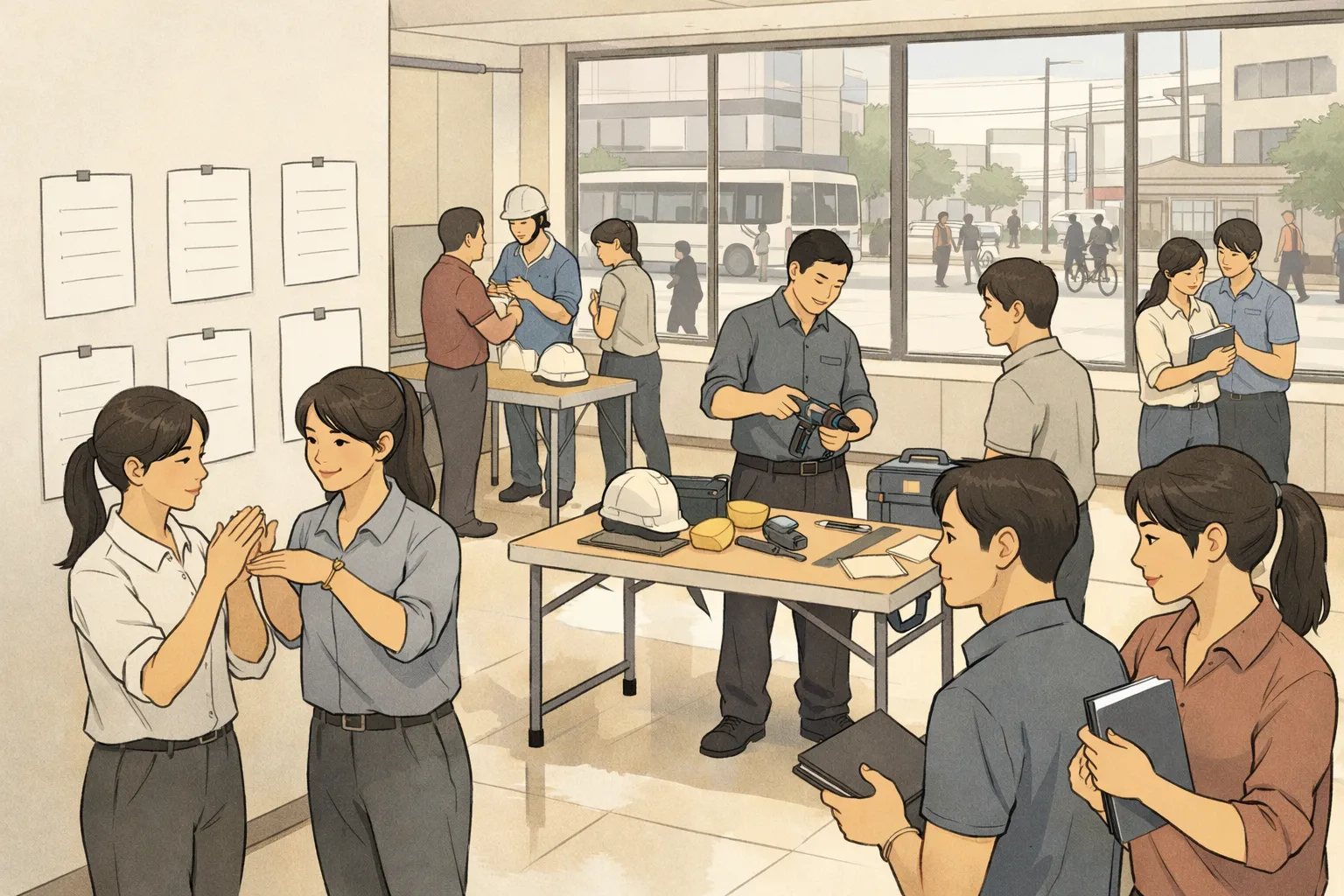
To effectively utilize training systems and opportunities for skill improvement, it is important to understand the various systems and connect them to your own growth. For Vietnamese individuals aiming to work in Japan, particular attention should be paid to OJT (On-the-Job Training) and Off-JT (Off-the-Job Training), qualification assistance, and language support systems. By wisely utilizing these, it becomes possible to build a richer career.
First, OJT is a method of learning skills through actual work. It is important to communicate to your supervisor how you want to grow and receive guidance on specific tasks. Additionally, Off-JT is a way to gain knowledge through training and seminars, and it is advisable to set goals in advance when participating. The key is to clarify how these goals relate to what you will learn and the tasks at hand.
Next, when utilizing the qualification assistance system, it is essential to list the necessary qualifications and use them to benefit your career plan. This allows you to think about specific ways to apply the qualifications obtained after the aforementioned training. Furthermore, the language support system is particularly useful for Vietnamese individuals considering business expansion overseas. Improving everyday language skills, as well as acquiring practical business English, will enhance competitiveness in the job market in Japan.
For the steps to utilization, please refer to the following points.
By executing these steps, you can maximize the training system and opportunities for skill enhancement. Especially for Vietnamese individuals hoping to work in Japan, solid planning will be the key to success. Don't forget to effectively communicate your growth during evaluation meetings to connect it to your next career leap.
To make the most of training systems and opportunities for skill enhancement, it is important to understand OJT and Off-JT, utilize qualification support, and take advantage of language assistance. Consulting with your supervisor to set goals and applying what you have learned to your work can lead to visible results. It is also important to communicate your growth through evaluation meetings.

Building networks and connections in Japan is a crucial factor for Vietnamese individuals aiming for employment in Japan. Building internal connections (with supervisors, seniors, and other departments) and external networks (study groups, communities, and networks of fellow countrymen) can greatly assist in job hunting and career development. However, there are also points to be cautious about during this process.
First, by forming an internal network, you can gain opinions and advice from supervisors and seniors. This can deepen your understanding of your work and potentially lead to improved evaluations. Specific actions, such as having regular lunches or feedback sessions, can promote open communication. On the other hand, a disadvantage of internal networks is that relying too much on specific individuals may hinder your own growth, so caution is necessary.
Next, building a network outside the company increases opportunities to obtain external information. By participating in study groups and communities, you can deepen your understanding of industry trends and technologies, which will lead to your skill enhancement. An example of action is to regularly attend industry events and seminars and exchange business cards. However, it is very important to verify the authenticity of the information. Be particularly cautious about information regarding job offers and strive to build a reliable network.
In this way, there are advantages and disadvantages to building networks both inside and outside the company. Refer to the following comparison to aim for effective network formation.
Understanding these advantages and disadvantages, conducting effective networking is the key to success in employment in Japan. It is important to build a reliable network while leveraging your strengths as a Vietnamese.
Networking and building connections in Japan is


2026.07.30

2026.07.30


2026.08.03


2026.08.03

2026.08.03

2026.08.03

2026.08.03

2026.08.03

2026.08.03

2026.08.03
2026.07.30
2026.07.30
2026.08.03
2026.08.03
2026.08.03
2026.08.03
2026.08.03
2026.08.03
2026.08.03
2026.08.03
2026.07.30
2026.07.30
2026.08.03
2026.08.03
2026.08.03
2026.08.03
2026.08.03
2026.08.03
2026.08.03
2026.08.03
 COLUMN CATEGORY
We explain the types of work visas (such as Engineering/Humanities/International Services, Skills, etc.), the procedures for obtaining or changing residence status, the required documents and review points, and the flow of procedures that employers must handle.
We introduce guidelines for Japanese proficiency (JLPT, etc.), the language skills required by industry, study methods and materials, and how to prepare for Japanese in interviews and write language proficiency certificates.
We explain how to write a resume and work history documents for Japan (format and translation points), provide sample wording for self-promotion and reasons for applying, and show with concrete examples how to organize attached documents.
We explain salary benchmarks by industry, how to calculate take-home pay, overtime pay, how social insurance, pensions, and taxes work, and negotiation points such as welfare benefits and housing allowances.
We explain Japanese workplace customs (reporting and communication, hierarchy, teamwork), how to handle long working hours and take time off, measures against harassment, and how to map out career paths.
We introduce how to choose a job-change agency or job site, what to watch for when registering, interview scheduling and follow-up after an offer, and how to use free support services and event information.
We provide helpful information for Mongolians who are considering finding a job in Japan.
We provide helpful information for Nepalese who are considering finding a job in Japan.
We provide helpful information for Indonesians who are considering finding a job in Japan.
We provide helpful information for Vietnamese who are considering finding a job in Japan.
The JLPT N1 is the highest level of Japanese-language proficiency, and it is one of the strongest assets a foreign national can have when looking for a job in Japan. It proves you have the advanced Japanese skills needed in real business settings, opening doors to general and specialized positions as well as roles at major companies. In this category, we bring together job listings and career tips to help foreign nationals with N1 succeed in their job search in Japan.
The JLPT N2 is a practical level of Japanese-language proficiency that many companies use as a benchmark when hiring, making it a valuable asset for foreign nationals looking for a job in Japan. It proves you can handle not only everyday conversation but also business Japanese across a wide range of situations, greatly expanding your options—from office and administrative roles to many other positions. In this category, we bring together job listings and useful tips to help foreign nationals with N2 succeed in their job search in Japan.
The JLPT N3 shows that a foreign national has a solid, basic command of Japanese when looking for a job in Japan. It demonstrates that you can handle everyday conversation and simple work-related exchanges, so you'll find options well suited to a first job—such as roles you can start with no experience and on-site full-time positions. In this category, we bring together job listings and useful tips to help foreign nationals with N3 find a job in Japan.
RELATION COLUMN
\ Easy 30-second sign-up /
 2026.08.04
Comment from the author
For Vietnamese individuals hoping to find employment in Japan, Japanese language ability is the key to career development. While utilizing N1 and N2 qualifications, it is also important to focus on practical experience and presentation during interviews. It is a shortcut to success to refine not just qualifications but overall abilities. I am cheering for you!